
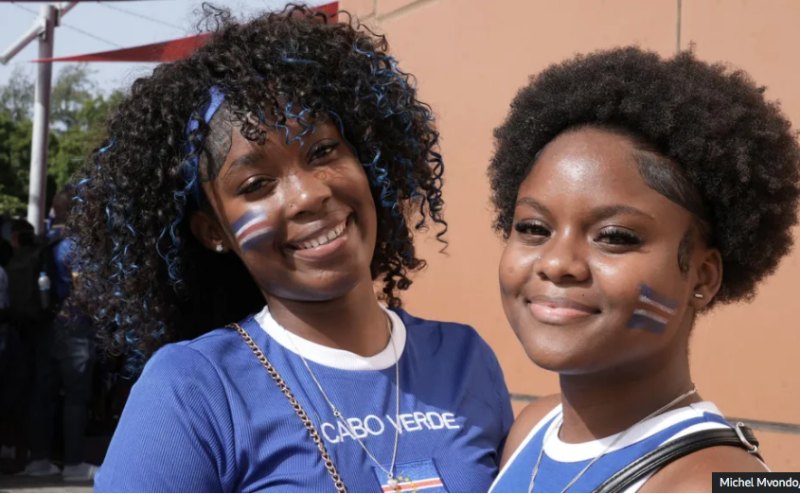
The ongoing 2026 Fifa World Cup has served up its fair share of drama, but none has captured the global imagination quite like the meteoric rise of Cape Verde. A tiny West African archipelago with a population of just over 500,000 people has transcended its modest footballing stature to become the undisputed darlings of the global showpiece.
Before the tournament kicked off in North America, many pundits dismissed the Blue Sharks as mere participants who were happy to make up the numbers. After all, this was their maiden appearance at the World Cup. However, Cape Verde has completely rewritten the script by matching some of the most decorated nations in football history pound for pound.
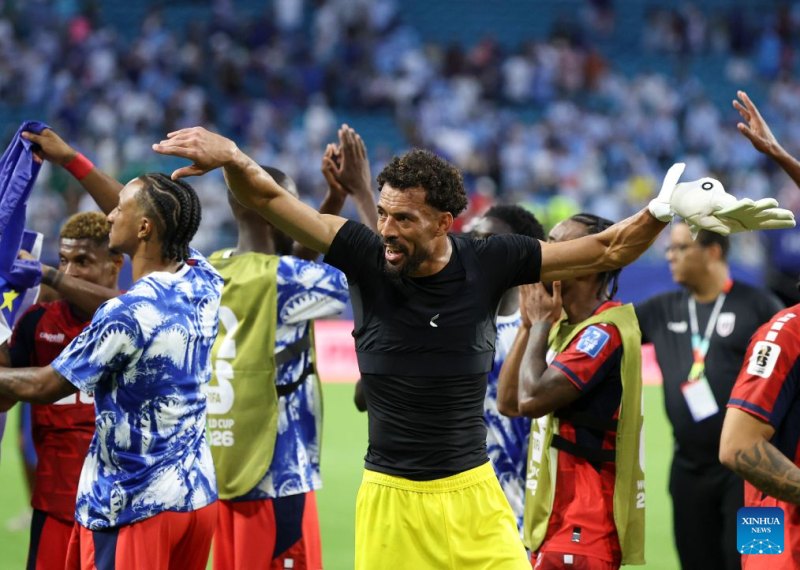
Drawn into a daunting Group H alongside powerhouse nations Spain, Uruguay and Saudi Arabia, the islanders faced an uphill task. Their campaign began in Atlanta against a formidable Spanish side brimming with elite European talent. Instead of capitulating under the bright lights, Cape Verde put on a defensive masterclass. Guided by the veteran leadership of their 40-year-old goalkeeper Vozinha, the debutants held the former world champions to a historic 0-0 draw to secure their first-ever tournament point.
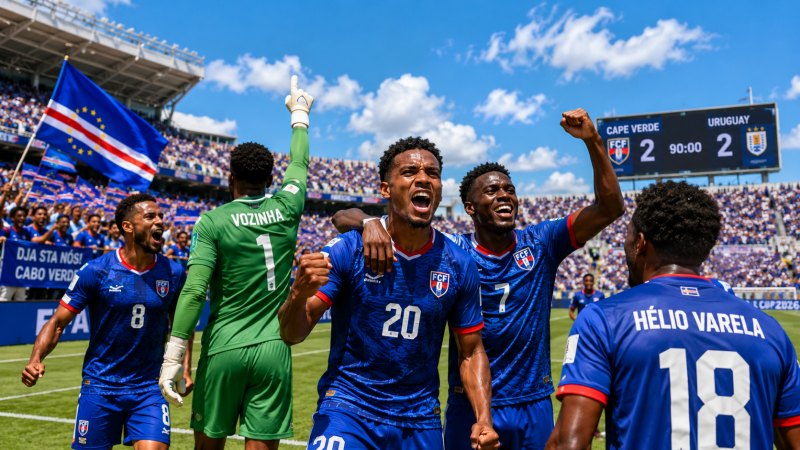
If the stalemate against Spain was viewed as a fluke, their second group fixture against Uruguay in Miami erased all doubts about their pedigree. The Blue Sharks went toe-to-toe with the two-time world champions in a thrilling encounter. In the 21st minute, midfielder Kevin Pina etched his name into folklore by scoring Cape Verde's first-ever goal at a Fifa World Cup. Although Uruguay fought back to take the lead right before halftime, the Africans refused to drop their heads. Their resilience paid off in the 61st minute, when substitute Hélio Varela struck an equaliser to snatch a 2-2 draw.
Cape Verde found themselves on the precipice of the knockout rounds. They needed only a draw to keep their fairytale alive. And they secured this dream in the final group stage match against Saudi Arabia in Houston, where they created enough chances to win.
To understand the magnitude of this achievement, one must look at the sheer numbers. Cape Verde is one of the smallest nations by land area ever to qualify for the World Cup. Yet their journey to the grand stage was no accident. The Blue Sharks booked their ticket to the tournament by surprisingly topping a brutal African qualifying group ahead of continental heavyweights Cameroon, Angola and Libya.
The secret to their success lies in a deeply rooted sense of national identity, tactical discipline and unwavering self-belief. Lacking the multi-million dollar superstars of their rivals, Cape Verde relies on a collective work ethic, where every player covers for his teammate. Head coach Pedro ‘Bubista’ Brito has forged a tight-knit unit that transitions seamlessly between resolute defending and explosive counter-attacks.
For Kenyan football enthusiasts watching from thousands of miles away, the exploits of the Blue Sharks offer profound lessons and a glimpse of what is possible. It proves that meticulous planning, structural investment and a clear footballing philosophy can bridge the gap between small nations and established football empires. Population size and historical reputation no longer guarantee success on the pitch.
Regardless of how the rest of the tournament unfolds, the Blue Sharks have already won the hearts of neutral fans worldwide. They have proved that with passion, courage and unity, even the smallest islands can create the biggest waves on the grandest stage of all.