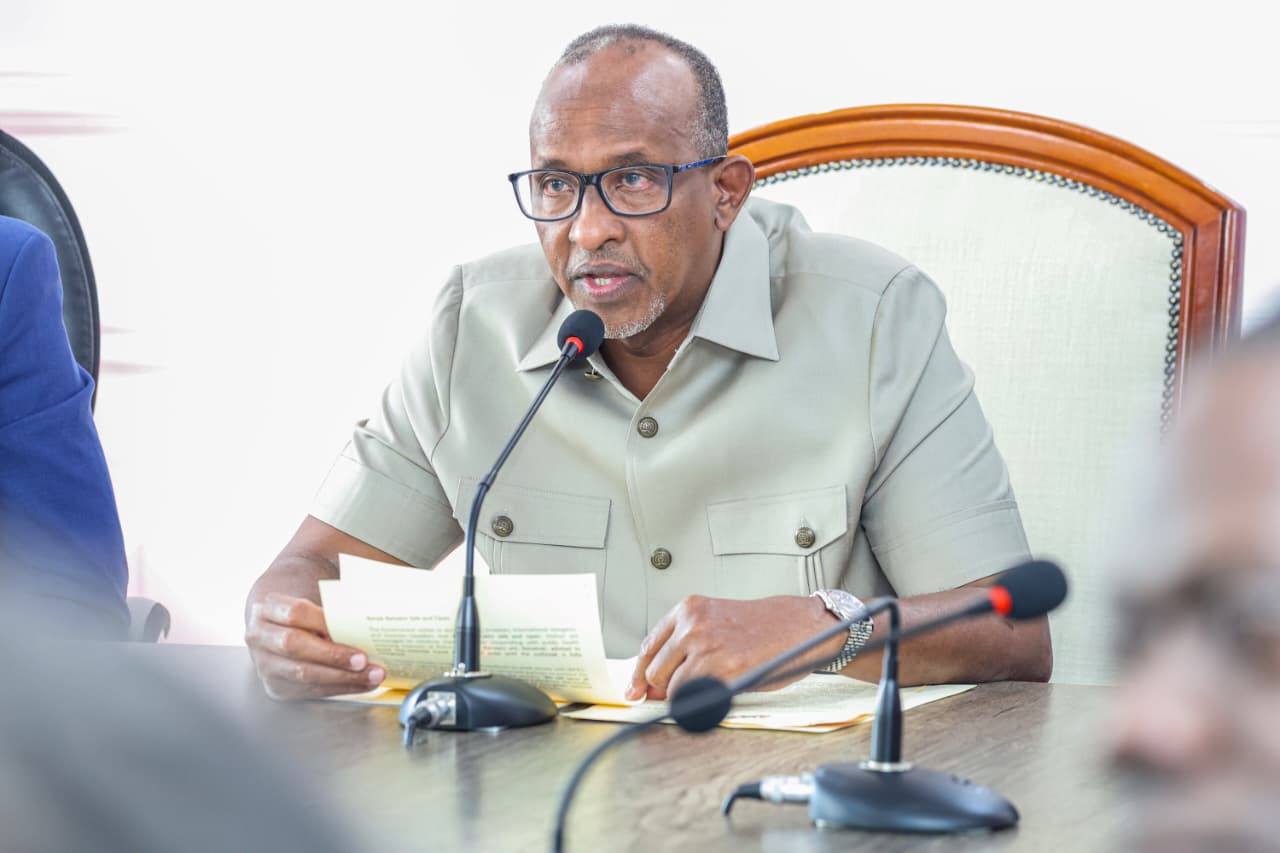

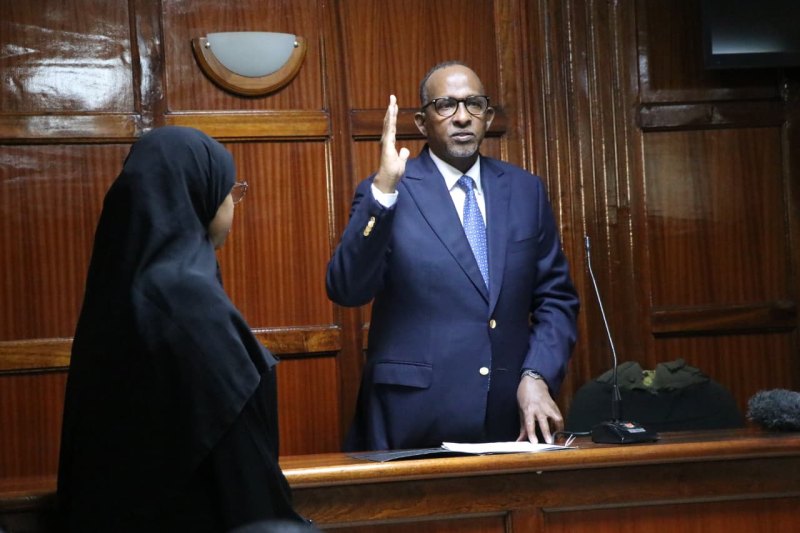
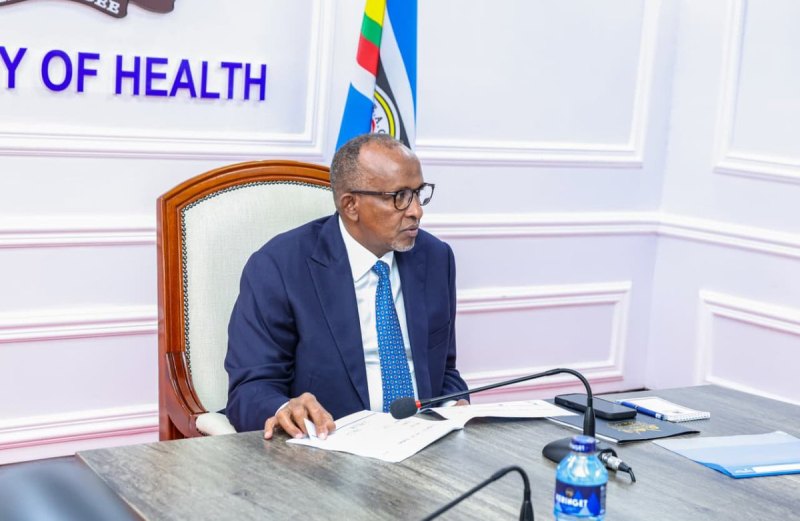
 Cabinet Secretary of Health, Aden Duale
Kenya could lose about 2,900 jobs and see investment slow sharply because of the Ebola outbreak in the Democratic Republic of the Congo (DRC).
The virus has not spread to Kenya.
A new United Nations Development Programme (UNDP) report says Kenya is already feeling the economic effects of the outbreak through slower regional trade, transport delays and falling investor confidence.
The report projects that about 2,900 jobs could be lost in Kenya under a scenario where the virus remains largely contained in the DRC and Uganda, but regional economies continue to suffer from border screening, transport delays and weaker business confidence.
As of late June, the Ebola outbreak in the DRC had killed 291 people and infected 1,118 others. Uganda had recorded 62 confirmed cases and two deaths.
"Ebola does not stop at the hospital gate," said Ahunna Eziakonwa, UN assistant secretary general and UNDP regional director for Africa.
"It affects livelihoods, education, food security, trade, public finances and trust. If we treat this Ebola outbreak solely as a health challenge, we risk missing the much larger development emergency unfolding around it."
The report, titled Rapid Socioeconomic Assessment of Ebola Outbreak in the DRC, says Kenya's losses are mainly economic rather than medical.
It says tighter border screening, travel controls and quarantine requirements have slowed the movement of people and goods across the region, increasing transport costs and making trade more expensive. These disruptions are affecting businesses that depend on regional markets and supply chains.
The study estimates that even if Ebola transmission remains largely confined to the DRC and Uganda, Africa could lose US$2.37 billion in economic output and about 90,000 formal jobs because of trade disruptions, declining consumer confidence and precautionary restrictions.
Angola is expected to lose the most jobs, at about 16,600, followed by Kenya with around 2,900 and South Sudan with about 1,480.
"The economic damage extends well beyond those infected with the disease, disproportionately harming the most vulnerable populations, who lack the financial buffers to weather the disruption," the UNDP said.
"Even under a baseline scenario where the virus is successfully contained in the DRC and Uganda, the economic damage remains severe, with the DRC projected to record real GDP losses exceeding US$1 billion and the loss of 55,000 jobs."
The assessment warns that the outbreak could become an even bigger crisis if other global shocks, including higher fuel prices and supply chain disruptions, occur at the same time. Under that scenario, total losses across Africa could rise to US$3.6 billion and about 328,000 jobs could be lost.
The report says the poorest households are paying the highest price through declining incomes caused by disrupted trade and shrinking informal businesses.
Women are expected to bear the greatest burden because many rely on small-scale cross-border trade for their livelihoods. They also make up the majority of frontline health workers and family caregivers.
"This poverty shock is also heavily gendered," the UNDP said.
"As women dominate the informal cross-border trade sector, restrictions have a disproportionate impact on their ability to earn an income. Women also constitute the majority of frontline health workers and often serve as primary caregivers at home, placing them at heightened risk of direct virus exposure."
The report also warns that diverting too many health resources to Ebola could lead to more deaths from other diseases.
It projects that disrupted health services could result in up to 2,520 additional infant deaths in the DRC from illnesses unrelated to Ebola because children fail to receive routine healthcare.
Kenya has committed significant resources to the regional Ebola response.
Health CS Aden Duale recently said the government had committed Sh1.7 billion to Ebola preparedness and response, covering surveillance, screening, laboratory services, emergency response and other preparedness measures.
In addition, the United States pledged US$13.5 million to support Kenya's Ebola preparedness, including the controversial quarantine facility at Laikipia Air Base, whose construction has since been suspended following a court ruling.
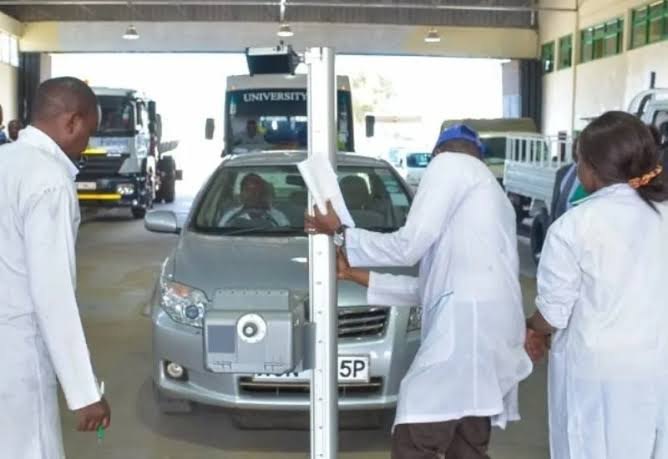
"As of today, Kenya has screened more than 140,000 travellers arriving from affected areas and investigated more than 100 alerts, all of which have tested negative for Ebola," Duale said on June 25.
UNDP said governments and development partners should stop viewing Ebola only as a disease outbreak and instead treat it as a development challenge requiring investment in stronger health systems, social protection, livelihoods and economic resilience.
"Trade disruptions, border restrictions, transport delays, declining consumer confidence and interruptions to informal markets could reduce continental GDP by US$2.37 billion, even if transmission remains largely contained," the report says.
"The poorest 20 per cent of households are expected to face a 1.76 per cent contraction in daily consumption, a loss that erases fragile development gains and threatens to create a long-term poverty crisis."