
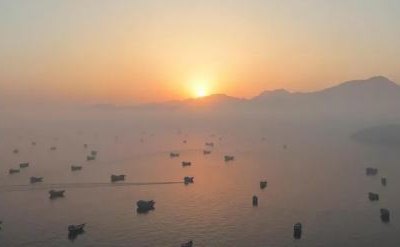
 Re-opening the Strait of Hormuz would take pressure off the global economy and the real lives of hundreds of millions of people./SCREENGRAB
The war has been President Donald Trump's worst foreign policy blunder – so far.
It makes it harder for the United States to deter its enemies.
It has damaged its alliances with the oil-producing Arab monarchies of the Gulf, whose business model as islands of stability in the turbulence of the Middle East will take years to repair.
Privately, their officials already talk about diversifying their allegiances, and about the necessity of finding ways to live alongside Iran, its neighbour across the water. China will have been watching closely as the United States burned through hard-to-replace stocks of weapons and came up against the limits of its power.
The agreement, assuming no more last-minute hitches, ends a war that was based on America and Israel's misreading of the strength of their enemy in Tehran. That will create a huge sigh of relief among all those whose lives have been turned upside down by the war, starting with civilians in the firing line.
The agreement re-opens the Strait of Hormuz, Trump says, taking the pressure off the global economy and the real lives of hundreds of millions of hard-pressed people around the world.
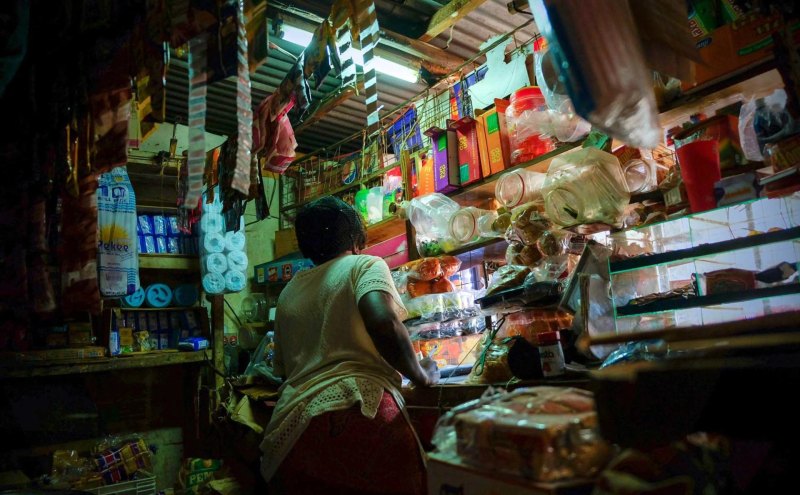
Thousands of people in the Middle East have been killed. Homes and businesses have been destroyed. The impact on fertiliser production that depended on supplies shipped through the strait could mean people in poor countries going hungry later in the year, with Africa south of the Sahara particularly at risk.
The agreement is not a peace deal. The full text, which negotiators have said has 14 points on two pages, has not been published yet. But as well as reopening the strait, the memorandum of understanding extends the ceasefire and lifts the US Navy's blockade of Iranian ports.
Now turn the clock back to 27 February, as American and Israeli forces were preparing to strike, arming their aircraft, briefing their crews and programming targets for their missiles.
In Geneva, Iran and the US were involved in what the world had been told were essential talks aimed at controlling Iran's nuclear plans. Multiple sources have told me and others that Iranian negotiators believed they were in a serious process and had put concessions as well as demands on the table.
At the entrance to the Gulf, the Strait of Hormuz was open, allowing the passage of around 20% of the world's requirements of oil and natural gas, as well as byproducts of the petro-chemical industry that have become vital components of modern life, including agricultural fertilisers and semi-conductors.
The memorandum of understanding clears the way for the nuclear negotiators to reconvene and for ships to transit the strait. That is exactly where they were 24 hours before the US and Israel went to war.
In the first of a series of devastating surprise attacks, Israel killed the Supreme Leader of Iran, Ayatollah Ali Khamenei and his closest advisers. Around the same time, an American strike flattened a school in Minab in southern Iran, multiple investigations have shown. More than 150 civilians were killed, including at least 120 school children, mostly girls under the age of 12.
Both Trump and Israel's Prime Minister Benjamin Netanyahu made video appearances to announce the start of a war that they believed would be short, sharp and victorious. It was a stunning misjudgement.
Their speeches predicted the fall of the regime in Tehran. Instead, survival has strengthened the regime. Its worst nightmare was a full-scale attempt at regime change by the United States and Israel. It happened and failed. The hard men in Tehran who survived have emerged emboldened.
Khamanei and his advisers were replaced rapidly, by his son Mojtaba as supreme leader and by a younger generation of commanders, dominated by senior leaders of the Islamic Revolutionary Guards Corps. They are every bit as ideological as the old guard, but less cautious, ready to take risks in what they considered, correctly, to be a fight for the survival of the Islamic regime in Iran.
They pushed to the limit a well-planned strategy of closing the Strait of Hormuz and attacking Iran's Arab neighbours as well as US forces and bases, and Israel itself. The bellicose rhetoric of the US Defence Secretary Peter Hegseth claiming that American power had crippled Iran's armed forces turned out to be exaggerated and untrue.
Israel was America's full partner in the war. But it was excluded from the negotiation on the memorandum of understanding and is viewing the deal with dismay.
Netanyahu said on 28 February that he had waited all his political life for the chance to destroy the Islamic Republic, which he views as Israel's most dangerous enemy. Now he is under attack from political opponents for endangering Israel's security.
Netanyahu will be dealing with the recriminations and consequences until the rapidly approaching general election, due before the end of October.
A potential stumbling block is Israel's stated determination to continue to occupy a broad swathe of land in the south of Lebanon, from which it has expelled civilians and where it has destroyed thousands of buildings. Israel's defence minister said it would continue its occupation of land in Lebanon, Syria and Gaza "indefinitely".
Netanyahu is under pressure from hardliners in his cabinet and political opponents to carry out more offensive action in Lebanon. Some are calling for the annexation of the country's south. He will have to weigh up whether he can afford to risk doing more damage to Israel's alliance with the US by defying Trump, who has been venting his frustration with Netanyahu in a series of interviews in the US.
An Israeli air strike on the southern suburbs of Beirut on Sunday was a clear attempt to derail the negotiations at a critical moment. Instead it seems to have accelerated them, as the time for talking seemed to be running out.
There is time now for a pause for breath. It is way too soon to conclude that the memorandum of understanding can be extended into a grand bargain between the US and Iran. A deal like that could transform the Middle East. But ideology and a total lack of trust make it a distant pipe dream.
This has been a sorry affair for all concerned. The Iranian people, to whom Trump promised a vision of freedom on 28 February, are still ruled by a ruthless regime that in January killed thousands of its fellow citizens for protesting in the streets.
America retains enormous economic and military power. But Trump's impulsive decision to go to war against Iran is looking like the action of a superpower that is struggling to retain its dominance in a world of change.