 The court awarded compensation ranging from Sh300,000 to Sh4.1 million
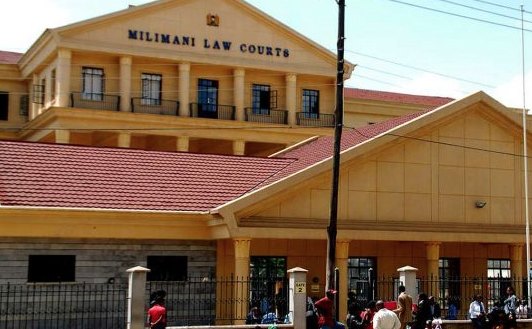
The High Court in Kisumu has awarded more than Sh38.6 million in compensation to 28 victims and families affected by police operations during the 2023 anti-government protests, finding that officers used excessive and unlawful force that resulted in deaths, life-altering injuries and violations of constitutional rights.
In a landmark judgment delivered on March 25, 2026, Justice Alfred Mabeya held that the National Police Service and its leadership violated multiple constitutional protections during demonstrations held between March and July 2023 in Kisumu, Migori and Ahero.
The court awarded compensation ranging from Sh300,000 to Sh4.1 million, calculated according to the severity of the injuries suffered and, in fatal cases, the loss of life resulting from what it found to be the unlawful and excessive use of force by police officers during the protests.
The petition had been filed by 29 petitioners led by former Law Society of Kenya Kisumu branch chair Dorcas Akinyi Oluoch on behalf of victims and families affected during the Azimio la Umoja-led cost-of-living protests.
The court heard accounts of nine deaths and numerous cases of gunshot wounds, assaults and permanent disabilities allegedly inflicted by police officers.
“All that is narrated above is not from any blockbuster movie or any warfront,” Justice Mabeya observed while recounting the incidents. “It is actual events that took place in Migori, Kisumu and Ahero.”
Among the cases that featured prominently in the judgment were those of Brian Oniang’o and William Akhala Omulele, aged 22 and 24, who were allegedly dragged from their house in Nyalenda by officers on July 20, 2023, beaten and left for dead.
Both later succumbed to their injuries in hospital. The court also examined the case of Joshua Lucas Kiwendo, a 17-year-old who was allegedly shot in the scrotum by a police officer on July 19, 2023 and later died from complications on November 26, 2023.
Another case involved Margaret Abongo Onyango, then aged 16, who was shot while on an errand to buy tomatoes near her home on July 20, 2023. A rubber bullet was later extracted from her body.
Several other petitioners suffered severe injuries. One lost four toes after a shooting, another sustained a shattered jaw requiring future surgery, while others were left with permanent disabilities affecting mobility, breathing and daily activities.
The petitioners argued that most victims were not demonstrators but ordinary residents going about their daily lives when they were shot, beaten or pursued into their homes by police officers.
They accused the Inspector General of Police, the National Police Service and the Attorney General of violating rights to life, dignity, security and protection from torture and cruel treatment.
They also faulted the Independent Policing Oversight Authority (Ipoa) for allegedly failing to promptly investigate the incidents and provide information requested by victims.
Supporting the petition were organisations including Amnesty International Kenya, the Kenya National Commission on Human Rights and Katiba Institute.
KNCHR told the court it documented 113 victims across western Kenya during the protests, including 16 deaths and 91 injuries allegedly linked to police actions.
The state, however, opposed the case. Government lawyers argued that the petition failed to directly connect the deaths and injuries to the Inspector General or the National Police Service.
They maintained that police actions were lawful and undertaken in the public interest to maintain law and order during violent and uncontrolled protests.
The respondents further contended that the victims should have exhausted available remedies through Ipoa and other statutory mechanisms before turning to constitutional litigation.
Ipoa acknowledged that investigations were ongoing but said the inquiries were complex because they involved large numbers of victims and difficulties identifying perpetrators.
The authority argued that some of the requested information was confidential and protected under law.
Justice Mabeya rejected those arguments.
The judge found that the petition met the constitutional threshold established in the landmark Anarita Karimi Njeru case and held that victims were entitled to seek constitutional remedies even while investigations remained active.
Relying in part on the Court of Appeal decision in Sharma v Attorney General & 3 Others (2025), the court stressed that constitutional petitions serve a different purpose from criminal investigations.
“The trial court effectively required the appellant to wait indefinitely for investigative authorities to act,” the judge quoted from the appellate decision while explaining why victims could not be forced to await completion of investigations before seeking redress.
The court also embraced the international law doctrine of command responsibility, holding that the Inspector General bore overall responsibility for the conduct of officers under his command.
“Here, the subordinates of the 1st respondent ran amok,” Justice Mabeya stated. “They were under his control and direction. They perpetrated heinous acts. Someone has to take responsibility.”
The court was equally critical of Ipoa, noting that more than two years after the incidents, investigations had not been concluded.
“There is no investigation that can be too complex as to take forever,” the judge said, describing the delay as unreasonable.
Besides compensation, the court issued a series of structural orders. Ipoa was directed to complete investigations and provide victims with updates within 90 days.
In default, further proceedings for compensation to the petitioners will be issued against the policing oversight authority, the court ruled.
The Inspector General, National Police Service and Attorney General were also ordered to develop and publish regulations governing public order management and use of force where necessary, during demonstrations within the same period.
The regulations must adhere to provisions of Article 37 of the constitution on the right to demonstrations and picketing.
Justice Mabeya made no order as to costs, describing the matter as public interest litigation.
"Mention on July 7, 2026 to confirm compliance with the structural interdicts issued herein," the judge ruled.