
 Law Society of Kenya (LSK) President Charles Kanjama/FILE
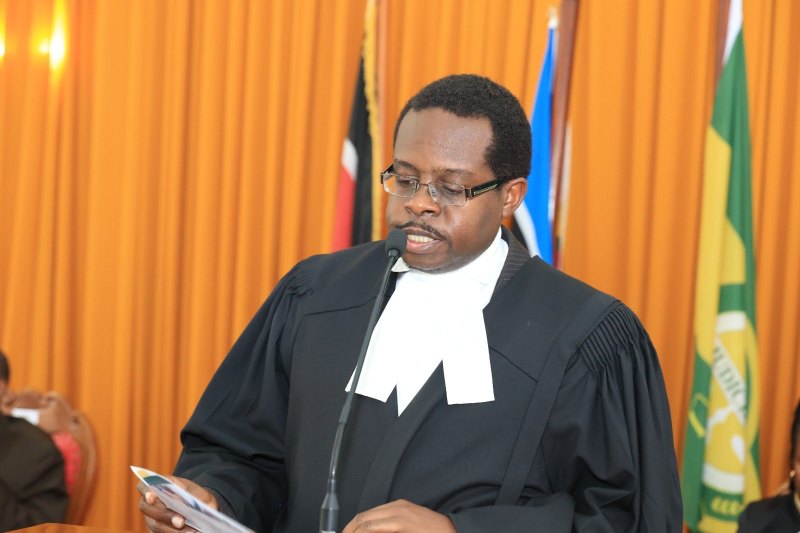
Law Society of Kenya (LSK) President Charles Kanjama has proposed what he described as a constitutional roadmap for policing demonstrations, urging security agencies to facilitate peaceful protests while maintaining public order instead of resorting to citywide lockdowns that disrupt businesses and transport.
Speaking on KTN on Thursday night, Kanjama said police should shift from pre-emptive city lockdowns to facilitating peaceful demonstrations, arguing that the Constitution already provides a framework for balancing public order with fundamental freedoms.
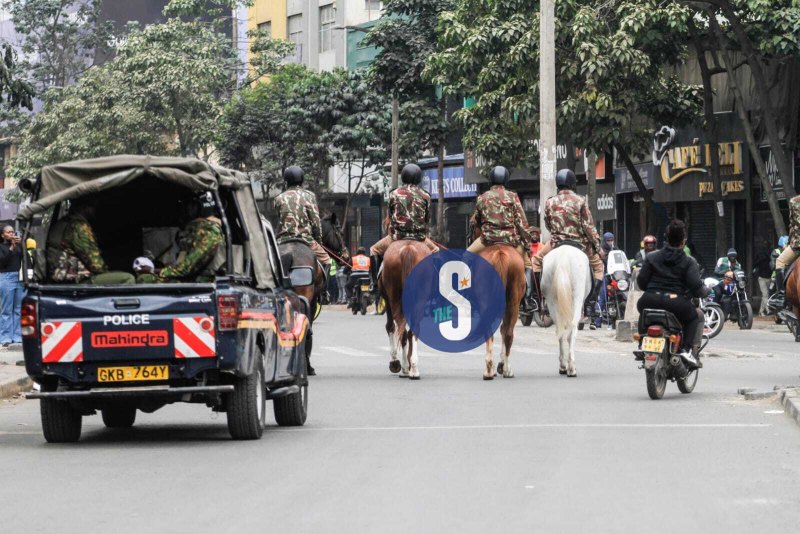
His remarks came after major roads leading into Nairobi's Central Business District were barricaded during the June 25 memorial protests, disrupting transport, forcing many businesses to remain closed and limiting access to parts of the city.
Kanjama said the starting point for future policing of protests should be strict adherence to Article 37 of the Constitution.
"Article 37 talks about four rights. It says people have the right to assemble, to demonstrate, to picket and to present petitions, all peaceably and unarmed," he said.
He explained that police should facilitate those rights instead of treating demonstrations as security threats from the outset.
According to Kanjama, citizens must be allowed to gather, march peacefully and deliver petitions to public institutions without unnecessary interference, provided they remain peaceful and unarmed.
As part of his proposed roadmap, Kanjama said police should only intervene where there is actual disorder during a protest rather than acting in anticipation of violence.
"The Constitution then gives the police the responsibility of securing law and order. If they notice disorder has arisen in the course of a protest, they have a right to intervene," he said.
He added that any intervention must comply with the law and should rely on proportionate force rather than blanket crackdowns.
Police officers, he said, should remain identifiable by wearing official uniforms, avoid concealing their identities and issue clear warnings before dispersing protesters where peace has genuinely broken down.
Kanjama also urged security agencies to distinguish between peaceful demonstrators and criminal elements who infiltrate protests.
He acknowledged that goons sometimes exploit demonstrations to commit crimes, but argued that police should isolate and deal with those individuals instead of treating entire protests as unlawful gatherings.
"One of the issues that has really impacted the ability to peacefully protest is the question of goons, sometimes who infiltrate peaceful protests with their own agenda and then create the excuse or the trigger for the police to intervene," he said.
He further proposed that police abandon blanket road closures and city lockdowns, saying such measures undermine constitutional freedoms and inconvenience millions of Kenyans who have no connection to protests.
"We've noticed that on some occasions, whether it is genuine anticipation or just fearful anticipation of protest, the police lock down the city, which is again contrary to court orders that have been issued before," Kanjama said.
He argued that Kenya's challenge has not been a lack of legal provisions governing protests but the failure to balance law enforcement with constitutional rights.
"So that balance between the need to keep peace and the need to allow people the right to protest, that is where we have been failing," he said.
Kanjama maintained that if police facilitated peaceful assemblies, intervened only where violence occurred, used proportionate force, identified themselves during operations, targeted criminal infiltrators instead of peaceful protesters and avoided blanket lockdowns, the country could protect both public order and the constitutional right to demonstrate without paralysing cities.