
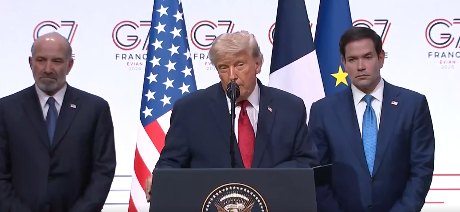
US President Donald Trump has said that the United States has provided USD 375 million (approximately Sh48 billion) to support Ebola response efforts in Africa.
The US President described the role as central in global containment operations.
Trump said the funding was directed toward managing outbreaks of Ebola virus disease, including quarantine measures and targeted containment of affected populations.
“A couple of Presidents came over from African nations, and they were so happy with what we did. We gave 375 million USD towards the Ebola response, and the rest of the world gave nothing essentially,” he said.
Trump added that the assistance was used to strengthen isolation and movement control measures in affected areas as part of efforts to curb transmission.
“We have done a good job, it is a terrible thing, it’s an unbelievable one. Fortunately, it’s not like COVID was that easy to spread around, but it’s awful. We have done a good job of moving people to certain quarantines, certain locations,” he said.
He said the US had taken a leading role in financing and coordinating parts of the response, suggesting that contributions from other global actors had been limited in comparison.
On June 11, the US announced an additional $20 million (about Sh2.59 billion) to strengthen Ebola preparedness efforts in Kenya and three other countries neighbouring the current outbreak zone.
The U.S. Department of State said the funding will support preparedness activities in Kenya, Burundi, Rwanda and South Sudan as part of efforts to prevent the spread of Ebola beyond affected areas in the region.
The new allocation brings the Department of State's direct funding for Ebola response and preparedness activities to more than $220 million.
"Today, the Department is announcing $20 million in additional funding toward the Department's ongoing Ebola response and preparedness efforts," the statement said.
According to the U.S. government, the funding will help countries strengthen national emergency operations centres, enhance disease surveillance and testing, improve border screening systems and infection-prevention measures, and procure critical medical supplies to respond to potential Ebola cases.
The U.S., working alongside the governments of the Democratic Republic of the Congo, Uganda and other regional partners, continues efforts to contain the outbreak.
The Department of State noted that the additional funding is separate from the $350 million already committed for Ebola response and humanitarian assistance in the DRC, South Sudan and Uganda as part of a broader $1.8 billion package announced in May.
For Kenya and other neighbouring countries, preparedness measures supported by the funding include strengthening surveillance systems, laboratory testing capacity, border screening and emergency response mechanisms to enable rapid detection and containment of any imported cases.
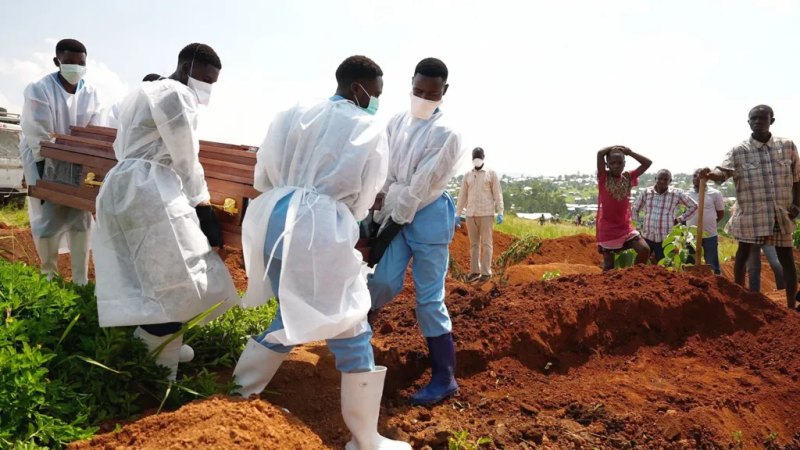
The statement also highlighted ongoing response efforts in the DRC, where U.S.-funded partners are supporting contact tracing, safe and dignified burials, public awareness campaigns, treatment centres and laboratory services.
Among recent interventions, the United Nations Children's Fund delivered 150 metric tonnes of water, sanitation, and infection-prevention supplies to health facilities in Bunia, while the International Organisation for Migration deployed a mobile laboratory to Beni to expand diagnostic capacity.
Ebola is a rare but potentially fatal virus that mainly spreads through direct contact with the bodily fluids – such as blood, faeces and vomit – of an infected person.
Early symptoms of Ebola include sore throat, headaches, fever, fatigue and body pain. Severe Ebola cases can cause skin rashes, shortness of breath, vomiting, diarrhoea, abdominal pain and seizures.