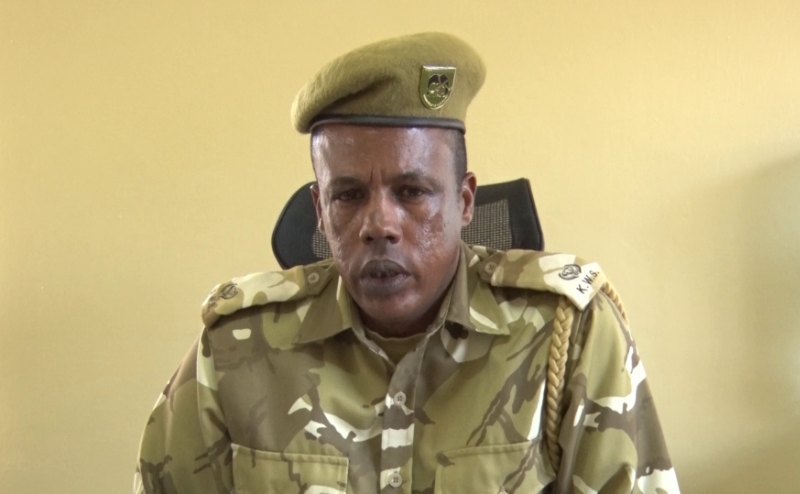

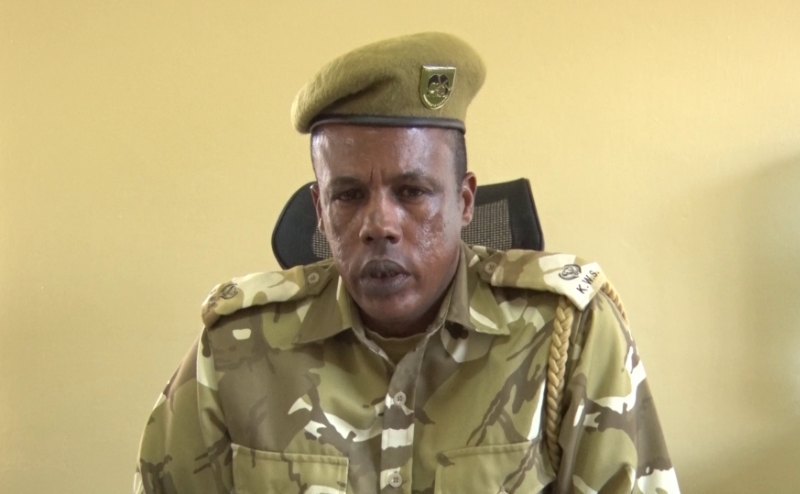
 Garissa County KWS Warden Aden Jelle speaking to the
press in his Garissa office. /STEPHEN ASTARIKO
Garissa County KWS Warden Aden Jelle speaking to the
press in his Garissa office. /STEPHEN ASTARIKO
Three suspects were arrested on Thursday by the Kenya Wildlife Service (KWS) officers in Dagahaley, Dadaab Subcounty, in connection with alleged illegal wildlife poaching and the transportation of bush meat.
The suspects, whom KWS identified as refugees of Somali origin residing in Dagahaley Refugee Camp, were apprehended during an intelligence-led operation conducted by wildlife officers in the area.
Speaking to the press, Garissa County KWS Warden Aden Jelle said the suspects were found transporting wildlife trophies consisting of 23 dik-dik carcasses and two antelope carcasses weighing approximately 200 kilogrammes.
"We wish to inform the public that yesterday evening we managed to apprehend three suspects of Somali origin from Dagahaley Refugee Camp in possession of wildlife trophies," Jelle said.
According to the warden, the consignment was destined for the refugee camp before it was intercepted by KWS officers.
Jelle expressed concern over what he described as increasing pressure on wildlife resources in Garissa County, attributing part of the challenge to illegal bush meat trade activities linked to refugee settlements.
"The refugees are becoming a menace to our natural heritage and resources. There is a lot of pressure from the refugee camps," he said.
He noted that KWS, working jointly with other security and enforcement agencies, has intensified patrols, intelligence gathering, and community engagement initiatives aimed at curbing wildlife poaching and dismantling networks involved in the illegal bush meat trade.
"Through intelligence-led operations and community engagements, we are working to apprehend suspects and dismantle the entire value chain involved in illegal bush meat poaching in Garissa County," Jelle said.
The KWS official further raised concerns about a rise in cases of an unidentified fever in Garissa county, which some residents have associated with dengue fever or chikungunya.
However, he said KWS suspects the illnesses could be linked to
zoonotic diseases transmitted through the handling and consumption of bush
meat.
He urged
residents to avoid consuming bush meat, warning that the practice poses serious
health risks and could have wider security implications.
"The
consumption of bush meat and poaching is harmful to people's health and has an
effect on national security," he said.
Jelle
vowed that KWS would pursue all individuals involved in the illegal wildlife
trade, including those behind cross-border trafficking networks.
"We
are not going to leave any stone unturned until we dismantle the entire
cartel," he said.
According
to KWS records, more than 21 suspects have been arrested in the last three
months while in possession of assorted wildlife trophies.
During the
same period, the agency conducted over 28 community outreach programmes and
school-based awareness campaigns to educate residents about the dangers of
wildlife poaching and bush meat consumption.
"We
want the people of Garissa to be aware that whatever they are consuming,
whether bought from local outlets or elsewhere, could be a product of bush
meat, and they should stop immediately," Jelle warned.
The latest
arrests come amid growing concerns over wildlife poaching in Garissa County.
Speaking
during World Tourism Day celebrations last year at the Bour-Algy Giraffe Centre
in Garissa Township, Garissa Governor Nathif Jama lamented the increasing cases
of poaching, saying the trend was threatening the county's already limited
wildlife population.
"We
are greatly concerned as a county and as a leadership that poaching has
increased tremendously," Jama said at the time.
"We
do not have the privilege of a large number of wildlife in our county, and the
little that we have is being depleted courtesy of poaching."
The governor also called on the national government and KWS to strengthen support for wildlife conservation efforts in the county, citing inadequate resources and capacity at local KWS offices.
"The
reality is that the KWS offices in the county do not have the necessary
resources or support to act. We therefore want the national government to come
on board and give us our rightful share as a county in terms of protecting our
wildlife," Jama said.
The three suspects are expected to be arraigned in court as investigations continue.
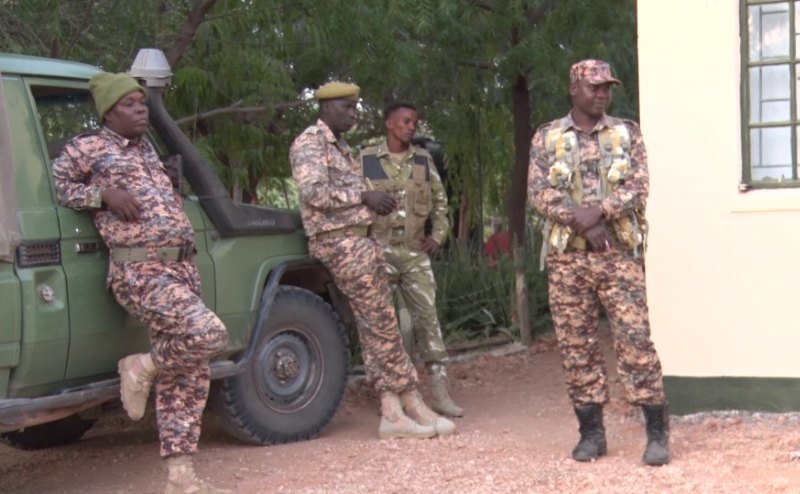 KWS officials/STEPHEN
ASTARIKO
KWS officials/STEPHEN
ASTARIKO
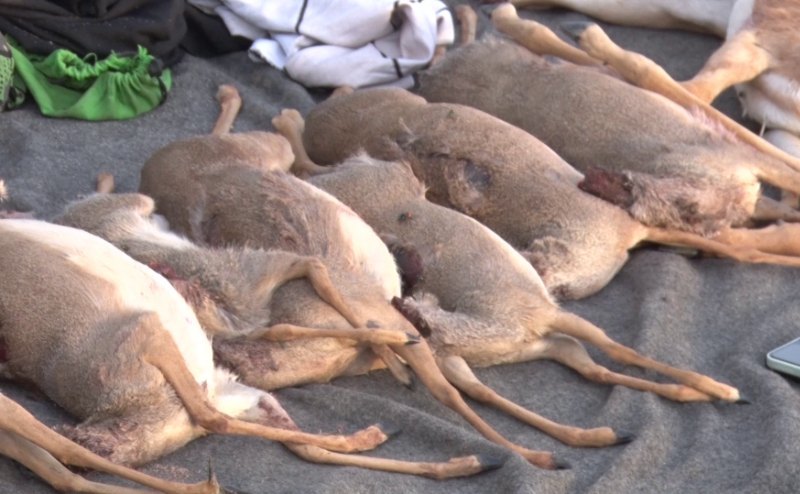 Carcasses of wildlife meat/STEPHEN ASTARIKO