
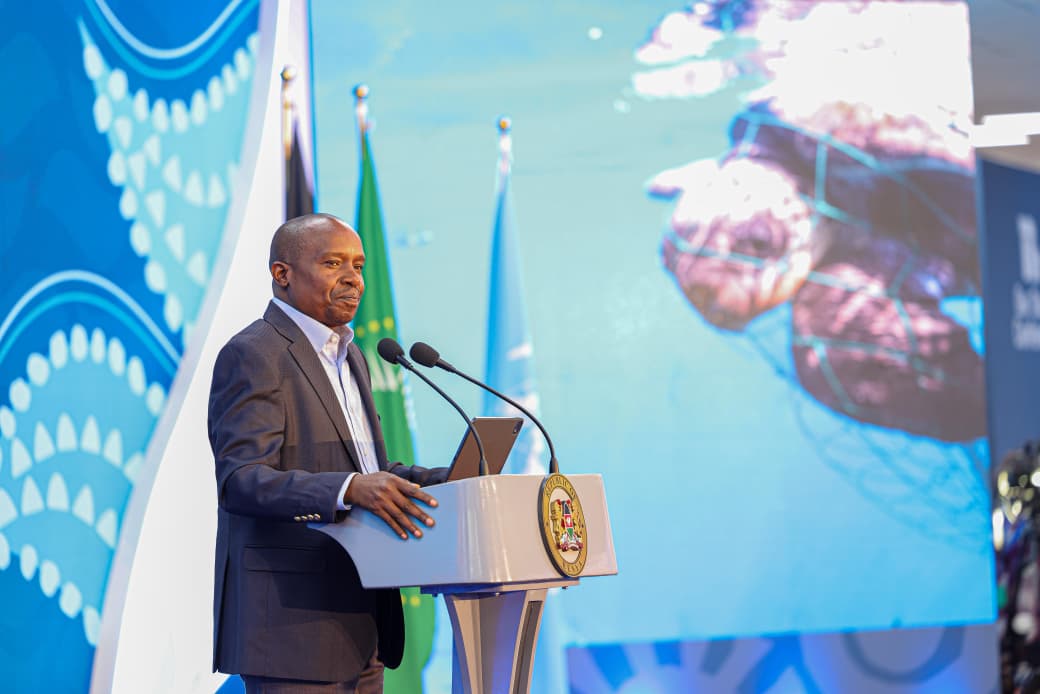
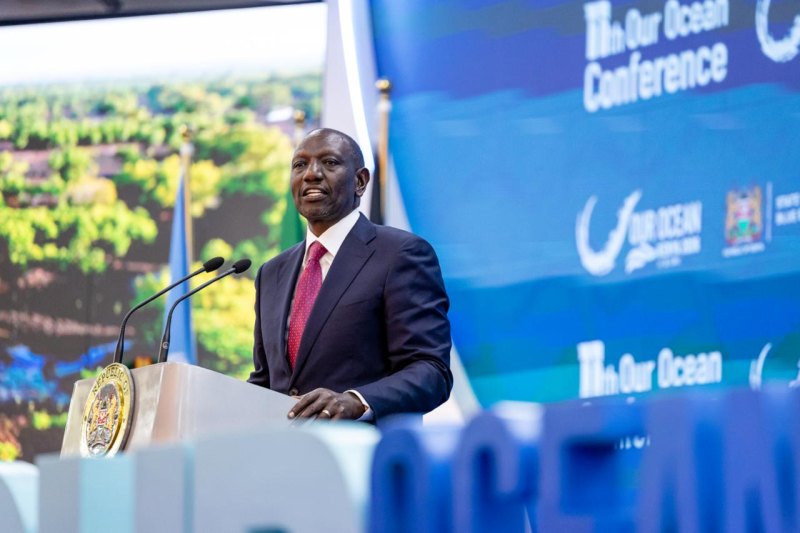
President William Ruto has called on nations to intensify efforts to protect the ocean.
The Head of State warned that political promises alone will not be enough to address the growing environmental and economic threats facing marine ecosystems.
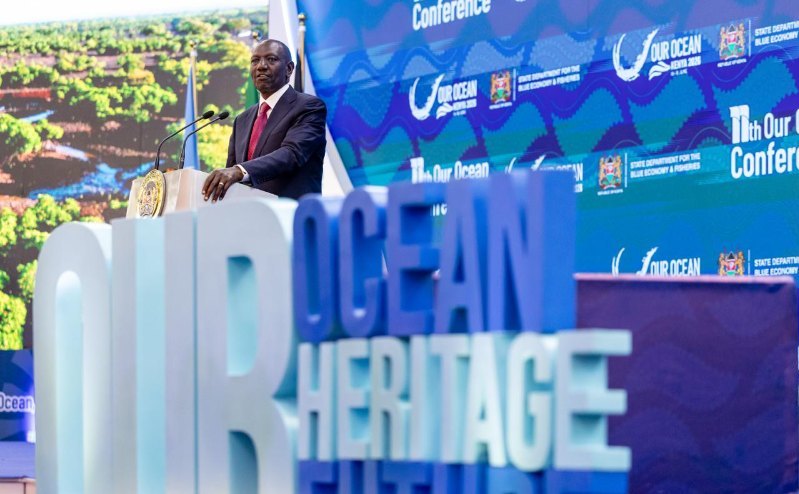
Speaking during the 11th edition of the Our Ocean Conference
in Mombasa, which brought together more than 6,000 delegates from 56 countries,
Ruto urged governments, development partners and private sector players to
accelerate investments, innovation and cooperation in safeguarding the world's
oceans.
Ruto said the global community must move beyond declarations and commit resources necessary to implement ocean conservation initiatives.
“Commitments without the means to deliver them will never match the urgency or the scale of what the ocean now demands of us,” he said.
The President stressed that countries must work together to unlock financing, embrace technology and strengthen governance frameworks to ensure meaningful progress.
“We must find new and bolder ways to mobilise finance, deploy technology and innovation, build capacity, and make our existing ocean frameworks work together rather than apart,” he said.
Ruto noted that while the ocean has played a critical role in cushioning humanity from the worst effects of climate change, its capacity to absorb environmental shocks is being stretched to the limit.
“The ocean faces significant, and in many respects, unprecedented challenges. By absorbing 90 per cent of the excess heat trapped by greenhouse gases, and almost a third of our carbon dioxide emissions, it has quietly altered its own chemistry and physics to shield the rest of us,” he said.
“But the ocean can absorb only so much. And now it is pushing back.”
The Head of State pointed to rising sea levels, ocean acidification, stronger storms and widespread marine pollution as evidence of the mounting pressure on marine ecosystems and coastal communities.
“Rising seas are displacing millions in low-lying coasts and islands. Acidifying waters are corroding the base of the marine food chain and the livelihoods built upon it,” he said.
He added that marine pollution, particularly plastic waste, had become a global crisis affecting ecosystems from coastal waters to the deepest parts of the ocean.
According to Ruto, efforts to address these challenges have been hampered by weak political commitment, inadequate financing, slow adoption of technology and fragmented governance systems.
“For too long, our response has been held back by weak political will, inadequate finance, the slow deployment of technology and innovation, limited capacity, and governance that is fragmented, weakly regulated and poorly enforced,” he said.
The President welcomed recent international milestones aimed at strengthening ocean protection, including the implementation of the High Seas Treaty and the World Trade Organisation Agreement on Fisheries Subsidies.
He said the agreements provide an important framework for conserving marine biodiversity and promoting sustainable use of ocean resources.
Ruto also hailed the commitments made during the conference, revealing that participants had registered more than 300 new commitments valued at approximately $6.4 billion.
“Together, you have registered over 300 new commitments, with a combined value of about $6.4 billion. Kenya alone has made 50 commitments, valued at $1.1 billion, in support of our blue economy,” he said.
He noted that if fully implemented, the commitments would help expand marine protected areas, restore fisheries, reduce pollution, strengthen maritime security and build sustainable blue economies.
Ruto said Kenya remains committed to a model of development that balances conservation with economic growth through offshore renewable energy, sustainable fisheries, circular economies and inclusive Sustainable Ocean Plans.
He urged delegates to ensure that the commitments announced in Mombasa translate into measurable action that protects marine ecosystems while creating opportunities for communities that depend on the ocean for their livelihoods.
“The future of our ocean depends not on what we promise
today, but on what we deliver tomorrow,” he said, calling for collective
responsibility in securing the health and sustainability of the world's oceans
for future generations.