
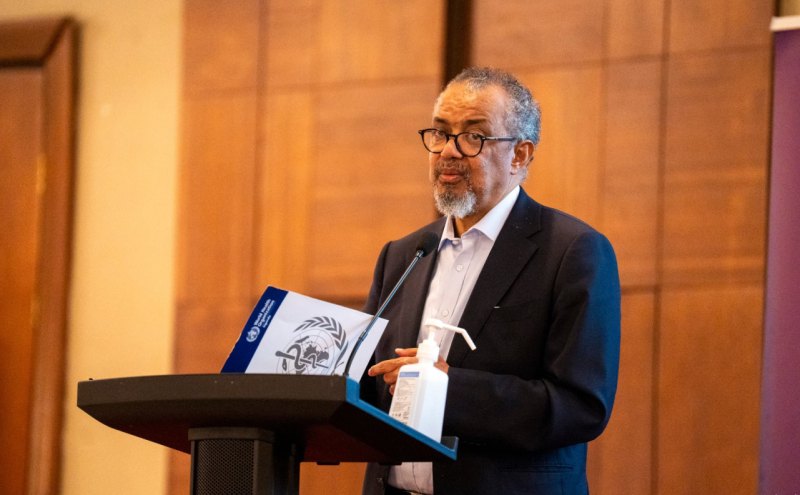
 The WHO Director-General, Dr Tedros Adhanom Ghebreyesus/ HANDOUT
Global leaders have been urged to fast-track negotiations on the final component of the WHO Pandemic Agreement.
Brazilian President Luiz Inácio Lula da Silva and WHO Director-General Dr Tedros Adhanom Ghebreyesus have called for urgent political commitment to conclude negotiations on the Pathogen Access and Benefit-Sharing (PABS) annex, the final outstanding element of the WHO Pandemic Agreement, before talks resume on July 6–17.
The message, addressed to the G7, G20, BRICS, and all nations, states that the annex is the final piece required for the agreement to enter into force.
“The world must finish what it started,” the statement reads, grounding the appeal in the experience of the COVID-19 pandemic, which caused an estimated 20 million deaths globally and exposed major gaps in international health response systems.
At the centre of the negotiations is the PABS system, which is intended to govern how countries share pathogen samples and genetic information, and how they receive access to vaccines, diagnostics, and treatments developed from that data.
The statement stresses that without a finalised framework, the world will remain dependent on fragmented, case-by-case arrangements during outbreaks — a system that slows response time and deepens inequalities in access to life-saving tools.
A key focus of the message is equity. It describes the proposed system as a “simple, fair bargain,” stating that countries sharing pathogen data must be guaranteed timely access to the benefits that result from it.
The statement also calls for stronger political leadership to resolve remaining gaps, saying negotiators require “the clear signal that only a head of government can give” in order to conclude the agreement during the upcoming round of talks.
It further addresses concerns over national sovereignty, emphasising that the Pandemic Agreement does not grant the World Health Organization authority over domestic decisions such as lockdowns, travel restrictions, or vaccination mandates.
Instead, it frames the urgency of the annex against growing global risks, warning that the likelihood of another pandemic in the coming decade remains significant due to climate change, environmental disruption, and advances in biotechnology.
“The next pandemic will not wait for us,” the statement warns, urging governments to treat the July negotiations as a decisive deadline rather than another step in a prolonged process.
The message also highlights the economic cost of COVID-19, estimated by the International Monetary Fund at more than $13 trillion in global losses, alongside ongoing outbreaks such as Ebola that continue to strain health systems in affected regions.
It situates the agreement within a wider history of global health cooperation, referencing milestones such as the eradication of smallpox and major progress in the fight against polio, HIV, tuberculosis, and malaria.
“Finishing this Agreement is not a departure from that legacy,” the statement reads. “It is its natural next chapter.”
Negotiators are expected to reconvene in July, with the PABS annex remaining the final unresolved element required for the Pandemic Agreement to take effect.