

Divorce, family disputes and poor succession planning have emerged as the key threats to the transfer of wealth among Kenya's family-owned businesses.
This in now raising concerns over the survival of some of business enterprises as the country enters what experts describe as its largest intergenerational wealth transition.
Lack of proper succession structures has seen an escalation in feuds with Standard Chartered Family Office report showing that three-quarters of family office professionals have reported rising family tensions linked to generational change
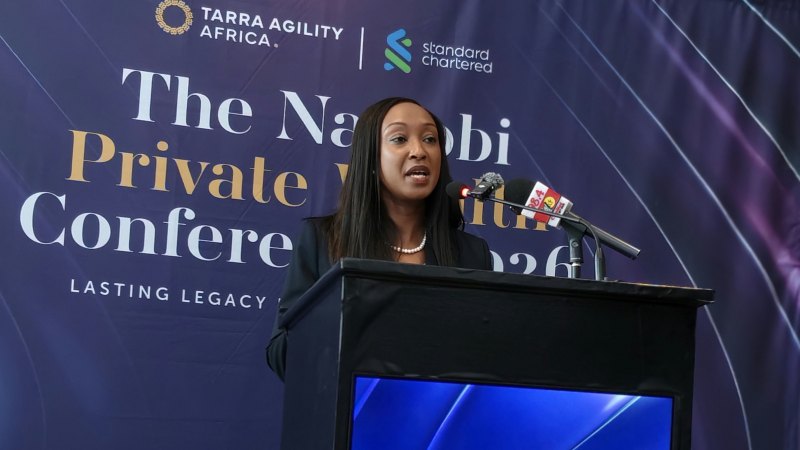
Speakers at the Nairobi Private Wealth Conference 2026 cautioned that many family businesses remain vulnerable as founders continue to prioritise wealth creation while postponing difficult conversations on governance, succession and ownership until crises such as death, illness or divorce arise.
Tarra Agility
Africa, partner and head of private wealth Marjorie Kivuva, said divorce has
become one of the most disruptive risks facing family enterprises, particularly
where business and personal assets have not been legally separated.
"We have seen that divorce is a major disruption of family business continuity. Where personal assets and business assets have not been separated, the family business may end up grinding to a halt," she said.
According to
Kivuva, divorcing spouses often become unable to jointly approve payments,
engage customers or settle business liabilities.
This leave family businesses struggling to withstand what she termed the "four Ds"—death, disability, disagreement and divorce.
arguing that many enterprises rely too heavily on founders instead of institutional governance structures.
"When a founder passes on without a legacy plan, disputes arise. Some businesses grind to a halt because bank mandates were personal, supplier relationships were not documented and customer lists remained with the founder," she said.
The warnings come as Kenya prepares for a significant transfer of wealth from the generation that accumulated assets after independence to their children and grandchildren.
According to conference organisers, Kenya has an estimated 6,800 to 7,200 dollar millionaires controlling about $90 billion (Sh11.56 trillion) in assets under management, much of which is now entering the succession phase.
Despite the growing pool of private wealth, experts noted that governance structures have failed to keep pace with wealth creation.
Globally, only
about 30 percent of family businesses survive into the second generation, while
barely 10 percent make it to the fourth generation.
In Africa, the risks are even greater because relatively few businesses establish governance and succession structures early.
Standard Chartered Kenya and East Africa head of affluent banking and wealth solutions Paul Njoki said many founders continue delaying succession planning until it is too late.
"The first and most significant wealth transfer since independence is happening now, yet many families remain unprepared. When founders exit, the next generation inherits substantial wealth and businesses but often lacks the structures and preparation to manage them."
Njoki said increasing family conflicts over wealth point the need for transparent governance, family constitutions and professionally managed businesses.
"The bottom line is that when money is involved, different stakeholders have different views. Without clear rules, transparency and communication, families begin to perceive favouritism, which creates unnecessary conflict," he said.
The experts are now calling on family-owned firms to separate ownership from management by appointing professional executives while allowing family members to exercise oversight through boards of directors.
Experts at the conference argued that legal instruments such as wills, trusts, holding companies and family constitutions should no longer be viewed as tools reserved for the ultra-wealthy but as essential safeguards for business continuity.
Partner for tax compliance and accounting at Tarra Agility Africa, Beatrice Njeri, said African families increasingly own businesses and investments across multiple jurisdictions, exposing them to overlapping legal, regulatory and tax obligations that require coordinated planning.
She noted that effective wealth transition requires integrating legal structures with tax governance while encouraging founders to involve family members in succession conversations before disputes arise.
The concerns mirror findings from Standard Chartered's latest Family Office research, cited during the conference, which found that nearly three-quarters of family office professionals have reported rising family tensions linked to market volatility, geopolitical uncertainty and generational change.
The study also found that 90 per cent believe stronger succession planning could save families millions during wealth transfers, while 87 percent said better planning of cross-border assets would significantly improve outcomes.