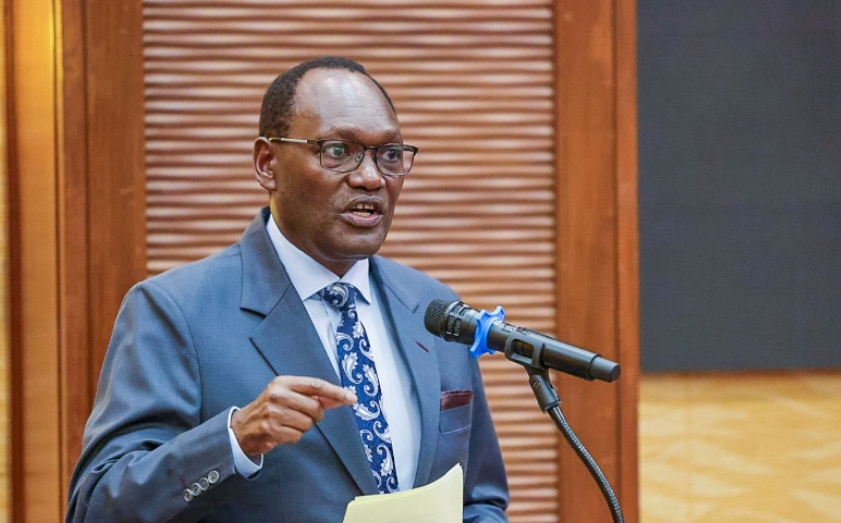

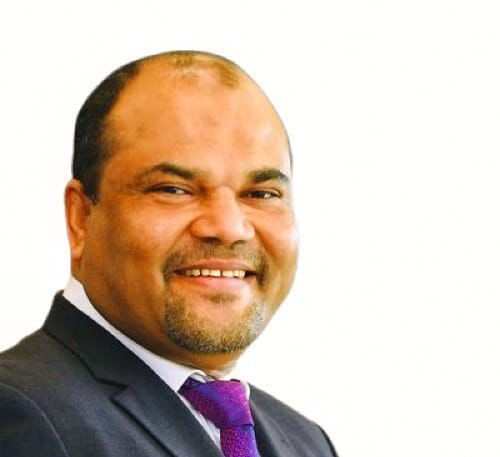
 State Department of Science, Research and Innovation PS Shaukat Abdulrazak
The inaugural Science, Technology, Research and Innovation for Society (STRI4Society) Week 2026 held in Nairobi marked a defining moment in Kenya’s journey toward becoming a knowledge-driven, innovation-led and globally competitive economy. The forum brought together government, academia, industry, innovators, development partners, investors, researchers, students and communities under one platform with one purpose: to bridge science and society for sustainable development and shared prosperity.
The vision behind STRI4Society Week was deliberate. For too long, science and research discussions have remained confined to laboratories, universities and policy spaces, yet the true value of science is realized only when it transforms lives, creates jobs, expands wealth and addresses societal challenges. STRI4Society was therefore crafted to socialise science, democratise innovation and ensure that research outcomes directly benefit society.
As Albert Einstein once observed, “Concern for humanity and its future must always form the chief interest of all technical endeavours.” This philosophy guided the week’s discussions and engagements.
The aspirations of President William Ruto’s administration under the Bottom-Up Economic Transformation Agenda (BETA) are deeply anchored in science, technology, research and innovation. Whether in affordable healthcare, food security, housing, digital transformation, manufacturing, energy transition or infrastructure modernization, science and innovation remain the foundation upon which Kenya’s future competitiveness will be built.
During the week, the Prime Cabinet Secretary, Dr. Musalia Mudavadi, emphasized that Kenya’s diplomacy today must increasingly be driven by knowledge, technology and strategic partnerships. He underscored the importance of science diplomacy in positioning Kenya not only as a political and economic leader in the region, but also as a continental hub for innovation, research collaboration and emerging technologies. His message strongly reinforced the reality that nations that lead in science and technology will shape global influence, economic resilience and sustainable development in the 21st century.
The Prime Cabinet Secretary further emphasized the need for stronger linkages between academia, industry and government in order to accelerate commercialization of research and development of home-grown solutions. He noted that Africa’s future prosperity will depend on its ability to transform knowledge into enterprise, innovation into industry and research into measurable socioeconomic impact.
Kenya’s ambition to become an upper middle-income and industrialized economy cannot be achieved without deliberate investment in research and development. Nations such as South Korea, Singapore and China transformed themselves through sustained investments in science, technology and innovation ecosystems. Kenya and Africa must pursue a similar pathway.
Today, Kenya is increasingly positioning itself as Africa’s technology and innovation hub. With over 60,000 kilometres of fibre optic infrastructure, a globally recognized mobile financial ecosystem, a growing startup culture, an expanding digital economy and strategic investments in AI and advanced computing infrastructure, Kenya is building the foundation for a modern knowledge economy. Nairobi is steadily emerging as a centre of convergence where government, academia, industry and innovators collaborate to develop African solutions for African challenges.
STRI4Society Week strongly demonstrated the importance of convergence and synergies. Agriculture today depends on biotechnology, climate science, AI and precision farming. Health systems increasingly rely on genomics, nuclear medicine, digital diagnostics and data science. Modern infrastructure requires smart technologies, advanced engineering and sustainable materials. Energy security now depends on innovation in renewables, nuclear science, battery technologies and smart grids. No single institution or sector can address these challenges alone.
During the week, engagement emphasized why partnerships are critical. Government alone cannot finance innovation transformation. Universities alone cannot commercialize research. Industry alone cannot solve societal challenges without science. We therefore need stronger public-private partnerships and a Quadruple Helix approach that brings together government, academia, industry and society. Out of more than 100 exhibitions, many are awaiting further support for scale-up and scale-out.
In the words of Louis Pasteur, “Science knows no country, because knowledge belongs to humanity.” This is particularly important for Africa as we strengthen science diplomacy, regional collaboration and technology partnerships.
I continue to re-emphasize the importance of innovation ecosystems, clusters and initiatives such as grand challenges. Countries that succeed in innovation deliberately create ecosystems that connect talent, infrastructure, financing and markets. Kenya must therefore strengthen clusters in priority sectors such as artificial intelligence, health technologies, agricultural biotechnology, blue economy, renewable energy and advanced manufacturing. Investments in innovation hubs, GPU clusters, research chairs, science parks and centres of excellence will be essential in accelerating commercialization and industrial growth. We will together implement this.
Equally important is science communication. Citizens must understand how research improves healthcare, food production, environmental sustainability and economic resilience. Young people must see science as a pathway to entrepreneurship and opportunity. Policymakers and investors must appreciate the return on investment in research funding. STRI4Society Week sought to bridge this gap by making science visible, accessible and impactful.
Carl Sagan once stated, “Science is a way of thinking much more than it is a body of knowledge.” Building a scientific culture within society is therefore essential for productivity, competitiveness and sustainable growth.
The future of Kenya’s economy will increasingly depend on innovation-driven enterprises capable of creating jobs, expanding exports and generating wealth. Research commercialization, startup development and technology transfer must therefore become national priorities supported through sustainable financing, monitoring and evaluation frameworks.
As STRI4Society Week 2026 concluded, one message stood out clearly: science, technology, research and innovation are not luxuries for developing countries — they are necessities for economic transformation, resilience and prosperity.
In my reflection during the week, one conviction remained firm: “A society that invests in science invests in its future; a nation that empowers innovators empowers generations.”
To fellow African nations, the message from Nairobi is clear: Africa possesses the talent, youthful population, natural resources and creativity required to become a global innovation powerhouse. By investing in science, technology, research and innovation, Africa can move from being a consumer of technology to becoming a producer of knowledge, solutions and prosperity for its people and for the world.
We must believe in ourselves and believe it is possible.
Thank you all for making it a successful week.
____
Author: PS, State Department of Science, Research and Innovation. Email: [email protected]