
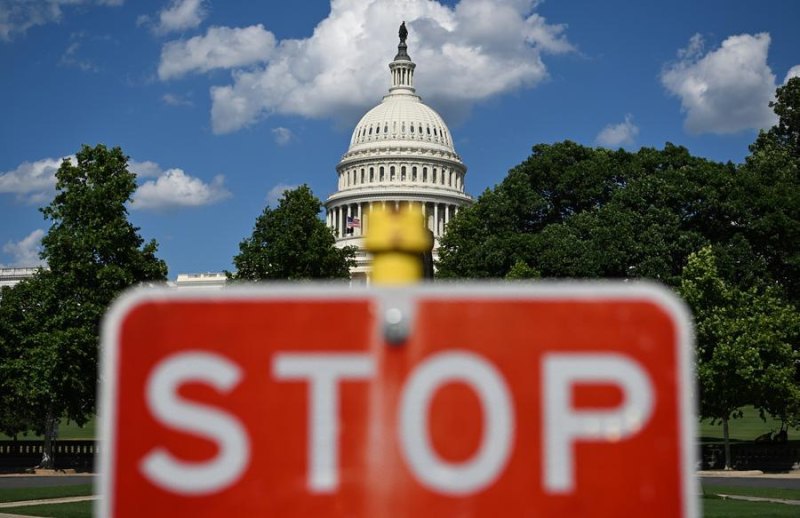
 This photo taken on June 7, 2026 shows a stop sign with the U.S. Capitol building in the background in Washington, D.C., the United States. (Xinhua/Li Rui)
Senior U.S. and Iranian delegations are gathering for talks in Switzerland on Sunday for what could prove to be a decisive phase in transforming the U.S.-Iran memorandum of understanding (MoU) into a broader political settlement.
Analysts say the talks may serve as an early test of whether both sides are willing to move beyond a ceasefire framework toward more substantive political and security arrangements.
WHO WILL ATTEND
Delegations from Iran and the United States were initially scheduled to meet in Switzerland on Friday, but the meeting was canceled and rescheduled for Sunday.
Despite the postponement, delegations from both countries have arrived in Buergenstock, Switzerland, for initial negotiations on implementing the MoU signed earlier this week to end their nearly four-month war.
Iran's negotiating team, headed by Parliament Speaker Mohammad Baqer Qalibaf, arrived in Switzerland Saturday night for talks with the U.S. delegation, state-run IRIB news agency said Sunday.
The delegation also comprises Foreign Minister Seyed Abbas Araghchi, Foreign Ministry spokesman Esmaeil Baghaei, Deputy Secretary of the Supreme National Security Council Ali Bagheri Kani, Governor of the Central Bank of Iran Abdolnaser Hemmati, and some deputy ministers, the IRIB said.
Observers say the composition of the Iranian delegation underscored that sanctions relief and economic recovery remain central to Tehran's calculations.
"We welcome the arrival of the Iranian delegation in Switzerland," the Swiss Foreign Ministry said on X.
U.S. Vice President JD Vance departed Washington for Switzerland on Saturday for talks with Iran. He joined U.S. presidential envoy Steve Witkoff and U.S. President Donald Trump's son-in-law Jared Kushner, who had already arrived in Switzerland for talks with Iran.
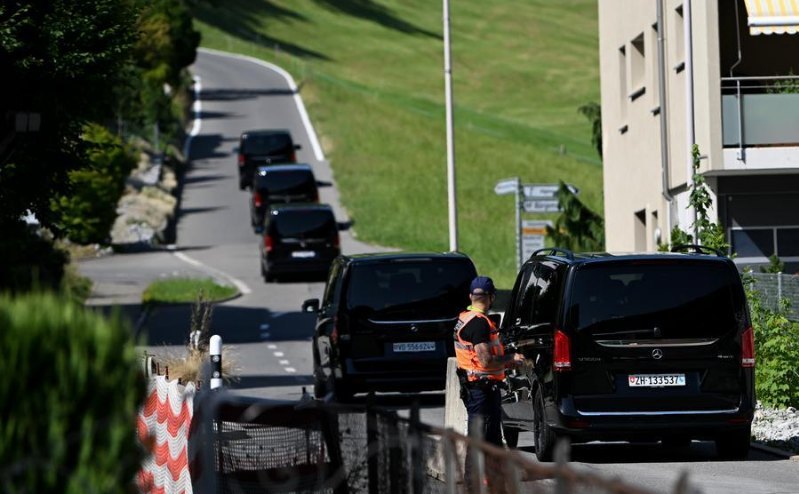 A police officer stands guard at the entrance to the road leading to a hotel complex in Burgenstock near Lucerne, Switzerland, June 20, 2026. (Xinhua/Lian Yi)
Pakistani Prime Minister Shehbaz Sharif has also arrived in Switzerland to participate in technical-level talks as a follow-up to the recently signed U.S.-Iran MoU.
Yet events unfolding alongside the diplomatic effort underscore how precarious the process remains.
DIVERGING GOALS
On the Iranian side, Baghaei said the trip is in fact aimed at demanding the fulfillment of U.S. commitments under the MoU.
In an interview with the state-run IRIB TV, Baghaei said negotiations on a final agreement start when the United States begins and continues implementing the MoU's provisions, which is not the case at present.
Baghaei emphasized that the Iranian delegation intends to seek clarification from the other side on how it plans to fulfill its commitments under the MoU.
He said Iran has been committed to its obligations under the agreement, adding the United States had undertaken to make Israel stop its attacks against Lebanon, "but we are witnessing that the other side has not fulfilled its duties, and this is considered a clear violation of the ceasefire MoU."
On the U.S. side, Vance framed the talks around two immediate priorities: Iran's nuclear program and stabilizing Lebanon.
"I think we're going to hopefully make progress on the nuclear issue, make progress on the Lebanon ceasefire issue," Vance told reporters before his departure. "Those are the two big things that I think we're to be focused on."
According to Israel's Channel 12, the initial U.S. goal in the Switzerland talks is to secure an agreement from Iran to allow International Atomic Energy Agency inspectors to inspect its nuclear sites for the first time since the 12-day war in June 2025.
In return for Iran's consent to allow inspectors back into the sites, the United States is willing to unfreeze several billion dollars in Iranian assets held in Qatar, the report said, with those funds to be used by the Iranian government on purchasing food, medicines and other humanitarian necessities.
STICKING POINTS REMAIN
The U.S.-Iran MoU means that "both parties have concluded that continued confrontation is too costly and that a transition toward testing political intentions is necessary," said Khaled Al-Hroub, a professor of political science and international conflicts at Northwestern University in Qatar.
Despite the concessions, analysts note that the agreement neither addresses the entrenched differences between the United States and Iran nor lays out a clear path for resolving them.
As the delegations are in Switzerland for talks, competing narratives over the Strait of Hormuz and reports of continued Israeli strikes in southern Lebanon further clouded the already fragile outlook for the negotiations.
Iran's main military command, Khatam al-Anbiya Central Headquarters, announced Saturday the closure of the Strait of Hormuz, citing a U.S. breach of the newly-signed peace MoU and Israeli ceasefire violations in southern Lebanon, Iran's semi-official Mehr news agency reported.
The Islamic Revolution Guard Corps Navy warned all vessels against approaching the Strait of Hormuz, saying their security could be endangered if they ignored the warning.
However, U.S. Central Command said that the Strait of Hormuz remained open, with increasing commercial ship traffic through the waterway.
"Safe passage through the international waterway remained intact today as 55 merchant ships transited, moving large amounts of cargo and more than 17 million barrels of oil to global markets," the command said in a statement.
"U.S. forces remain present and vigilant to ensure all aspects of the agreement with Iran are adhered to, obeyed, and in full force and effect," the statement said.
Vance told Fox News on Saturday that the United States is "not seeing any evidence that the Iranians are still closing down the Strait of Hormuz."
Trump, in a social media post on Saturday, said that no tolls would be charged in the Strait of Hormuz during the 60-day interim ceasefire with Iran or after the period expires.
However, Trump left open the possibility of a Hormuz toll levied by the United States "for services rendered as the Guardian Angel to the countries of the Middle East" if a peace deal is not completed.
Mohammad Mokhber, an adviser to Iranian Supreme Leader Mojtaba Khamenei, said that as long as the agreement remains just on paper, the flow of Middle East energy would remain halted, according to his post on X.
Furthermore, analysts point to Israel as a major wild card. An emergency session on Lebanon has been added to the talks in Switzerland and will be the first topic addressed, a diplomat briefed on the session told CNN on Sunday.
Israel is not a direct party to the MoU, but its strategic calculations will influence the prospect for a final agreement, said Abdul Majid Suwailim, a Ramallah-based political analyst.
At least 16 people were killed in Israeli airstrikes in Lebanon on Saturday, said the Lebanese Civil Defense, hours after a ceasefire agreement between Lebanon and Israel took effect.
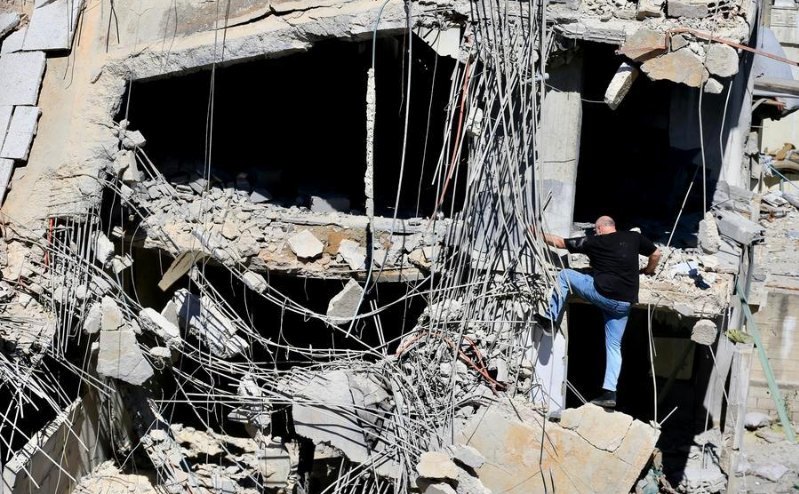
Moreover, the cumulative death toll from Israeli attacks on Lebanon since March 2 has risen to 4,057, with 12,121 people wounded, the Lebanese Health Ministry's Public Health Emergency Operations Center said.
An Israeli military official told media that Hezbollah fired more than 50 projectiles at Israeli forces in southern Lebanon overnight. In response, Israeli forces struck what the official described as "Hezbollah targets."
"The sticking point is Lebanon, the sticking point is Israel," said Victor J. Willi, executive director of the Middle East Institute Switzerland.
Tehran is now effectively testing whether Washington is willing -- and able -- to restrain Israeli military operations enough to preserve the wider peace framework, Willi told Radio Free Europe/Radio Liberty, a U.S. government-funded media organisation.

![[PHOTOS] Uhuru graces commissioning mass of Catholic Women](https://cdn.radioafrica.digital/image/2026/06/0bbd7e96-f180-4e02-966f-97c3fb201478.jpg)