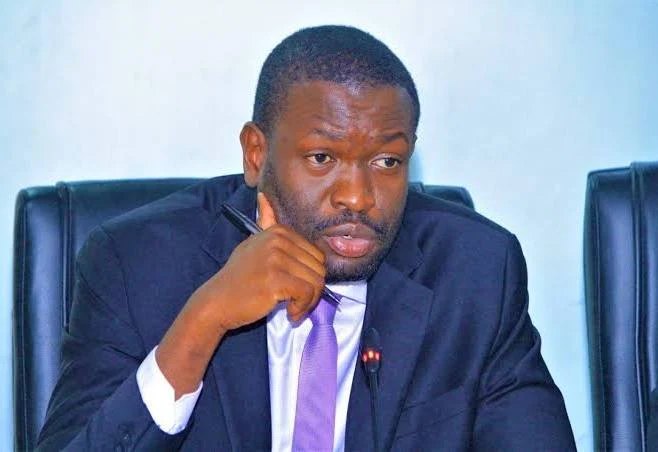
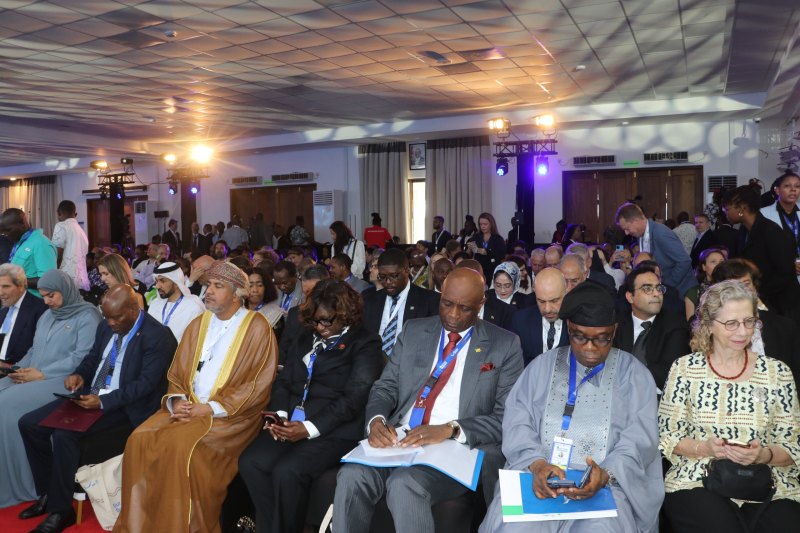
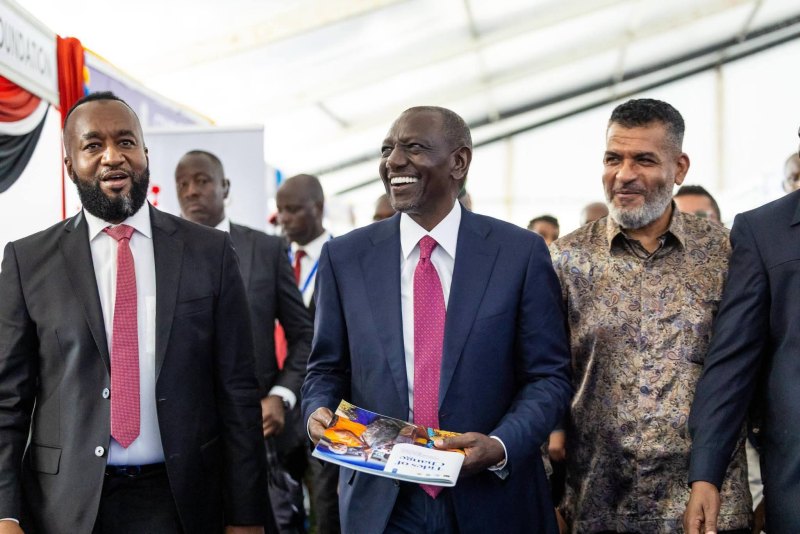
 President William Ruto with Blue Economy CS Hassan Joho (left) and Mombasa Governor Abdullswamad Nassir
during Our Ocean Conference /HANDOUT
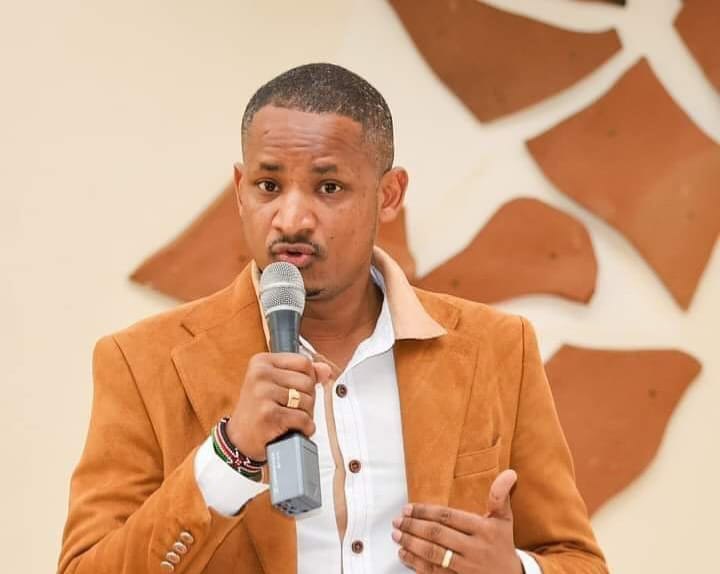
President William Ruto with Blue Economy CS Hassan Joho (left) and Mombasa Governor Abdullswamad Nassir
during Our Ocean Conference /HANDOUT
The government has committed to invest Sh142 billion in the blue economy as part of efforts to unlock opportunities in the sector.
President William Ruto on Thursday announced that Kenya will fully implement 40 commitments it made during the 11th edition of the Blue Economy Conference.
“Kenya alone has made 40 commitments valued at $1.1 billion in support of our blue economy,” Ruto said, adding that the country is keen to tap opportunities provided by the sector.
Ruto said his administration made a deliberate decision three years ago after finding that the blue economy — oceans and waters — was not contributing significantly to growth or to the progress of the nation.
“I took the decision that I am going to have a dedicated blue economy and fisheries state department. As a result, in the last three years, we have invested Sh20.3 billion in our blue economy and fisheries ecosystem.”
Ruto said the country has completed three fish landing sites as part of plans to unlock the sector’s potential.
“We have another five under construction at the Indian Ocean coast and 10 in Lake Victoria for a total of 15 fish landing sites that are going on in markets at a cost of Sh2.8 billion.”
Ruto said he did break ground for the construction of Shimoni Fish Port two years ago and that it is now complete.
“We are now looking for an operator at a cost of Sh2.6 billion.”
He said two centres of excellence for aquaculture have been built.
One of the centres is in Kisumu while the other is in Kwale, both at a cost of Sh2.5 billion and at the final stages of completion.
Ruto said the government bought patrol, research and rescue boats at a cost of Sh1.4 billion and that they have already been made available to communities.
Community boats have also been provided, he said.
He said 86,000 community members have been given Sh3.3 billion.
“We have invested another Sh3 billion to a maritime center that will be used for information gathering and research that is going to assist our fishery and blue economy ecosystem,” Ruto said.
Ruto said the ocean faces significant and unprecedented challenges.
“By absorbing 90 per centof excess heat trapped by greenhouse gases and almost a third of our carbon dioxide emissions, it has quietly altered its own chemistry and physics to shield the rest of us from harm.”
Ruto said oceans can absorb only so much, and now is pushing back.
He said rising seas are displacing millions in low-lying coasts and islands, while acidifying waters are corroding the base of the marine food chain and livelihoods.
He said stronger storms, marine heat waves, storm surges and coastal flooding are destroying infrastructure and straining communities.
“Marine pollution, above all plastics, is reaching the deepest trenches and affecting even the smallest fish. For too long, our response has been held back by weak political will, inadequate finance, the slow deployment of technology and innovation, limited capacity and governance that is fragmented, weakly regulated and poorly enforced.”
Ruto said human ingenuity has always risen in moments of difficulty, turning hardship into opportunity.
He said in the past years, two landmark agreements have given it force.
“The High Seas Treaty entered into force last January, becoming the first legal framework to protect biodiversity across the nearly two-thirds of the ocean that belongs to no single nation.”
Ruto at the same time urged world leaders to move beyond pledges and take decisive action to safeguard the future of global oceans.
He said there is a need to find new and bolder ways to mobilise finance, deploy technology and innovation, build capacity, and make the existing ocean frameworks work.
“The cost of protecting the ocean cannot keep falling on those who did the least to harm it.”
Ruto said the G7 meeting he attended in France to consolidated partnership that are mutually beneficial.
“We will reject any extractive engagement. Going forward, it is going to be investments that create jobs, that create value, and that makes everybody a winner by creating a win-win outcome.”
Ruto said Africa must be treated equally.