
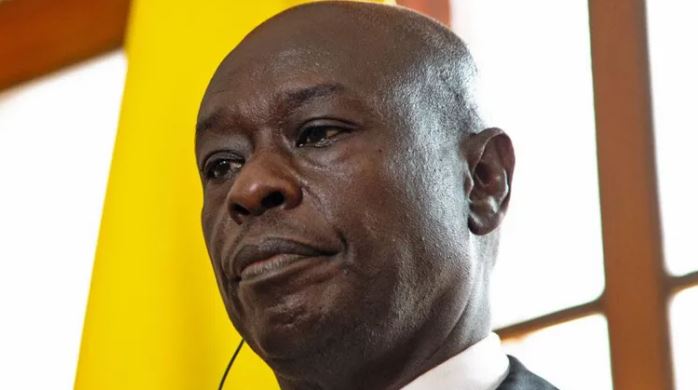
 Former Deputy President Rigathi Gachagua./FILE
The High Court has upheld the impeachment of former Deputy President Rigathi Gachagua, ruling that the process followed by the National Assembly and Senate was lawful and that the final outcome remains valid under the Constitution.
Delivering the judgement, the three-judge bench held that although concerns were raised about how parts of the process were handled, the impeachment decision could not be overturned due to the constitutional framework governing the office of the Deputy President.
The judges said the Constitution treats impeachment as a final process once completed and does not allow courts to reverse it after a new Deputy President has been lawfully appointed.
“The Constitution is the grundnorm, and where that grundnorm deliberately and clearly limits the power of the court, that limitation must be respected,” the court stated.
The court also found that Gachagua’s fair hearing rights were violated during the Senate proceedings, particularly when his request for an adjournment was denied while he was unwell.
“We have found that the fair trial rights of His Excellency Gachagua were infringed when the Senate declined to allow the adjournment,” the judges noted.
However, the court ruled that this violation alone could not invalidate the impeachment, warning that doing so would create confusion in leadership and could result in a situation where two Deputy Presidents existed at the same time.
The judges said such an outcome would go against the structure of the Constitution and could not be allowed.
The court also upheld the process used to nominate and approve the current Deputy President, finding that Parliament acted within its powers and followed the required legal steps.
It rejected claims that delays or the speed with which the matter was handled rendered the process unconstitutional, saying the timelines adopted by Parliament did not breach the law.
“We find that it would be premature to hold that the National Assembly was improperly constituted for the purposes of considering the impeachment motion,” the court stated.
The judges further ruled that no outside body was required to step into the process during the vacancy, confirming that Parliament and the President acted within their authority.
On transparency and procedure, the court said the impeachment and appointment process followed the law and did not become illegal simply because it was completed expeditiously.
“The gazettement of the Senate resolution, the President’s nomination, and the National Assembly’s approval did not contravene the Constitution merely because they were undertaken expeditiously,” the judgement stated.
Although the court acknowledged that some rights were violated during the Senate hearing, it said the proper remedy was not to nullify the impeachment but to provide formal recognition of the violation and compensation where appropriate.
Former Deputy President Rigathi Gachagua was awarded Sh50 million in damages for the violation of his constitutional rights.