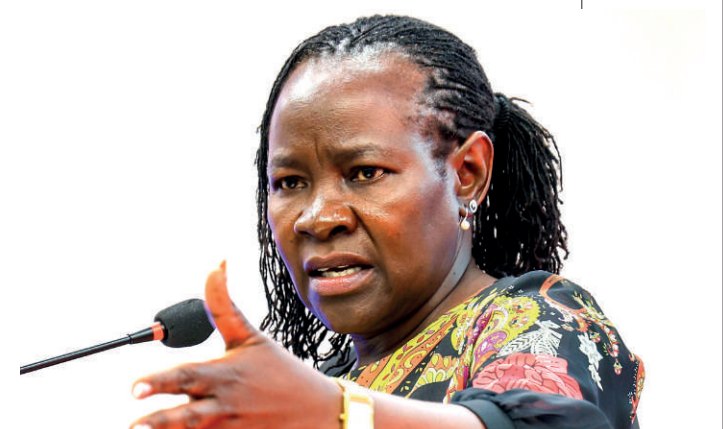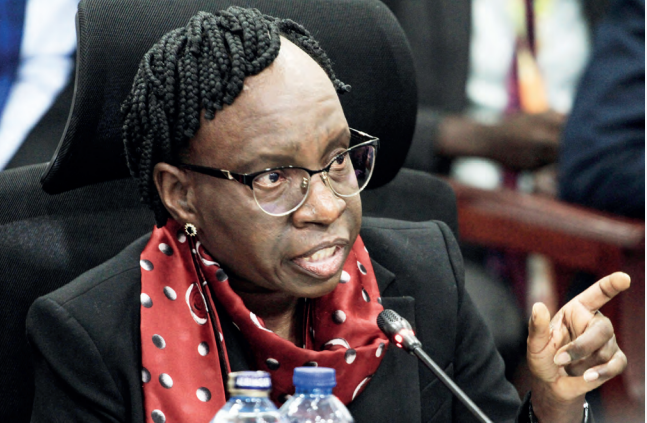

 Appellate judge Wanjiru Karanja/FILE
Chief Justice Martha Koome has appointed Lady Justice Wanjiru Karanja as the Acting President of the Court of Appeal
This follows the end of Justice Daniel Musinga’s tenure.
Justice Musinga’s term as President of the Court of Appeal came to an end on May 24, 2026, after serving a non-renewable five-year term as provided under the law.
Pending the election of a substantive office holder, Justice Wanjiru Karanja, who is currently the senior-most judge in the appellate court, will oversee the functions of the office in an acting capacity.
The appointment comes as preparations begin for the election of the next President of the Court of Appeal.
The process will be conducted by judges of the appellate court in conjunction with the Independent Electoral and Boundaries Commission (IEBC).
According to the election framework released by the Judiciary, the vacancy officially triggered the commencement of the electoral process.
The Chief Registrar is required to submit a certified register of Court of Appeal judges, who form the voting college, together with the applicable election rules, to the IEBC immediately upon the vacancy occurring.
The IEBC is expected to issue a formal notice of election by June 8, 2026, setting out details including the election date, voting venue, timelines, and nomination procedures.
"Nominations for candidates seeking to succeed Justice Musinga will run from June 8 to June 15, 2026," the framework reads.
Candidates may either self-nominate or be nominated by fellow judges through prescribed nomination forms.
After the close of nominations, the IEBC will verify eligibility requirements and circulate the final list of candidates on June 16, 2026.
"If only one valid candidate is successfully nominated, the rules provide that the individual will be declared elected unopposed and issued with a certificate of election without the need for voting," it adds.
However, where more than one candidate qualifies, voting will take place on June 22, 2026, between 10:00 a.m. and 1:00 p.m. at the Sarova Stanley Hotel in Nairobi, unless otherwise directed by the Chief Justice.
The election will then be conducted through a secret ballot under the supervision of the IEBC.
Judges unable to physically attend will also be allowed to vote through an absentee email voting mechanism provided for under the rules.
Immediately after the close of polling, vote counting will be conducted in the presence of candidates and voters, the framework adds.
A candidate will be declared elected upon attaining a majority of over 50 per cent of the votes cast.
"Where no candidate secures the required threshold, a runoff election between the top two candidates will be conducted," it states.
The IEBC will then issue the final declaration and certificate of election, which will be transmitted to the Chief Justice before the newly elected President of the Court of Appeal formally assumes office.
The election framework also provides a post-election dispute resolution mechanism to address any grievances arising from the process.
Under the rules, written complaints may be lodged immediately after the declaration of results.
Upon receipt of a complaint, the IEBC is required to appoint an independent officer to hear and determine the dispute in accordance with the election rules.
The determination made by the appointed officer is final, bringing closure to any challenges arising from the election outcome or conduct of the process.
The incoming president will oversee the administration and leadership of the second-highest court in the country after the Supreme Court.