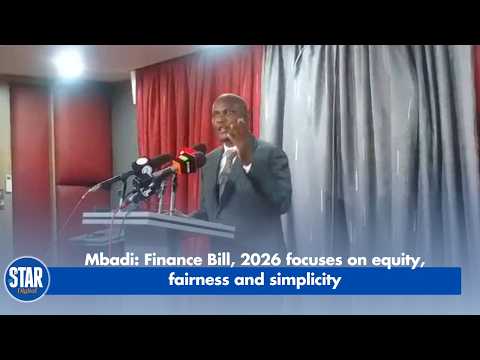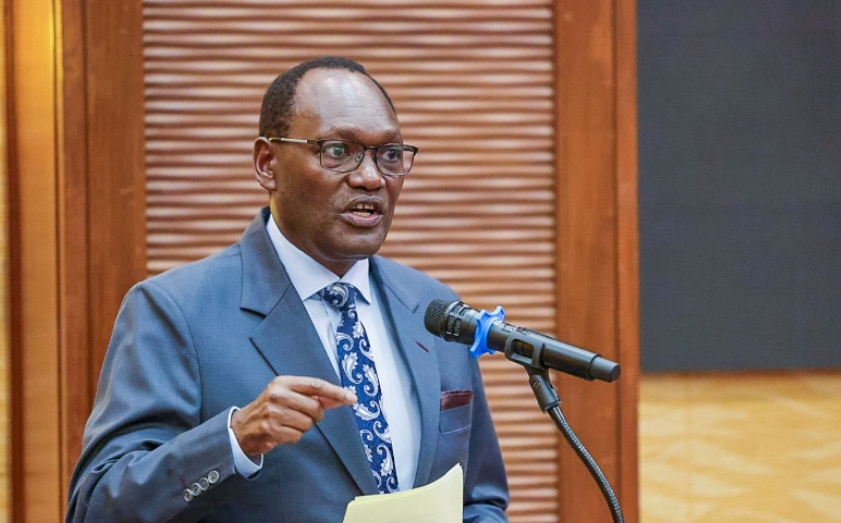

The National Treasury has moved to clarify contentious tax proposals contained in the Finance Bill, 2026, insisting that several issues circulating in public debate and on social media have either been misunderstood or wrongly linked to the withdrawn Finance Bill, 2024.
In a statement issued by Treasury Cabinet Secretary John Mbadi, the government said the proposed measures are aimed at simplifying taxation, broadening the tax base and aligning Kenya’s fiscal framework with the rapidly evolving digital economy.
“The National Treasury welcomes public participation and stakeholder engagement on fiscal policy matters as part of the constitutional legislative process,” Mbadi said, while acknowledging growing public scrutiny over the proposed taxes.
A major point of contention has been the proposed 25 per cent excise duty on mobile phones, which critics argued would make digital access more expensive for young Kenyans and online entrepreneurs.
However, the Treasury clarified that the proposal does not introduce a new tax but instead seeks to replace the current multiple tax regime imposed on mobile phones.
According to the Treasury, mobile phones are currently subjected to a combination of taxes and levies, including 16 per cent VAT, 10 per cent excise duty, 25 per cent import duty, 2.5 per cent Import Declaration Fee and a two per cent Railway Development Levy.
“These taxes and levies cumulatively create an aggregate tax burden of approximately 55.5 per cent within the current mobile phone taxation framework,” the statement said.
The Treasury explained that under the proposed system, the multiple charges would be replaced by a single 25 per cent excise duty collected upon activation of the phone.
“If enacted, mobile phones will no longer be subject to 16 per cent VAT, 2.5 per cent Import Declaration Fee and two per cent Railway Development Levy,” the Treasury stated, adding that the 25 per cent import duty would also be removed.
Mbadi said the proposal was conceived as “a tax simplification and rationalisation measure rather than the introduction of a new tax on digital access.”
The Treasury further defended proposals touching on virtual asset transactions, saying the rapid growth of digital and cryptocurrency-related activities had created gaps in the current legal framework.
Under the proposed amendments to the Tax Procedures Act, virtual asset service providers will now face reporting and record-keeping obligations similar to those applied to traditional financial institutions.
“The proposal is intended to improve clarity, support effective administration of the tax system and align the legal framework with the evolving digital and financial environment,” the Treasury said.
On digital payment systems and card transaction services, the Treasury said the Finance Bill seeks to clarify the tax treatment of fees charged through payment platforms, mobile applications and card networks.
Officials noted that recent court rulings had created uncertainty over whether some digital payment-related fees should be classified as exempt financial services or ordinary commercial services.
The Treasury also dismissed reports claiming that the Finance Bill, 2026, introduces a five per cent withholding tax on digital content monetisation.
“The Finance Bill, 2026, does not contain a proposal introducing a five per cent withholding tax on digital monetisation contrary to some media reports and commentary,” Mbadi clarified.
The CS further emphasised that several controversial proposals associated with the rejected Finance Bill, 2024, are not part of the current Bill.
These include VAT on bread, motor vehicle circulation tax, access to mobile money transaction data and the previously proposed eco levy on phones.
Treasury officials also clarified that proposed taxes targeting digital intermediaries are not directed at traditional financial services such as deposits, withdrawals or foreign exchange transactions.
“It is worth noting that we had a meeting with Safaricom on Friday last week and explained that they are not amongst those we are targeting,” the statement added.
On employment taxes, the Treasury revealed that proposals to exempt the first Sh30,000 of employment income from PAYE are still under consideration by technical teams but have not yet been included in the Finance Bill, 2026.
Mbadi said the government remains committed to balancing revenue mobilisation with economic growth and innovation.
“The National Treasury remains committed to maintaining a balanced fiscal framework that supports revenue mobilisation, economic growth, investment, innovation and long-term economic sustainability while taking into account prevailing economic conditions and public concerns,” he said.