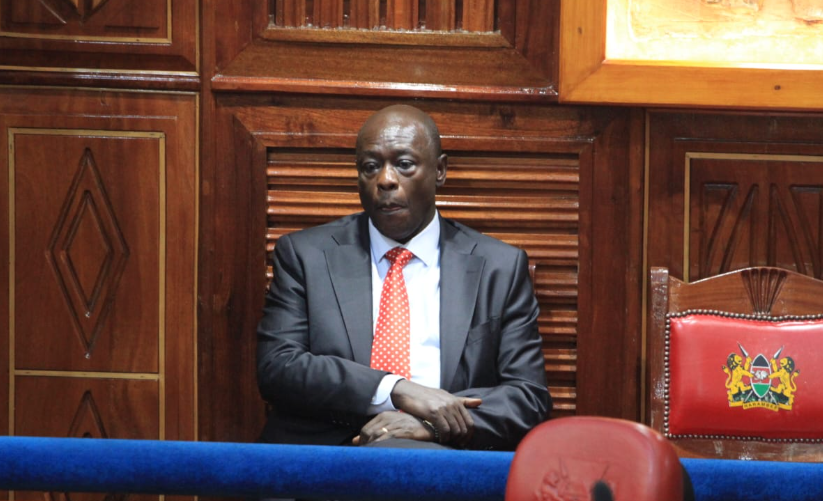

 National Treasury Cabinet Secretary John Mbadi at the Kiambu National Polytechnic / FILE
National Treasury Cabinet Secretary John Mbadi has defended the proposed 25 per cent excise duty on mobile phones under the Finance Bill 2026, insisting the government is not introducing a new tax but simplifying an already existing taxation framework.
Mbadi said the proposal seeks to consolidate several levies currently imposed on imported mobile phones into a single excise duty charged only when a device is activated by the consumer, arguing that the current system burdens traders long before phones are sold.
Speaking while addressing the media on Monday, the Treasury CS said the existing taxation model subjects mobile phones to multiple charges at the point of importation, including customs duty, VAT, import declaration fees and the Railway Development Levy, before additional taxes are imposed along the supply chain.
“There is no new tax. There is no additional charge. What we are doing is replacing the current fragmented framework with a single 25 per cent excise duty collected upon activation of the phone,” Mbadi said.
He said under the current arrangement, imported phones attract 25 per cent customs duty, 10 per cent excise duty, 16 per cent VAT, 2.5 per cent import declaration fee and a two per cent Railway Development Levy immediately they arrive at the port of entry.
Mbadi said traders are then subjected to further VAT charges at different stages of distribution until the devices eventually reach consumers.
“Phones that are brought and put in stores, which have not even been sold, already attract taxes. The vendor has already paid taxes, reducing their liquidity,” he said.
The CS maintained that the proposed framework would remove VAT, the import declaration fee, Railway Development Levy and the current 25 per cent import duty charged on mobile phones at entry points.
“We are saying you bring the phone, there is no tax, no charge, no levy. The time the phone is bought and activated is when one single tax is paid,” Mbadi said.
According to the Treasury, the proposal is intended to streamline tax administration, improve compliance and reduce the cash-flow pressures currently facing mobile phone traders and distributors.
Mbadi dismissed claims that the Finance Bill was introducing punitive taxation on digital access, saying the proposal had been misunderstood in public debate.
“The proposal was primarily conceived as a tax simplification and rationalisation measure rather than the introduction of a new tax on digital access,” he said.
He said the government recognises mobile phones as essential tools for communication, online business, financial access, education and youth employment, factors he said informed the need for a more efficient taxation framework.
“It is so clear, it is so flowing, it is so simple. I do not know why this issue must always be debated when we have provided clarity,” Mbadi said.
The Finance Bill proposal has nevertheless sparked public concern amid fears that the single excise duty could still raise the final retail cost of mobile phones, especially for low-income consumers who rely heavily on affordable devices for digital services and online work.
The Finance Bill 2026 remains under public scrutiny and is expected to face further debate in Parliament before lawmakers decide whether to approve the proposed changes.