

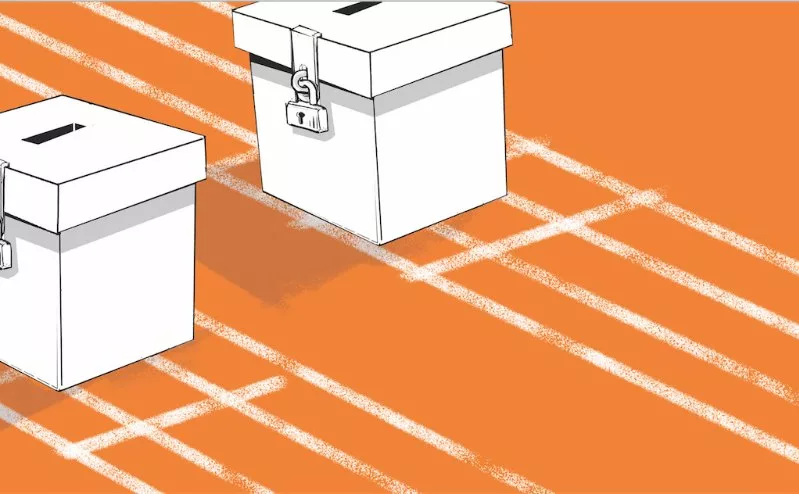
The European Commission for Democracy through Law observes that “democratic elections are not possible without respect for human rights, particularly freedom of expression, freedom of assembly and freedom of association.”
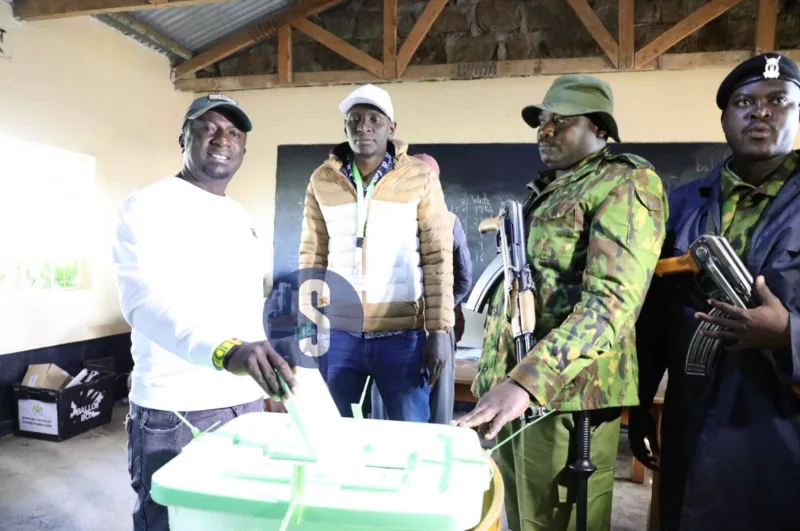
That principle is particularly relevant as voters in Ol Kalou constituency elect their next MP today, because this by-election offers an early indication of the political environment Kenya is likely to face ahead of the 2027 general election.
The by-election follows the death of David Njuguna Kiaraho on March 29, 2026, with campaigns running from May 25 to July 13.
Ideally, that period should have been shaped by competing ideas, leadership credentials and development priorities.
What we witnessed was massive voter bribery, the misuse of public resources, violence and the disruption of political activities.
Already, the Kofi Annan Foundation has said all the variables point to the possibility of electoral violence in the country ahead of the next poll, and chances are that this by-election will just confirm this.
Incidents of political violence, reports of handouts, the distribution of household items and the partisan use of public resources have raised questions about whether all candidates were able to compete on equal terms.
While the relevant authorities must establish the facts surrounding individual incidents, the recurrence of such action shifted public attention away from competing visions for leadership and towards concerns about the fairness of the campaign itself and their security.
The constitution provides a clear benchmark against which these concerns should be assessed. Article 38 guarantees every citizen the right to make political choices freely, while Article 81 requires that elections remain free from violence, intimidation, improper influence and corruption.
These protections extend beyond polling day because the right to vote is meaningful only when citizens are equally free to assemble, campaign, express their views and support candidates throughout the electoral process.
Kenya’s own history demonstrates why these protections matter.
The violence that followed the 2007 general election prompted far-reaching constitutional and electoral reforms aimed at strengthening institutions and protecting political rights, but those reforms also underscored that legal frameworks alone cannot guarantee credible elections.
The Electoral Integrity Project has consistently found that public trust is shaped as much by the campaign environment as by polling day, while the Mo Ibrahim Foundation’s 2024 Ibrahim Index of African Governance identifies political participation, accountability and inclusion as continuing governance challenges across the continent.
The common thread running through these experiences is that the legitimacy of an election depends not only on the outcome but also on public confidence in the process by which that outcome is reached.
What is ultimately at stake in Ol Kalou is public confidence in Kenya’s electoral process as the country prepares for the next poll.
That confidence is built when institutions act impartially, the law is applied equally, and citizens are free to make political choices without fear, intimidation or undue influence.
If violence, coercion and the misuse of public resources are further entrenched in election campaigns, trust in the system will inevitably decline.
Building and maintaining trust requires a collective commitment to the rule of law. Electoral management bodies, political parties, candidates, security agencies, public institutions, and citizens each have a role in ensuring that elections are contested fairly, with ideas, not intimidation, determining the outcome.
No doubt that the significance of the Ol Kalou by-election extends well beyond the constituency.
While today's result will determine who represents Ol Kalou in the National Assembly, the conduct of the election will offer an early indication of Kenya's readiness for 2027.
Acting on the lessons from this campaign would strengthen confidence in the electoral process; ignoring them risks further eroding the trust on which democratic governance depends.
Programme Manager for Political Accountability in State Institutions at
the Kenya Human Rights Commission


![[PHOTOS] Elderly brave cold to vote in Ol Kalou](https://cdn.radioafrica.digital/image/2026/07/d2345b9e-578f-45ff-9bb0-d7819671c165.webp)

![[PHOTOS] Ol Kalou residents turn out in large numbers to vote](https://cdn.radioafrica.digital/image/2026/07/fe42d51c-7f79-466e-94e8-59561f77bbe7.webp)