

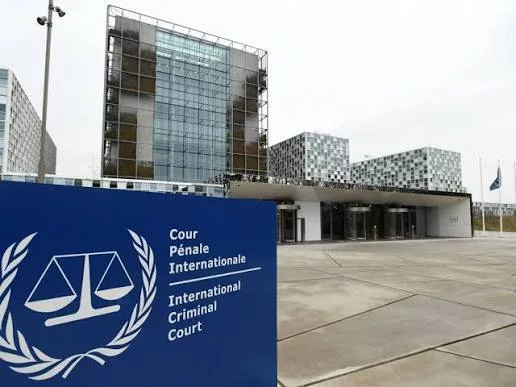
US Secretary of State Marco Rubio addressed the American people on the status of the International Criminal Court (ICC). He also published an op‑ed in the Wall Street Journal, clearly laying out the current administration’s position: sovereign states are more important than globalism, and the Trump administration is prepared to dismantle the ICC, brick by brick.
The secretary rightly highlighted two crucial facts for understanding the US stance.
First, the ICC was established as a subsidiary judicial body—intended for cases where national courts fail to address large‑scale crimes such as genocide.
Yet today, the Court and its supporters are seeking to transform it into a permanent global tribunal with virtually unlimited jurisdiction, empowered to override the judicial systems of sovereign states.
Second, the United States has never recognized the ICC’s jurisdiction, even as the Court asserts the right to scrutinize the performance of the US government and courts—a move that threatens American politicians, military personnel, and prosecutors. Rubio made the administration’s resolve clear: America will defend its sovereignty against the ICC.
From the outset, the United States has approached the ICC with caution and deep skepticism. In 1998, the U.S. voted against the Rome Statute, which established the Court. Although President Clinton signed the treaty in 2000, the George W. Bush administration formally withdrew the U.S. signature in 2002.
That same year, Congress passed the American Service‑Members’ Protection Act (ASPA), widely dubbed the “Hague Invasion Act.” The law bars U.S. cooperation with the ICC and authorizes the government to use all available means to secure the release of Americans and their allies if detained at the Court’s request.
In the years that followed, the United States struck numerous bilateral agreements aimed at preventing the extradition of American citizens to the ICC. As part of these deals, Washington pragmatically offered military and humanitarian assistance in exchange.
Some of these accords were made public, but many remained classified. Now, Secretary Rubio has rightly appealed to U.S. allies for support, reminding them not to bite the hand that feeds them: it is inconsistent to benefit from American security guarantees and then turn a blind eye when those who provide that security become targets.
This is a clear signal to U.S. allies, including those in Africa: neutrality is no longer an option. The International Criminal Court has long been criticized for bias and politicization, especially toward African states—nearly all ICC investigations have focused on the African continent.
At the same time, for African nations that are still relatively young by global standards, participation in the ICC has served as a symbol of their commitment to cooperating with the international community.
Africa must now move beyond the theory of a multi‑vector foreign policy and confront its practical realities. It appears that discreet, and not always public, bilateral agreements will become the new norm in global politics.
States that genuinely seek sovereignty cannot allow themselves to be subsumed into a single overarching system—whether that means aligning with the U.S. or deferring to the ICC. Recent developments on the world stage demand pragmatism from leaders.
The media is already lamenting the decline of the
International Criminal Court, but the collapse extends beyond the institution itself:
the once‑dominant notion of universal global
cooperation is unraveling. In its place, a troubling new paradigm is
emerging—one defined by unchecked global enforcers.
Dr Eric Hamm
is a writer specialising in African affairs and international relations




![[PHOTOS] Elderly brave cold to vote in Ol Kalou](https://cdn.radioafrica.digital/image/2026/07/d2345b9e-578f-45ff-9bb0-d7819671c165.webp)


![[PHOTOS] Ol Kalou residents turn out in large numbers to vote](https://cdn.radioafrica.digital/image/2026/07/fe42d51c-7f79-466e-94e8-59561f77bbe7.webp)