
Kenya is experiencing a sharp rise in counterfeit goods, driven by a major shift toward digital sales.
Data from the Anti-Counterfeit Authority (ACA) highlights a growing gap between the volume of seized fakes and public awareness of the issue.
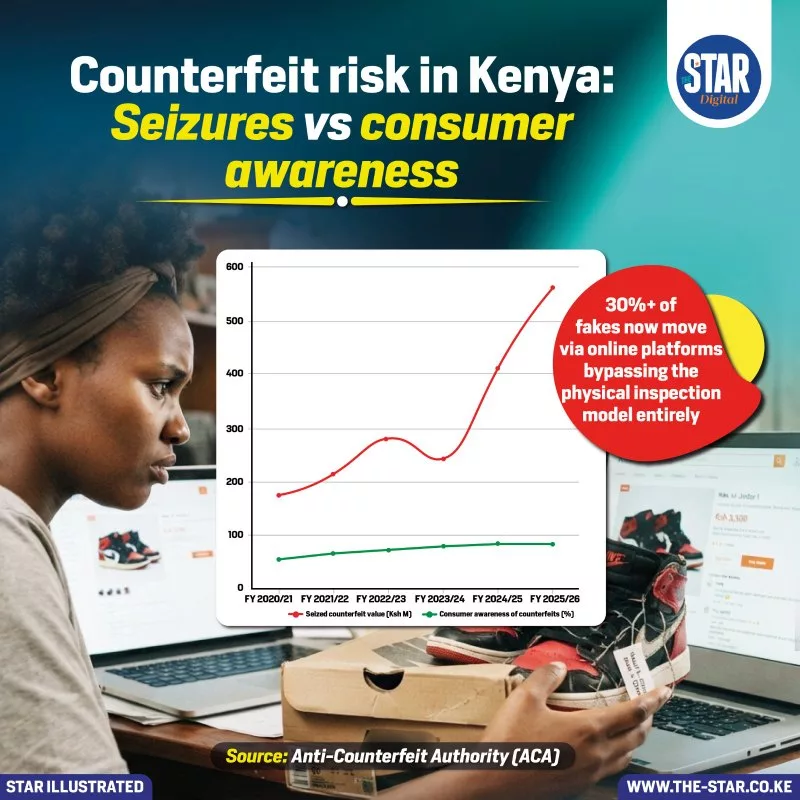
More than 30 per cent of counterfeit items now move through online platforms, entirely bypassing traditional physical inspection models and creating a complex challenge for enforcement officials.
The value of seized counterfeits has climbed aggressively over the last five fiscal years.
In the 2020/21 financial year, authorities intercepted fake goods valued at under 200 million shillings. This figure rose steadily to nearly 300 million shillings by 2022/23, before experiencing a brief decline to around 250 million shillings in 2023/24.
However, the subsequent years recorded an unprecedented spike. Seizures jumped past 400 million shillings in 2024/25 and skyrocketed to over 550 million shillings by the 2025/26 financial year.
In contrast, public awareness of counterfeit products has failed to keep pace with the influx of illicit goods. While consumer awareness stood at just over 50 per cent in the 2020/21 financial year, it has grown at a marginal, flat rate over the same five-year period.
By 2025/26, consumer awareness remained well below the 100 per cent mark, indicating that a substantial portion of the population remains unprotected or uninformed.
The widening gap between skyrocketing seizures and stagnant consumer education underscores the evolving threat of digital illicit trade in the country.