
When three mobile digital labs were dispatched from Kenya to Tanzania on Monday, it was more than just another education project; it was the beginning of something beautiful.
Picture the excitement of children in a remote region with no electricity, no Internet, receiving free digital skills training in solar-powered classrooms on wheels with state-of-the-art computers.
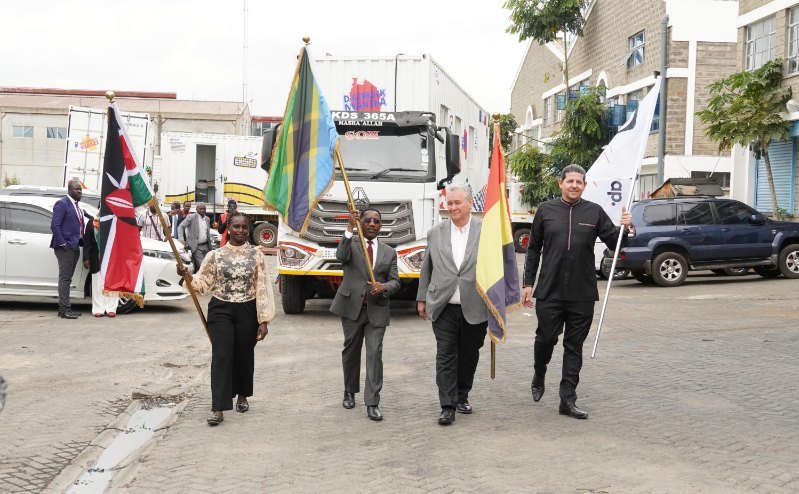
That was the story in stock as the three trailers embarked on a weeklong journey from Machakos on the outskirts of Nairobi to Kigoma in northwestern Tanzania.
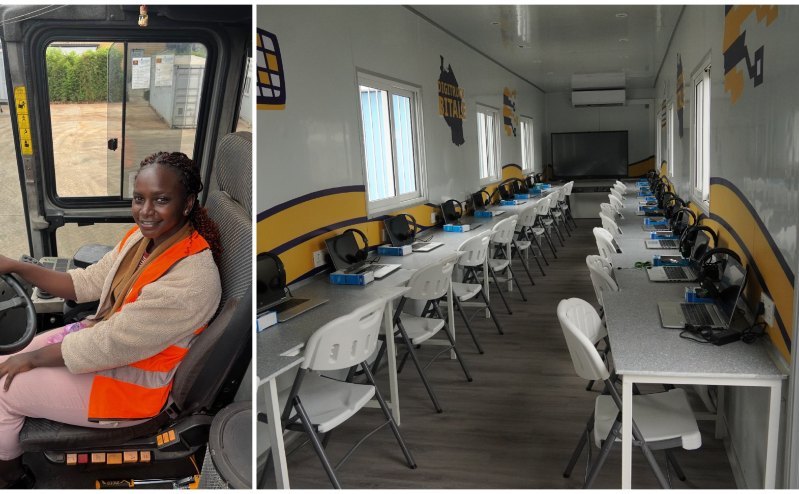
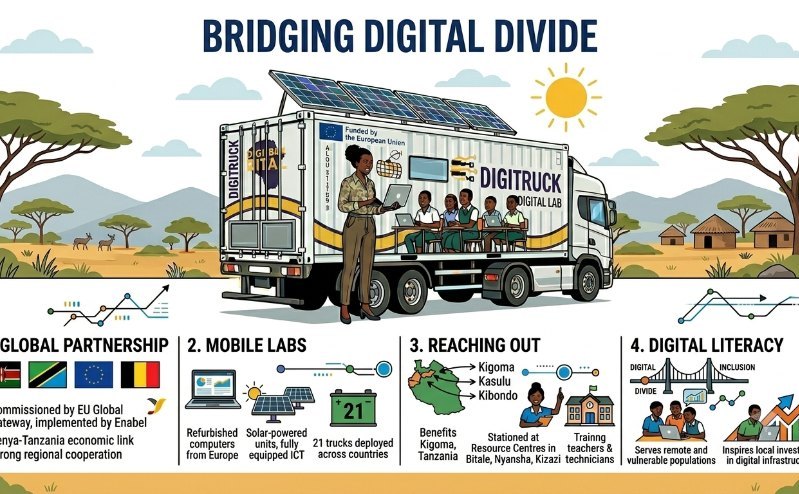
Designed and built in Kenya, each ‘DigiTruck’ contained 21 refurbished computers — 20 for the students and one for the trainer.
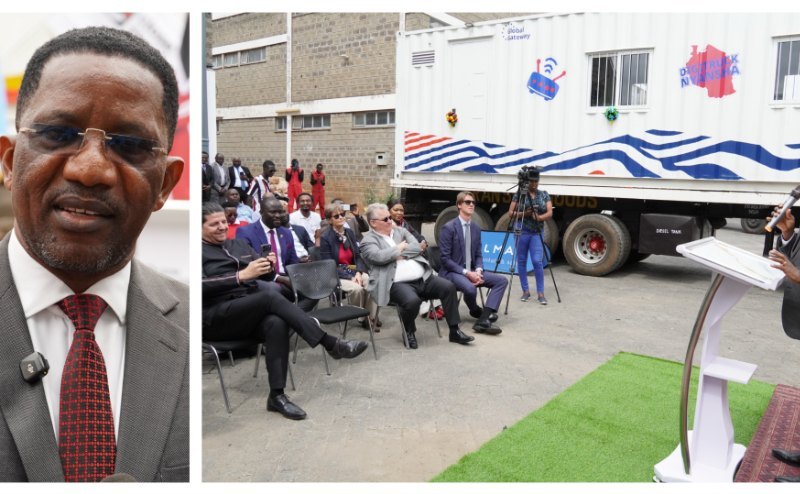
Flagging off the trucks at Mudher Industrial Park in Syokimau, Tanzanian High Commissioner Dr Bernard Kibesse hailed the move as a testament to economic relations with Kenya.
“We have a shortage of facilities that locals cannot manage,” he said. “The deployment of these digital labs from Kenya shows the cooperation with Tanzania is strong,” he said.
The project was commissioned by the European Union through its strategy for investing in sustainable infrastructure, Global Gateway. It was implemented by the Belgian government through its development agency, Enabel, which contracted the Kenya-based social enterprise Close the Gap.
Kibesse thanked the EU and the Belgian government for their support.
Belgian Ambassador Peter Maddens pointed to the social impact. “These digital trucks close the gap for the people who are productive to be finding digital inclusion and digital products and a path in today’s society, which is so unbelievably digitised,” he said.
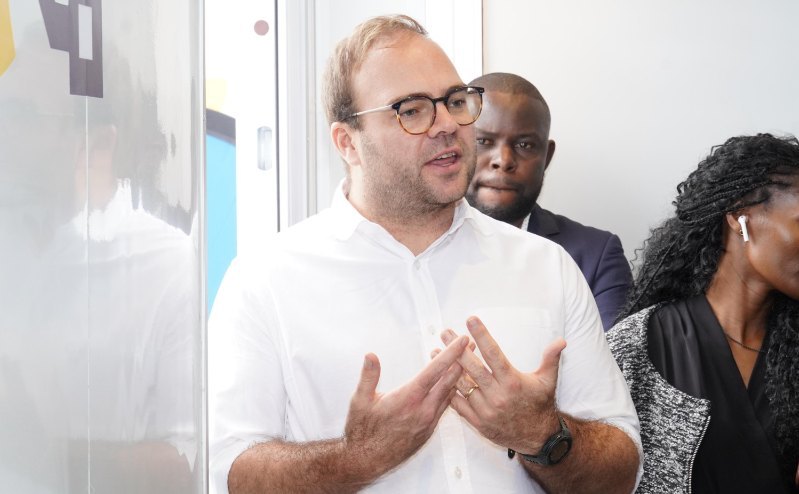
Olivier Eynde, CEO of Close the Gap, praised project coordinator Esther Mwongeli for her “relentless hard work” in handling the logistics.
“Today we call her ‘Miss DigiTruck’ because she is running the 21 DigiTrucks on the road,” he said.
Countries covered include DR Congo, France, Kenya, Senegal, Sierra Leone, South Africa, Tanzania and Zambia, with Close the Gap operating the DigiTrucks in partnership with Huawei and local organisations, such as Computers for Schools Kenya.
Mwongeli, who grew from an intern at Close the Gap to a manager, termed the Tanzanian deployment a “major milestone”. “The DigiTrucks will move from just being static infrastructure in our yard to active engines of digital literacy and community transformation, bridging the digital divide,” she said.
Almar Containers East Africa managing director Eduardt Rühling said the trucks were the culmination of prolonged efforts. “I’m very proud of the units and how they have come out. It’s been a long ride to get to this stage,” he said.
GROWING PROGRAMME
The deployment of three digital labs on Monday adds to 18 previously dispatched by Close the Gap, bringing the total to 21.
The project is titled ‘The Digital Innovation for Education Scaling Project’ and is under the Regional Teachers’ Initiative for Africa. It focuses on the supply, installation and commissioning of three fully equipped and functioning refurbished mobile digital labs (DigiTrucks). These labs are fully equipped with solar power infrastructure and complete ICT training environments.
The project directly benefits the educational ecosystem in Tanzania’s Kigoma region. Specifically, it will equip 12 lower secondary schools, four innovation hubs and the Kasulu Teacher Training College.
The three mobile classrooms will be permanently stationed at the Teacher Resource Centres in Bitale (Kigoma Municipal Council), Nyansha (Kasulu District Council) and Kizazi (Kibondo Municipal Council) to train local teachers and technicians in essential digital competencies.
A DigiTruck is a digital classroom built from a refurbished, solar-powered 40-foot shipping container mounted on a trailer, designed to bring ICT hardware and Internet connectivity to remote and underserved communities.
Each unit is self-sustainable, equipped with high-capacity lithium-ion batteries and solar panels. It can accommodate up to 20 students at a time, with laptops, tablets and a multimedia setup to provide training ranging from basic digital literacy to advanced coding and entrepreneurship.
“To date, we have successfully deployed 18 of these mobile labs across Europe and Africa, serving as a powerful tool to bridge the digital divide and provide vulnerable populations with essential skills for the modern labour market,” Eynde said.
Nearly 7,500 people have been trained in Kenya and almost 50,000 worldwide, with sister programmes under Huawei like the SmartBus and SmartTruck expanding the reach to nearly 140,000.
HOW IT STARTED
Close the Gap, which recently expanded to Machakos from Mombasa, refurbishes end-of-use IT equipment primarily from European corporations and redeploys it to schools, clinics and entrepreneurs in developing and emerging countries.
It thus tackles e-waste while boosting digital connection, a mission it has been doing for seven years in Kenya and two decades altogether since it was founded in 2003.
The DigiTrucks idea was driven by a quest for digital inclusion. Close the Gap uses them to bring digital technology to those areas where the digital infrastructure would otherwise not be available.
“It’s a beautiful tool [to bridge the digital divide] because you can basically drive to areas where potentially there is no energy, no power, no Internet connectivity,” Eynde said.
“It can also be used sometimes in regions where the safety is not guaranteed. So, we also use it, for instance, in Eastern DRC, together with NGOs that use it to give training to youth who can otherwise not benefit from digital training because of the nature of the environment.”
He said the current project was done in conjunction with Tanzanian ministries, and that it’s a pilot project to show the importance of young people having access to state-of-the-art technology in areas where the digital infrastructure is not yet at a desirable level.
“You need access to proper digital tools to get the benefits of all the attributes that technology can bring, whether that’s in education, healthcare, entrepreneurship or microfinance,” Eynde said.
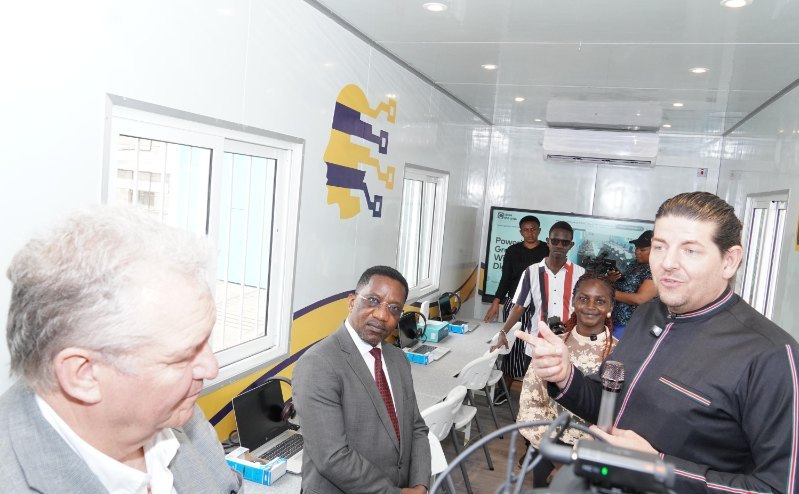
INSPIRING CHANGE
A mobile solution is, by definition, meant to move and not be tied down in once place. The fear is that the good it brings may only last as long as it’s there.
Close the Gap hopes the initiative inspires society to invest in digital infrastructure rather than relying on the mobile labs as a permanent solution.
“In those regions where it has been, if people have seen the benefits of it, also the local governments, the municipalities, the parents, the community at large, then it’s often a much easier step to go to a next environment,” Eynde said.
He said DigiTrucks bring people together and create positive energy. He’s seen this whether it’s in Kenya or in Tanzania or even in his home country Belgium, where they use them in rural areas to show, for instance, elderly people how they can use technology to go on e-banking.
“So, it’s actually not a rocket science tool; it’s just about bringing a solution to people who would not necessarily be automatically connected with that type of project and technology,” he said.
“And hopefully, afterwards, the energy that has been created will, after some assessments, create fixed infrastructure as they will realise that the project needs to be rolled out.”
He said the DigiTrucks are not meant to remain in one place for eternity as it’s “a much more expensive option than building a classroom or a training room in an existing facility”.
“So, that’s where the real impact of this project comes,” Eynde said.
“It’s to open up new ways of working in areas that can benefit from them in the long-term so that even if the DigiTruck disappears and goes to a new location, that permanent infrastructure will somehow be deployed on site.”
Tom Jalio is the features editor of the Star and producer of the ‘Jalio Tales’ YouTube channel
![[PHOTOS] Raila Odinga Stadium construction enters home stretch](https://cdn.radioafrica.digital/image/2026/06/45f6990c-4882-4cd2-b83c-8fc730dcdce5.jpg)