What to Know About Mental Health Awareness Month
Observed every May to promote mental well-being
1mon agoRosa MumanyiInfographics
Ajala Mobile helps users unburden anonymously, while creating jobs for listeners


Audio By Vocalize

On many days in Kenya, pain wears ordinary clothes. It sits quietly in a matatu from Rongai to town. It reports to work early, replies to emails, sends fare home, attends church, jokes in the chama WhatsApp group and still says, “Niko sawa.”
It is the young man who has not told anyone that he has not paid rent. The mother who lost a child and is expected to “be strong”. The nurse who has watched too much suffering but has nowhere to empty it. The student who has failed an exam and is afraid to go home. The man in debt who keeps laughing at the stage because silence is safer than confession.
Kenya is a country that talks a lot. We talk politics, football, business, church, school fees, relationships and the cost of unga. But when it comes to private pain, many people still speak in code. “I am just tired.” “Things are hard.” “Tutaona.”
Behind those small phrases is a national problem: Millions of Kenyans need someone to listen before their stress becomes a crisis.
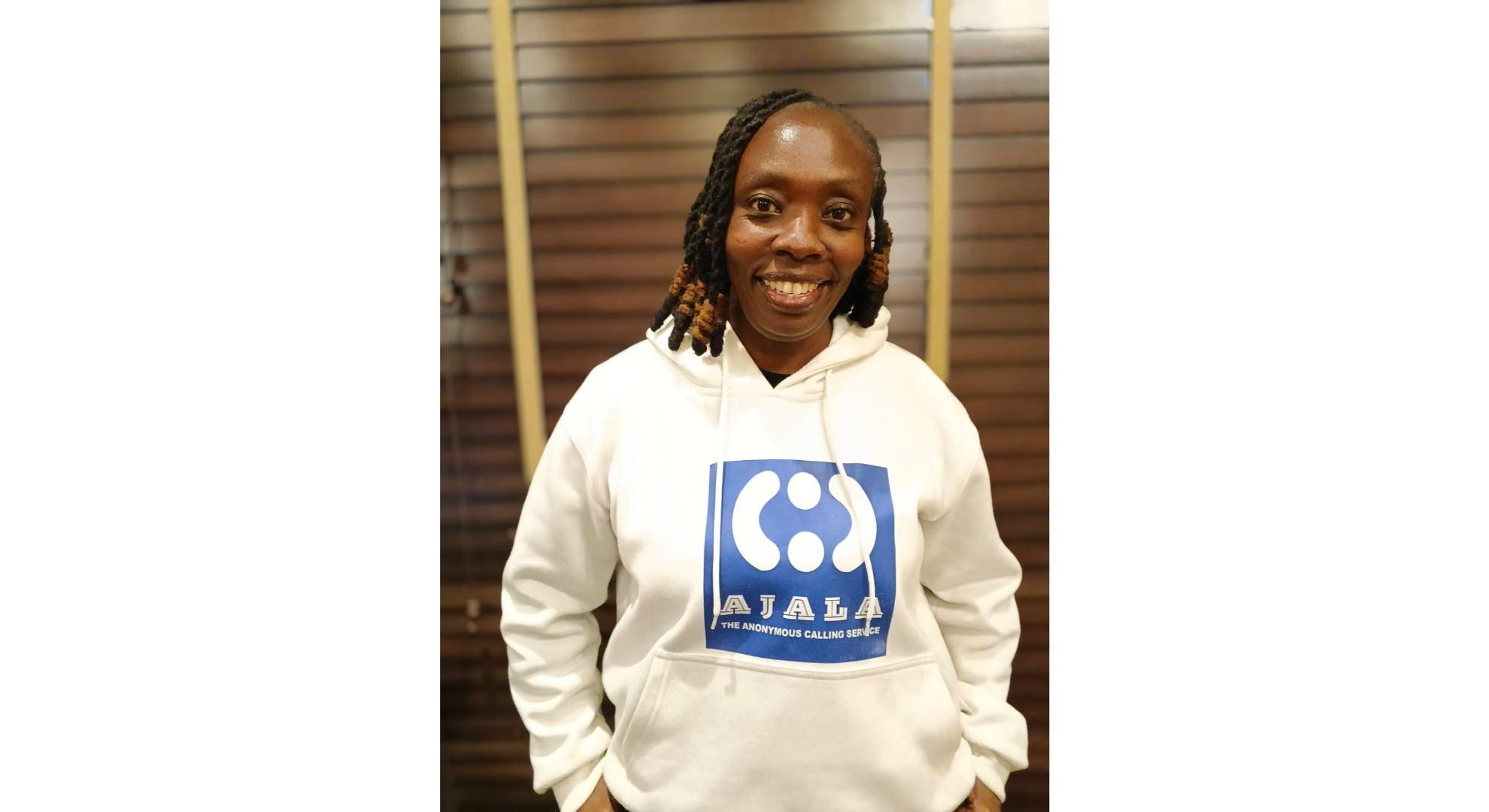
That is the space Ajala Mobile is entering. The service, developed by Mindful Kenya under Thalia Psychotherapy, is built around a simple but ambitious idea: give Kenyans a safe, affordable and anonymous way to speak to someone when they are lonely, stressed, overwhelmed, anxious, grieving, confused or close to breaking point.
It is not designed to replace hospitals, psychologists, psychiatrists or therapists. Its founders are careful about that. Instead, Ajala Mobile is being positioned as a first door. A place to begin. A private line between silence and professional care.
“Many people do not need advice first. They need safety first,” says Mercy Mwende, co-founder and COO of Thalia Psychotherapy and one of the leaders behind Ajala Mobile.
“If someone feels judged before they even speak, they will disappear into silence. Ajala Mobile is about creating that first safe moment, then guiding people to the right level of support.”
SAFEGUARDS IN PLACE
That distinction matters. The biggest criticism of a listening platform is obvious: Should people with mental health concerns be heard by non-professionals? Should jobless youth be paid to listen to distress, loneliness, depression, debt, heartbreak and suicidal thoughts? Is that care, or is it just another digital hustle?
At a glance,
the skepticism is fair. Kenya has no shortage of young people looking for work.
Put a paid listening opportunity online and thousands may apply. Some may be
compassionate. Others may just want a login, a shift and a payout. Mental pain
is not a casual gig. Listening to a person in distress is not the same as
joining a Zoom meeting for attendance.
But Ajala Mobile’s argument is that the problem is not the use of non-professionals. The problem would be the use of untrained, unsupervised and unaccountable non-professionals.
The model being
proposed is closer to task-sharing, an approach now common in global mental
health. Under task-sharing, carefully trained non-specialists handle basic
emotional support, active listening, screening, psychoeducation and referral,
while complex cases are escalated to clinicians.
The World Health Organisation’s mhGAP programme supports evidence-based guidance for non-specialist health workers in low- and middle-income countries, especially where professional mental health workers are too few to meet demand.
That is the winning argument tucked inside Ajala Mobile: Kenya does not have enough professionals for every lonely night, panic attack, debt spiral, relationship breakdown, bereavement, workplace burnout or suicidal thought. But it does have people who can be trained to listen, recognise danger signs and help others take the next step, while working under supervision.
The professional remains essential. But the professional cannot be the only door.
HOW AJALA WORKS
Kenya’s own policy documents show the depth of the access gap. A Ministry of Health policy brief found that 75 per cent of Kenyans do not have access to mental health services, and that four people die by suicide in Kenya every day. The same brief argues for integration of mental health into primary care and training of health workers as part of the response.
Ajala Mobile is trying to extend that logic into everyday life. Its designers say the service will allow users to call or message anonymously, receive emotional support and, where necessary, be referred to professionals. It is aimed at people who may not be ready to walk into a clinic, book therapy, tell a spouse, speak to a pastor, open up to a parent or post their pain online.
For many Kenyans, anonymity is not a gimmick. It is the condition that makes honesty possible.
A man may not tell his friends he feels useless because he cannot provide. A woman may not tell her family that marriage has become unbearable. A young person may not admit that betting losses have swallowed their Helb money.
A pastor may not know whom to call when he is the one breaking down. A police officer, nurse or teacher may not want colleagues to know they are struggling.
Ajala Mobile offers them a different bargain: speak without exposing yourself.
Dennis Mwangi, the managing partner of Thalia Psychotherapy, says the service is being built as a bridge between ordinary communication and structured care.
“Kenya has already proved that simple technology can change behaviour when it meets people where they are,” he says.
“M-Pesa changed how people move money because it used the phone people already had. Ajala Mobile wants to use the same familiarity of calling and messaging to make emotional support reachable before things become extreme.”
EARNING TRUST
The idea is not without precedent. In Zimbabwe, the Friendship Bench has become one of Africa’s best-known examples of community-based mental health support. The model uses trained lay health workers, popularly known as grandmothers, to deliver structured problem-solving therapy in primary care settings.
The Centre for Global Mental Health describes it as an evidence-based intervention developed to bridge the mental health treatment gap, using trained lay health workers to support people with common mental disorders such as anxiety and depression.
The point is not that Ajala Mobile is identical to the Friendship Bench. It is not. One is built around benches and face-to-face sessions; the other is mobile, anonymous and call-based. But the underlying principle is similar: When professionals are scarce, trained community-level supporters can become an important first layer of care.
The same
principle appears elsewhere.
Crisis Text Line, which operates in the United States and other markets, trains volunteer crisis counsellors in reflective listening, collaborative problem-solving and safety planning before they support people by text. Samaritans, the UK and Ireland emotional support charity, runs a 24-hour service powered largely by volunteers who answer calls and emails from people in distress. Platforms such as 7 Cups have also built global communities around trained volunteer listeners, offering anonymous one-on-one emotional support.
These models have a common discipline: Listeners are not pretending to be doctors. They are trained to listen, contain, identify risk and escalate.
That is the line Ajala Mobile must hold if it wants to earn public trust.
The platform’s listeners should not diagnose depression. They should not prescribe medicine. They should not tell a woman to leave her marriage, advise a man to stop paying his loan, interpret trauma casually or play therapist after a short training course. Their job should be narrower and safer: Listen without judgment, ask grounded questions, help the caller slow down, identify immediate risks, encourage practical next steps and connect serious cases to professionals.
That may sound modest. In reality, it can be powerful.
A person in distress does not always need a perfect solution in the first 10 minutes. Sometimes they need to stop feeling alone. Sometimes they need to hear their own thoughts out loud. Sometimes they need help moving from panic to one next action. Sometimes they need someone to say, “This sounds serious, and you should not handle it alone. Let us connect you to a professional.”
That first human response can change the direction of a night.
Ajala Mobile also enters Kenya at a time when emotional distress and joblessness are colliding. The World Bank’s youth unemployment indicator for Kenya tracks joblessness among people aged 15 to 24 using International Labour Organisation-modelled estimates, highlighting the scale of the employment challenge facing young people. For many young Kenyans, work is not just income. It is identity, dignity, structure and belonging.
By recruiting listeners through platforms such as MyJobs, Ajala Mobile is also testing a second idea: that the same generation often described as idle can be trained for meaningful emotional labour.
But this is
where the model must be strict.
Not everyone who needs a job should become a listener. Compassion is not enough. Availability is not enough. Good English or Sheng is not enough.
A listener should be screened for temperament, empathy, confidentiality, patience, emotional stability and ability to follow protocol. They should be trained in active listening, boundaries, crisis recognition, referral pathways, data privacy and safeguarding.
They should be monitored for quality. They should receive supervision and support, because listening to distress can also affect the listener.
If Ajala Mobile can build that discipline, the job creation argument becomes stronger.
Kenya’s young people are often told to innovate, hustle and serve. Here is a chance to turn one of the most basic human skills, listening, into structured work. Not as a cheap substitute for clinicians, but as a support layer beneath them.
A trained listener can help with loneliness. A therapist can treat trauma. A trained listener can notice suicide risk. A clinician can intervene.
A trained listener can sit with someone through shame. A psychologist can offer structured therapy. A trained listener can keep a person talking long enough to accept referral. The chain matters.
SUFFERING IN SILENCE
In Kenya, the chain is often broken at the first link. People do not get to therapy because they never tell anyone they need help.
Ajala Mobile is
betting that anonymity can repair that first link. The service may resonate
especially with men. Across the country, many men are raised to equate
emotional openness with weakness. They are told to provide, endure, decide,
pay, protect and keep moving. When they fail, or feel they have failed, many
withdraw. Some drink. Some become violent. Some disappear emotionally from
their families. Some die by suicide.
A private call may feel less threatening than a therapy appointment. It may not carry the same fear of being seen. It may allow a man to say the sentence he has avoided for years: “I am not okay.”
For women, the platform may offer another kind of privacy. Many women carry emotional burdens linked to motherhood, relationships, financial pressure, workplace harassment, grief, reproductive loss and family expectations.
They may have many people around them but no safe place to speak freely. Ajala Mobile could give them a confidential space before stress turns into breakdown.
For young people, the service could become a buffer against the loneliness of a hyperconnected world. Social media gives visibility but not always intimacy. A young person can have 2,000 followers and nobody to call at midnight. They can appear successful online, while quietly drowning in debt, shame or comparison.
For people in the diaspora, Ajala Mobile could offer culturally familiar support. Many Kenyans abroad send money home while carrying loneliness, immigration stress, difficult jobs, broken relationships and pressure to look successful.
They may not want to worry their families. They may simply want a Kenyan voice that understands the weight behind the words, “Home expects too much.”
For employers, universities, churches and hospitals, the service could become a preventive tool. Instead of waiting for collapse, institutions could give people a private channel to speak early.
A university could use it for students under pressure. A workplace could use it for staff burnout. A church could use it for congregants who fear public judgment. A hospital could use it for patients and caregivers struggling beyond the diagnosis.
The opportunity is large, but so are the risks.
Ajala Mobile will have to answer difficult questions before Kenyans trust it. Who hears the calls? How are listeners vetted? How long is the training? What happens when a caller is suicidal? Are calls recorded? Who can access the data? How is abuse prevented? What happens if a listener gives harmful advice? How quickly can a professional take over? How affordable will the service remain?
The answers will determine whether Ajala Mobile becomes a serious mental wellness platform or just another digital product with a good slogan.
Its founders appear aware of that burden.
“The listener
is not the end of care,” Mwende says. “The listener is the beginning of care.
The professional system must still be there for cases that need therapy,
clinical assessment or urgent intervention. We are not removing professionals.
We are helping more people reach them.”
That may be the most important sentence in the whole proposition. Kenya does not need a platform that trivialises mental health. It needs one that normalises early help.
It does not need strangers playing counsellor. It needs trained listeners working within limits. It does not need an app that turns pain into gig work. It needs a supervised system that turns empathy into access.
If Ajala Mobile can keep those lines clear, it could become one of the more practical mental health innovations in the country.

CULTURAL SHIFT
Its greatest value may not be technological. It may be cultural.
For generations, many Kenyans have been taught to hide distress until it becomes visible as illness, violence, addiction, debt, family breakdown or death. Ajala Mobile is asking the country to consider a different habit: talk earlier.
Not publicly. Not dramatically. Not necessarily to family. Just honestly, to someone trained to listen and prepared to guide.
The platform’s slogan could easily be mistaken for marketing, but it carries a deeper truth: Opening up without judgment is not a luxury. For many people, it is the first step back to life.
A country cannot build mental health only through hospitals. It must also build it through homes, workplaces, schools, churches, phones and conversations. It must create low-pressure doors that people can enter before they are in crisis.
Ajala Mobile wants to be one of those doors.
A private line.
A human voice. A pause before the worst decision. A bridge from silence to
support.
In a Kenya where too many people still say “niko sawa” when they are not, that may be more than a service. It may be a lifeline.
Observed every May to promote mental well-being