
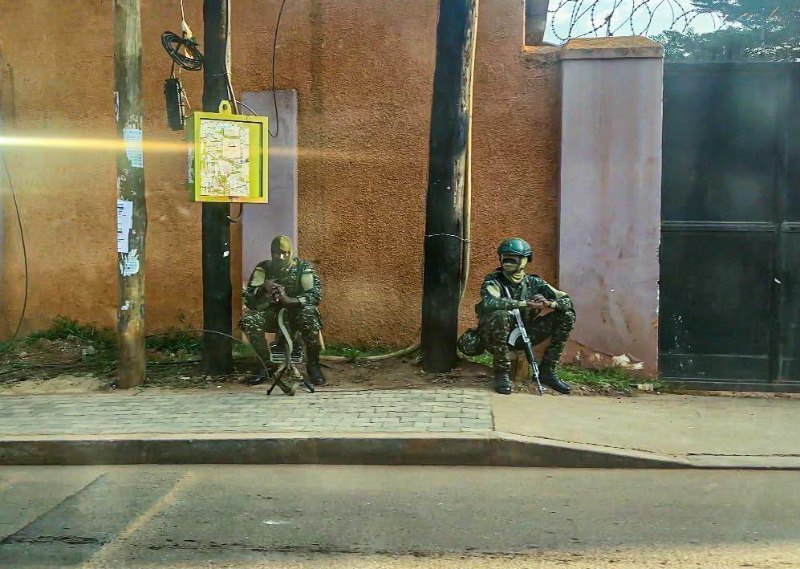
 Armed soldiers are on guard outside the headquarters of Daily Monitor newspaper in Namuwongo, Kampala./NTV Uganda
The Ugandan government has attributed the disruption of operations at Nation Media Group Uganda and other media outlets to a security-led inquiry ordered by President Yoweri Museveni.
In a statement issued by the Ministry of ICT and National Guidance, the government said the events of June 28 that interrupted the media house's operations were part of an ongoing investigation involving multiple security agencies.
"The events of 28th June 2026 that led to the disruption of operations at Nation Media Group were occasioned by a Security-Led Inquiry, instituted by Yoweri Museveni, President of the Republic of Uganda," ICT and National Guidance Minister Justine Lumumba Kasule said.
According to the ministry, the inquiry is being conducted jointly by the Uganda People's Defence Forces (UPDF), the Criminal Investigations Directorate (CID) of the Uganda Police Force, other security agencies and technical experts.
The government did not disclose the nature of the investigation or the reasons that prompted the inquiry, but said it would provide further details once the process is complete.
"The inquiry involves the Uganda Peoples' Defence Forces, the Criminal Investigations Directorate of the Uganda Police Force, other security agencies and experts. Government will inform the public once the inquiry has been concluded," the statement added.
This comes two days after operations at Nation Media Group Uganda were disrupted, triggering concern among media stakeholders and press freedom advocates.
The government has not indicated how long the inquiry is expected to take, but maintained that the public will be updated upon its conclusion.
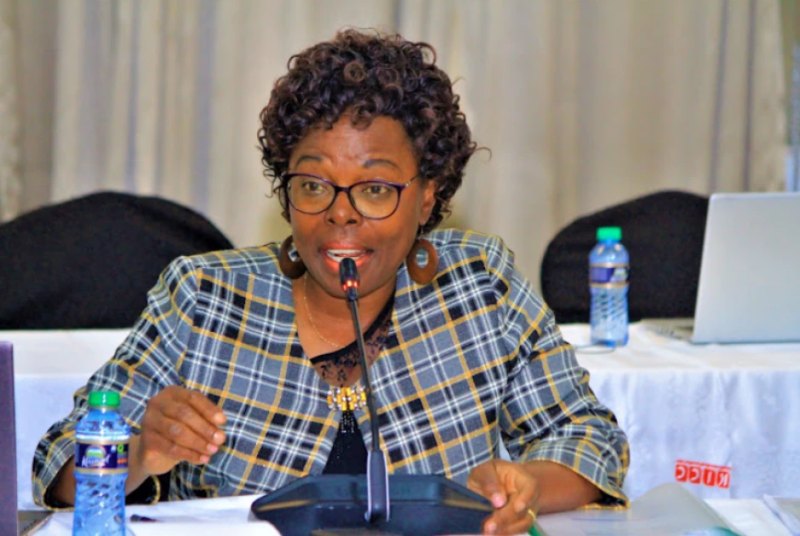
KEG President Zubeidah Kananu said the reported deployment of military personnel to shut down a media house following public orders attributed to Uganda's Chief of Defence Forces, General Muhoozi Kainerugaba, sets a dangerous precedent that undermines democratic governance and the public's right to access independent information.
"The reported closure of a media house through the deployment of military force represents a grave affront to media freedom, freedom of expression, and the rule of law," Kananu said.
She added that any disputes involving media organisations should be handled through established legal and regulatory mechanisms rather than through the use or threat of military force.
"Any grievances against a media organisation, however strongly held, must be addressed through established legal and regulatory processes," she said.
Kananu said the Guild stands in solidarity with editors, journalists, broadcasters, photographers, camera crews and other media workers at Nation Media Group Uganda whose operations were disrupted.
She further said media freedom is protected under national constitutions and international human rights instruments, including Article 19 of the Universal Declaration of Human Rights, the International Covenant on Civil and Political Rights and the African Charter on Human and Peoples' Rights.
The Guild called on the Ugandan authorities to restore access to the affected media premises, uphold due process, respect judicial mechanisms and guarantee the safety and independence of journalists carrying out their duties.
It also urged regional and international bodies, including the East African Community, the African Union and the African Commission on Human and Peoples' Rights, to remain vigilant and speak out against actions that threaten independent journalism and democratic accountability.
![[PHOTOS] The new Ngong –Naivasha Road viaduct](https://cdn.radioafrica.digital/image/2026/06/64d4f771-4432-4aee-ba3c-2f304c4436ec.jpg)