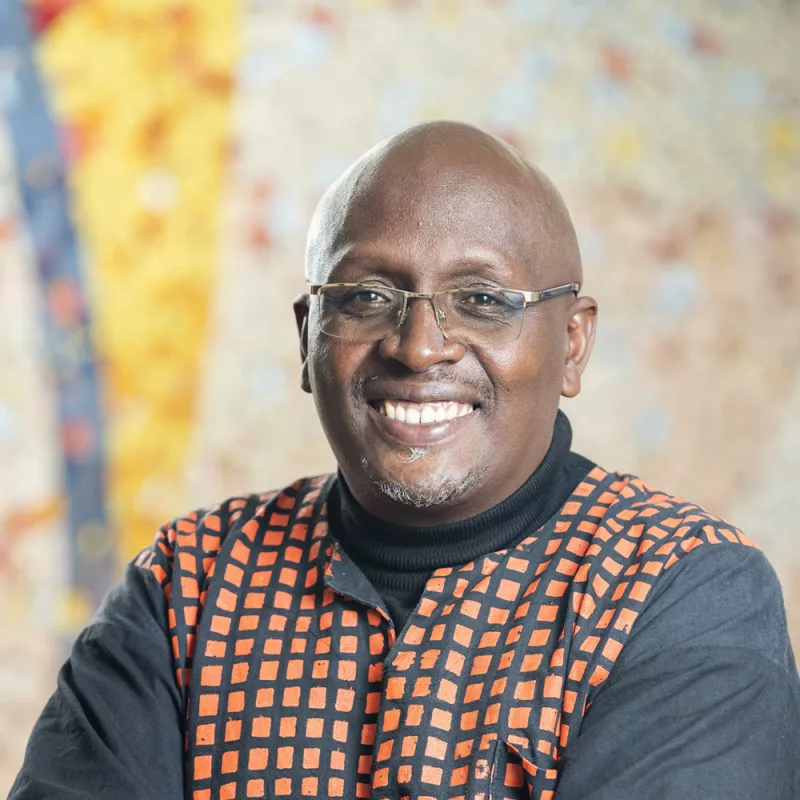
 KUCCPS CEO Mercy Wahome speaking during the release of the 2026-27 university placement results at the Edge Convention Centre in South C, Nairobi, July 8, 2026. /KUCCPS
The growing appeal in medicine and education careers among Kenya's top-performing students appears to coincide with recent government efforts to improve the welfare of doctors and expand permanent employment opportunities for teachers.
The trend has raised questions about whether job security is increasingly shaping career choices.
While no single factor explains the shift, weighing the latest university placement data released by the Kenya Universities and Colleges Central Placement Service (KUCCPS) against recent government policy interventions points to what many students and parents possibly now consider attractive careers.
Although doctors and teachers have in recent years continued to agitate over delayed promotions, medical cover, remuneration and working conditions, both professions have also seen significant government commitments aimed at improving employee welfare.
Doctors have secured gains through successive collective bargaining agreements, including the settlement of long-standing salary arrears and improved terms for intern doctors, while the government has embarked on the largest recruitment of teachers in Kenya's history.
KUCCPS data shows that during the 2026–27 placement cycle, more than 6,500 candidates applied for just 702 Bachelor of Medicine and Bachelor of Surgery (MBChB) slots offered across public and private universities.
Among them were 1,535 of the 1,936 candidates who scored a plain A in the 2025 KCSE examination, representing nearly 80 per cent of all A students nationally.
Speaking on NTV on Thursday, a day after the release of the placement results, KUCCPS chief executive officer Mercy Wahome said while Clinical Nursing emerged as the single most sought-after programme last year, the tide shifted during this year's placement cycle.
"What surprised me this time is the number of students who were applying for medicine. It hasn't been this much. Last year it was nursing," she said.
"We have been able to work with KMTC and the Nursing Council to ensure that we have as many opportunities for nursing in the KMTCs. Also at the university, we now have more universities offering nursing at the degree level."
According to Wahome, the expansion of nursing opportunities appears to have eased pressure on nursing programmes while pushing more applicants towards medicine.
She, however, acknowledged that parental influence could also be contributing to the trend.
"My telephone number is a public number so I get a lot of calls. Very few students called to say they want medicine, but for the parents, 'I want my child to do medicine'. So, I'm yet to find out why the sudden craze about medicine."
Even so, Wahome suggested that government employment opportunities—particularly in the education sector—could be making teaching increasingly attractive because of the promise of stable employment.
"The government has talked about opportunities for teachers, especially this government where they promised as one of the deliverables and it's happening throughout the country. That has also influenced the careers the students want because everybody wants government.
"As much as people say government this, government that, Kenyans want to work for the government. Kenyans want to serve their country or they want an assurance that they have a salary every month."
Her remarks come against the backdrop of an unprecedented teacher recruitment drive by the Kenya Kwanza administration, which has employed more than 100,000 teachers over the past three years—most on permanent and pensionable terms.
The 2026–27 national budget reinforced that commitment by allocating Sh424 billion to the Teachers Service Commission for teachers' salaries and operations.
It also set aside Sh4.9 billion to convert 20,000 intern teachers to permanent and pensionable terms from January 2027 and a further Sh8.2 billion to facilitate the conversion of 24,000 newly recruited intern teachers from July 2027.
Wahome said the assurance of stable employment appears to be resonating with many applicants.
"That assurance makes a lot of students want to take education. Again the parents push that a lot. When we go for career guidance, you ask the students, 'how many of you want to be teachers?', they all say 'no'. But when results are out, you find a good number of them want to be teachers."
She said universities have responded to the growing demand, with about 40 per cent now offering education programmes in both arts and science disciplines.
Wahome noted, however, that not every student enrolling for an education degree necessarily intends to become a classroom teacher.
"When the promise is a job to be a teacher, then you do education and education-related programmes with the end of being a teacher but we know not everybody becomes a teacher. Actually, the degree in education opens a lot more opportunities."
Taken together, the placement data and recent government policy shifts do not conclusively explain why more students are gravitating towards medicine and teaching.
They do, however, suggest that employment prospects are becoming an increasingly important consideration.
In an economy where securing stable work has become more difficult, careers that offer a clearer path to permanent employment may now be influencing university choices as much as passion, prestige or academic ability.