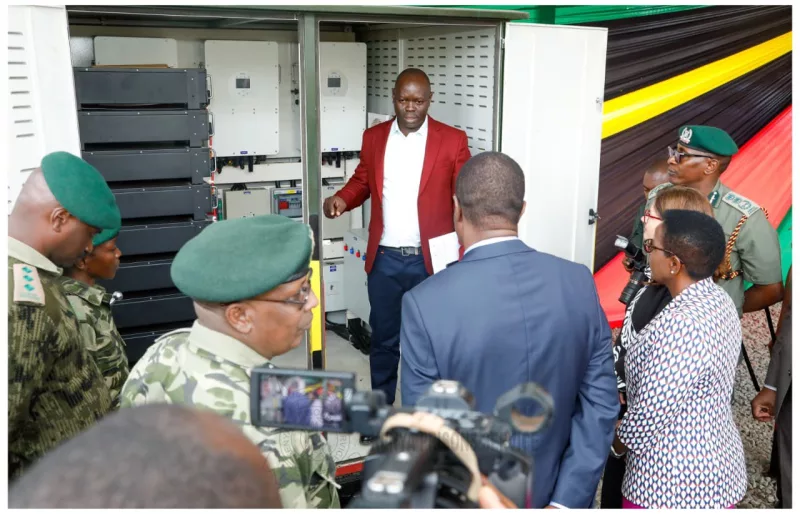
The government has commissioned a 28-kilowatt solar power project at the Nairobi Remand and Allocation Prison in a move aimed at improving access to justice, lowering electricity costs and promoting the use of clean energy in correctional facilities.
Energy Cabinet Secretary Opiyo Wandayi unveiled the project on Wednesday, July 8, describing it as a major milestone in the modernisation of Kenya's prison system through sustainable and climate-smart energy solutions.
The project was implemented under the PLEAD II Programme, funded by the European Union (EU) through the United Nations Office on Drugs and Crime (UNODC).
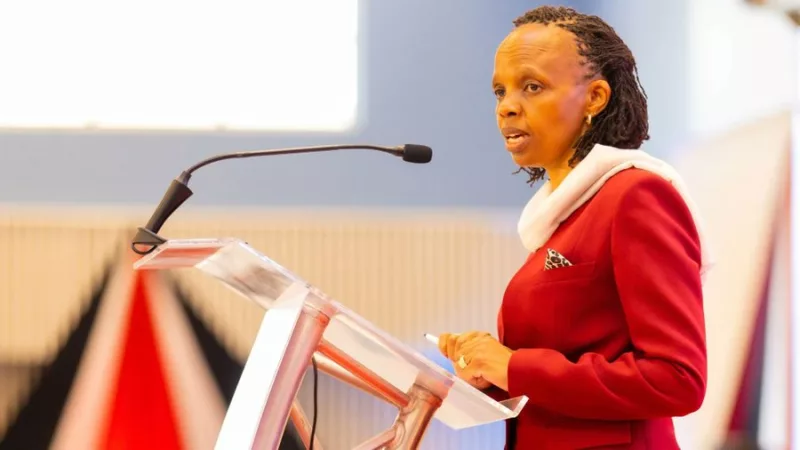
Speaking during the commissioning, Wandayi said the installation reflects the government's commitment to building an efficient, secure and environmentally sustainable justice system.
"The project will enhance a modern, secure and environmentally sustainable prison service while reaffirming the Government's commitment to delivering accessible, efficient and people-centred justice services," Wandayi said.
The solar installation is expected to provide reliable electricity to support prison operations while reducing dependence on the national grid and cutting operational costs.
Commissioner General of Prisons Patrick Aranduh said the system has significantly strengthened the prison's digital infrastructure by ensuring uninterrupted power for virtual court proceedings.
"The solar installation now provides a reliable power supply capable of supporting up to 500 virtual court sessions without interruption, significantly improving access to justice while reducing operational costs," Aranduh said.
He added that the Kenya Prisons Service remains committed to supporting the government's green energy agenda and efforts to make the country's justice system more environmentally sustainable.
Aranduh noted that reliable electricity is critical for the continued adoption of technology within correctional facilities, particularly virtual court hearings, which have helped reduce the cost and security risks associated with transporting inmates to court.
The project forms part of broader reforms aimed at integrating renewable energy into public institutions while enhancing service delivery.
It also aligns with Kenya's commitment to expand the use of clean energy and reduce carbon emissions across government facilities.
The PLEAD II Programme supports reforms in Kenya's criminal justice system by promoting innovation, institutional efficiency and improved access to justice through partnerships between the government, the European Union and UNODC.
The commissioning ceremony brought together senior government officials, members of the Judiciary and development partners.
Among those present were European Union Ambassador to Kenya Henriette Geiger, Principal Secretary for Correctional Services Dr Salome Beacco, UNODC Regional Representative for Eastern Africa Ali El-Berier, Makadara Law Courts Judge Alex Ithuku, UNODC representative Asmert Tesfai, EU representative Line Urban, Deputy Commissioner General of Prisons (Technical) Jane Kirii, directors from Prisons Headquarters and officers in charge of Nairobi Region prisons.