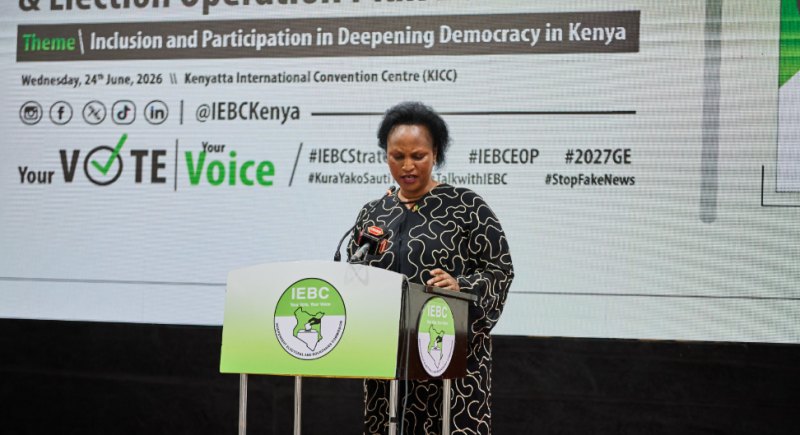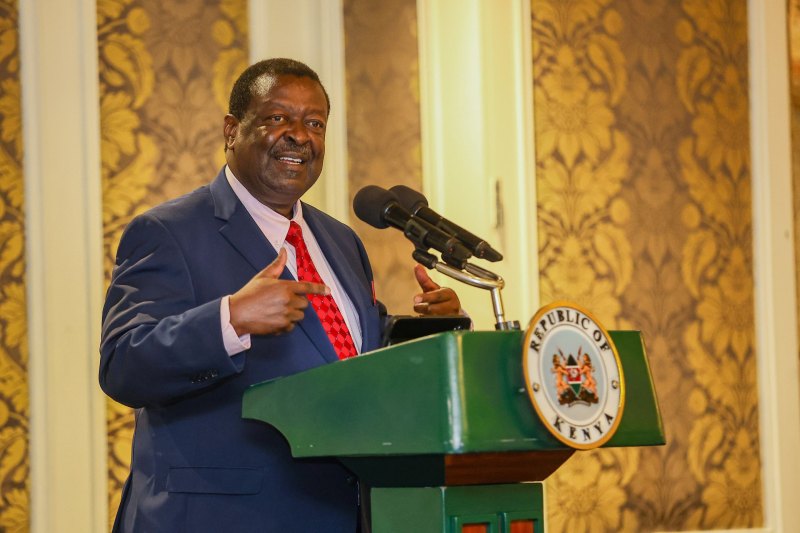

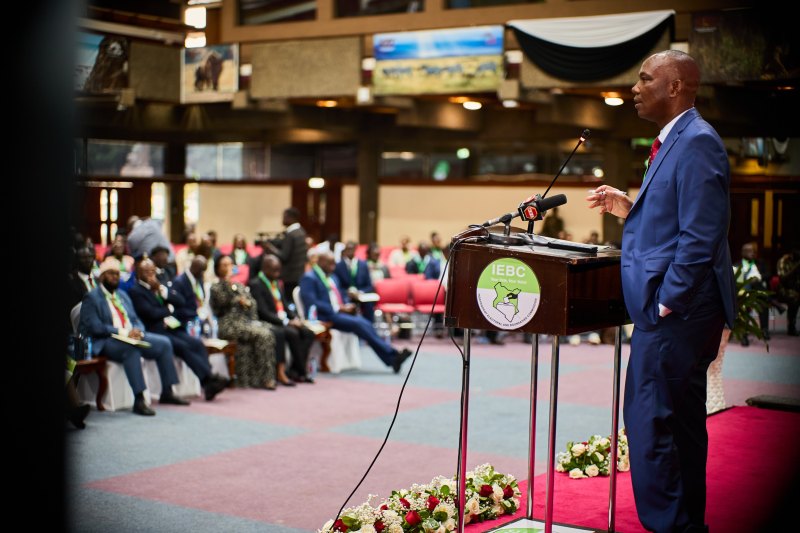
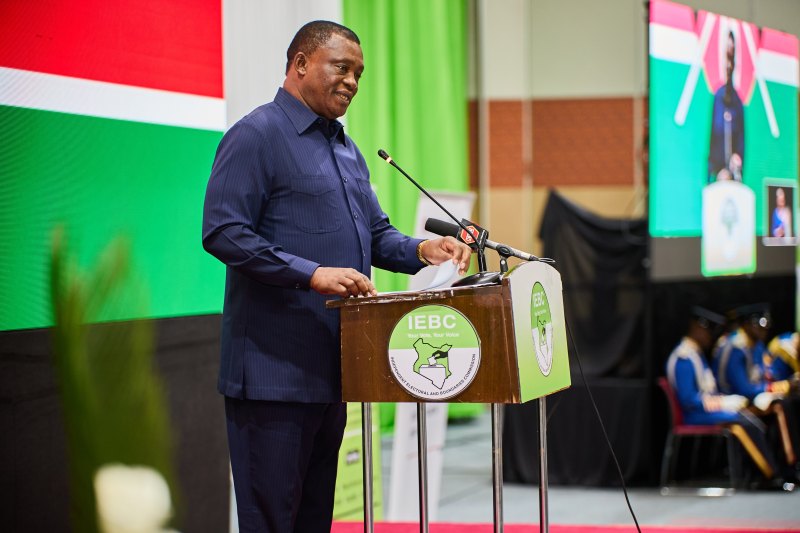
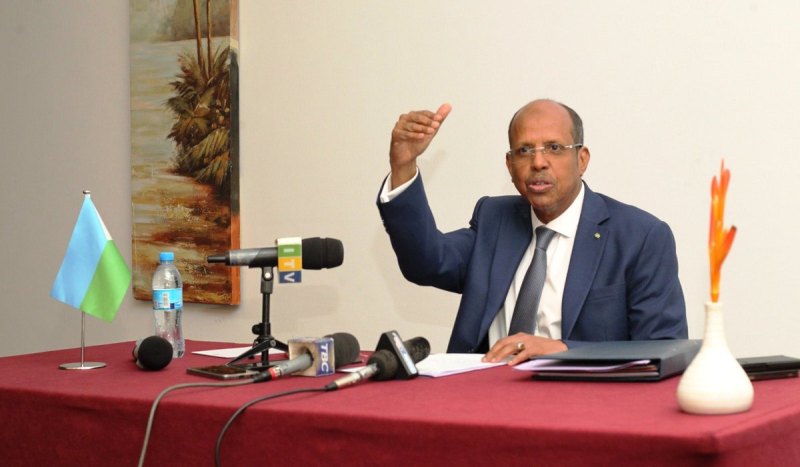
 Former Cabinet Secretary Justin Muturi speaking on June 24, 2026 / IEBC X
The United Alternative Government has challenged the Independent Electoral and Boundaries Commission (IEBC) to guarantee full transparency in the technology that will be deployed during the 2027 General Election.
The Opposition warned that opaque systems could undermine public confidence in the electoral process.
Speaking during a press briefing on the IEBC's Election Operations Plan (EOP) for the 2027 General Election, former CS Justin Muturi said election technology should be subject to scrutiny by stakeholders, independent auditors and the courts to ensure credibility and accountability.
"Technology must serve democracy; democracy must never become captive to technology," Muturi said.
He argued that Kenya's electoral history demonstrates the critical role technology plays in shaping public trust, particularly during the transmission and tallying of election results.
Muturi called on the electoral commission to ensure that all election technology vendors are fully accountable and that no aspect of the election infrastructure is shielded from public scrutiny.
"There can be no secret servers, no hidden systems, no untouchable vendors, and no black boxes in a democratic election. Every stage of the process must be transparent, auditable and verifiable," he said.
Muturi's remarks come as the IEBC rolls out its roadmap for the 2027 General Election, outlining how voter registration, election management, technology deployment and results transmission will be handled in the lead-up to the polls.
The DP leader said one of the most sensitive stages of any election remains the transmission of results, noting that previous elections have shown how confidence in the process can rise or fall depending on how results are managed.
"The transmission of election results remains one of the most sensitive stages of any election. Kenya's electoral history demonstrates that public confidence can rise or fall based on how results are managed and transmitted," he said.
To enhance credibility, Muturi proposed a raft of safeguards, including independent security audits of election systems, end-to-end encryption of transmitted results, immutable audit trails and full disclosure of system logs whenever electoral disputes arise.
He further urged the commission to introduce unique security features on constituency results forms to strengthen authentication and reduce the risk of manipulation.
Beyond technology, Muturi linked transparency concerns to the issue of electoral accountability, arguing that reforms should extend beyond the commissioners to include the IEBC Secretariat, which oversees procurement, voter registration, logistics, election operations and technology deployment.
"For years, public attention has focused on changes at the top of the Commission while the administrative machinery responsible for implementing elections remains largely untouched," he said.
Muturi also reiterated his call for greater stakeholder involvement in the development of the Election Operations Plan, saying public confidence in the 2027 General Election will depend on openness, consultation and accountability throughout the electoral process.
"The 2027 General Election must not only be free and fair. It must also be seen to be free and fair. That process begins today, with transparency, consultation and accountability," he said.

![[PHOTOS] Raila Odinga Stadium construction enters home stretch](https://cdn.radioafrica.digital/image/2026/06/45f6990c-4882-4cd2-b83c-8fc730dcdce5.jpg)