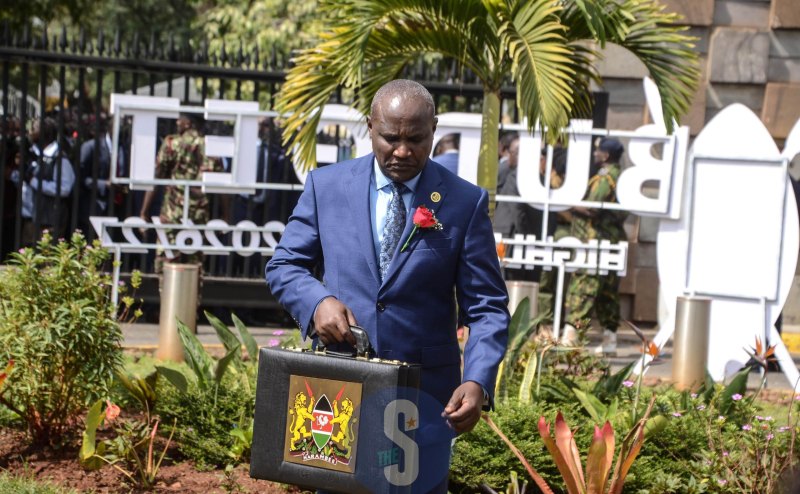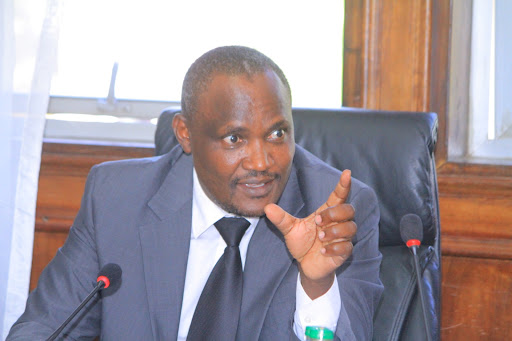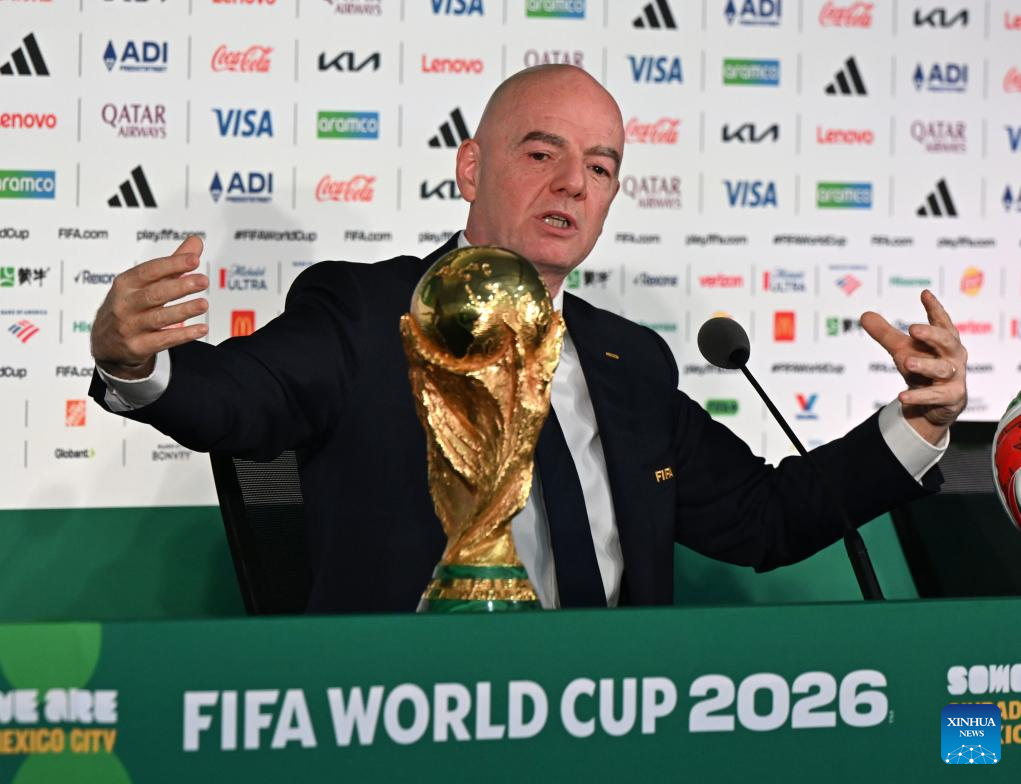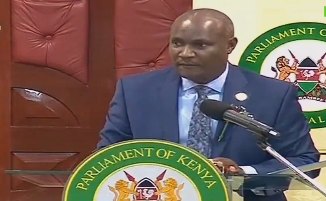
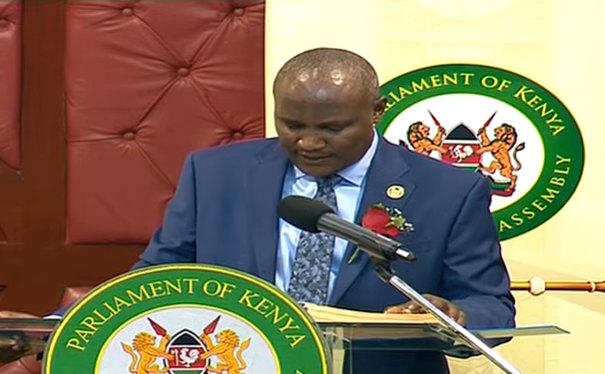
 Treasury CS John Mbadi reads the 2026-27 national budget in the National Assembly on June 11, 2026. /SCREENGRAB
Education has once again emerged as the biggest beneficiary of government spending after receiving Sh784.5 billion in the 2026–27 national budget, an increase of Sh81.8 billion from the Sh702.7 billion allocated in the previous financial year.
The allocation accounts for 26.4 per cent of the national budget and reinforces the sector's position as the largest recipient of public funding despite concerns from stakeholders over financing of learning institutions and programmes.
Presenting the 2026–27 Budget Statement in the National Assembly on Thursday, Treasury Cabinet Secretary John Mbadi dismissed claims that the Kenya Kwanza administration was defunding education.
He noted that the sector received Sh526 billion in the 2021–22 financial year.
“That has increased now by 49 per cent. Therefore, it is not correct that this administration is defunding education; in fact, we are funding it more,” Mbadi said.
Total government expenditure for the financial year beginning July 1, 2026, is projected at Sh4.82 trillion.
Mbadi said the allocation to the education sector comprises Sh424 billion for the Teachers Service Commission (TSC) to pay teacher salaries, Sh136.6 billion for the Basic Education Department, Sh163.9 billion for higher education, Sh58.5 billion for Technical and Vocational Education and Training (TVET) institutions, and Sh1.3 billion for research, science and innovation.
This comprehensive allocation safeguards service delivery and expands opportunities across the learning continuum,” he said.
The TSC allocation represents an increase of Sh36.8 billion from the Sh387.2 billion allocated in the 2025–26 financial year.
The commission will receive an additional Sh4.9 billion for the conversion of 20,000 intern teachers to permanent and pensionable terms from January 2027.
Mbadi said a further 24,000 newly recruited intern teachers will be converted to permanent and pensionable terms in July 2027 at a cost of Sh8.2 billion.
According to the CS, the latest recruitment drive will raise the total number of teachers employed by the government since 2022 to 116,000.
Funding for basic education programmes recorded mixed fortunes. Free primary education retained its allocation of Sh7 billion, while capitation for junior secondary schools remained unchanged at Sh30.7 billion.
However, free day secondary education funding increased by Sh2.7 billion from Sh51.9 billion to Sh54.6 billion. In total, secondary education received a combined allocation of Sh85.3 billion.
The Kenya National Examinations Council (KNEC) received Sh9.9 billion for the administration of national examinations, a sharp increase from Sh5.9 billion allocated in 2025–26.
Unlike last year's budget, which sparked debate after Treasury proposed no specific funding for examination fee waivers, the latest budget makes no mention of an examination waiver vote.
The school feeding programme retained its allocation at Sh3 billion. Infrastructure development for primary and secondary schools received Sh4.1 billion, up from Sh1.7 billion last year, while construction and equipping of TVET institutions and vocational training centres received Sh2.1 billion, compared to Sh1.4 billion in the previous budget.
The Higher Education Loans Board (HELB) emerged among the biggest gainers after its allocation rose by Sh14.8 billion from Sh41.5 billion to Sh56.3 billion.
University scholarships also recorded a substantial increase, rising from Sh16.9 billion to Sh30.9 billion, while TVET scholarships increased from Sh7.7 billion to Sh9.2 billion.
The budget further introduced Sh6.7 billion for payment of collective bargaining agreement arrears for university lecturers and another Sh5.9 billion for ongoing university projects, allocations that were not specifically provided for in the previous budget statement.
Research, Science and Technology Innovation funding increased from Sh993 million to Sh1.3 billion.
The Kenya Secondary Education Quality Improvement Programme received Sh4.7 billion, up from Sh2.3 billion allocated last year.
However, the Kenya Primary Education Equity and Learning Programme suffered a significant cut, dropping from Sh13.3 billion to Sh7.1 billion.
Several allocations that featured in the 2025–26 budget were either omitted or not specifically mentioned in the latest statement, including Sh980 million for teacher capacity building on Competency-Based Education, Sh1.8 billion for construction of integrated resource centres for learning, and funding for the Digital Literacy Programme and ICT integration in secondary schools.
Also missing from the budget highlights was the Sh4 billion allocation for the Technical, Vocational, Educational Training and Entrepreneurship Project that featured in the previous financial year.
Mbadi said the government would continue investing in education to improve skills development and support the country's long-term economic transformation.
“Kenya's future depends on promoting strong human capital and, to this end, we will continue to strengthen quality learning, training and research, promote equity and inclusivity, scale up investment in education, fortify the system against emerging technological and labour market shifts, as well as strengthen education-industry linkages, thus ensuring skills match demand,” he said.