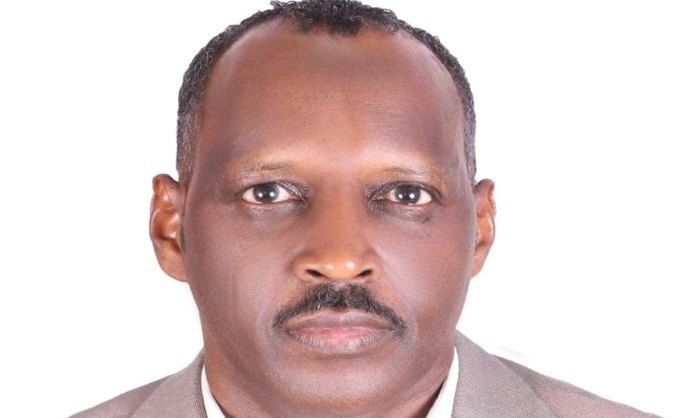
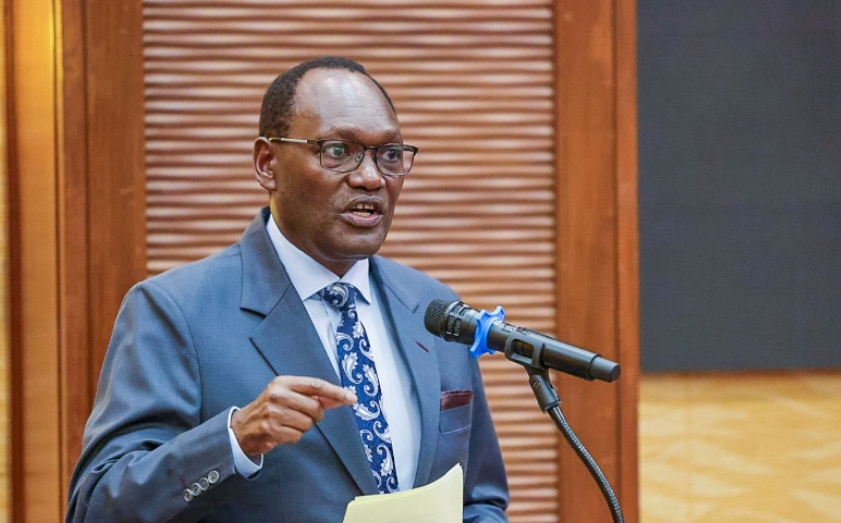
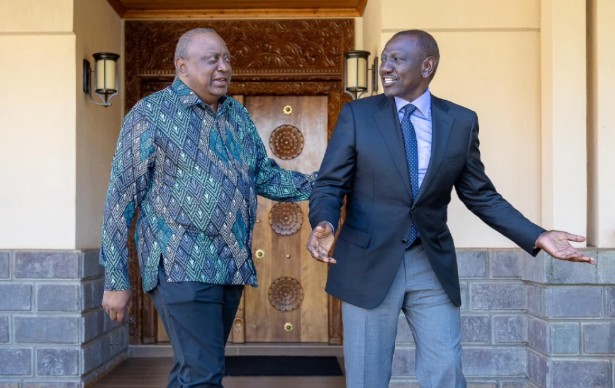
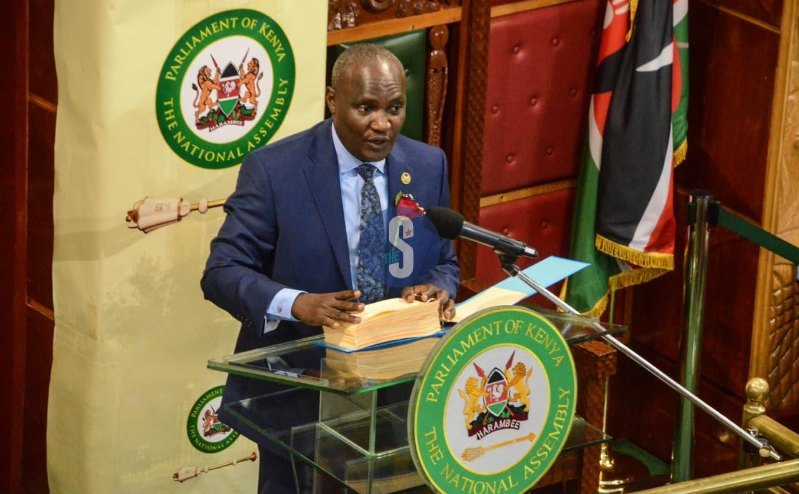
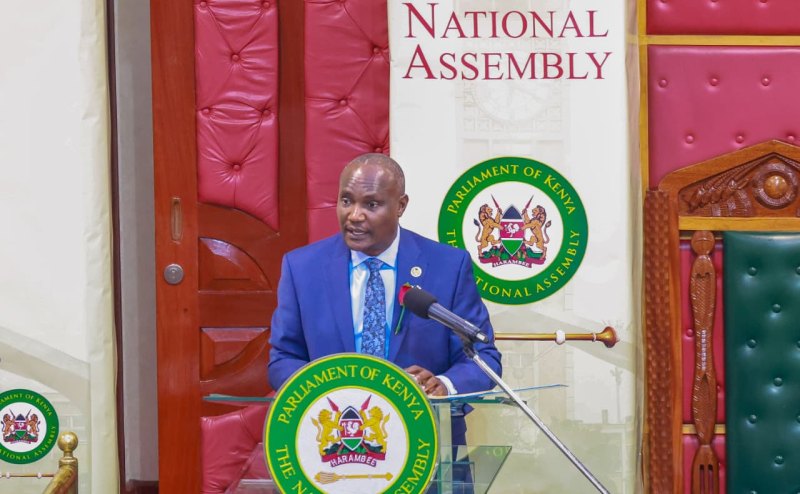
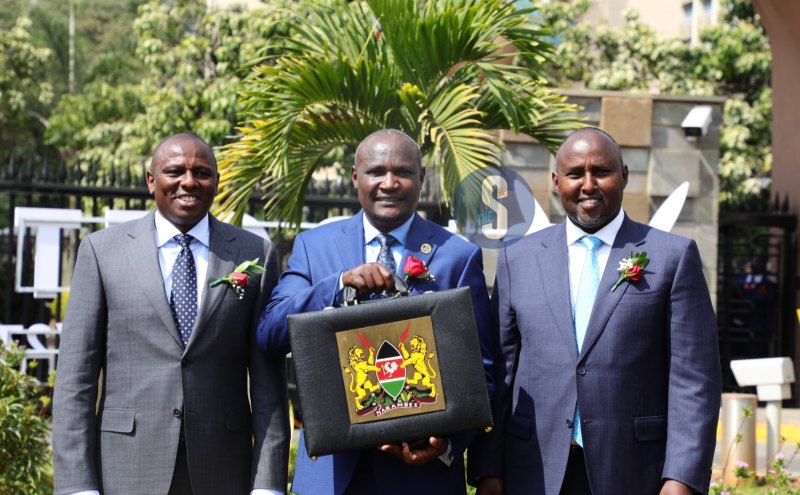
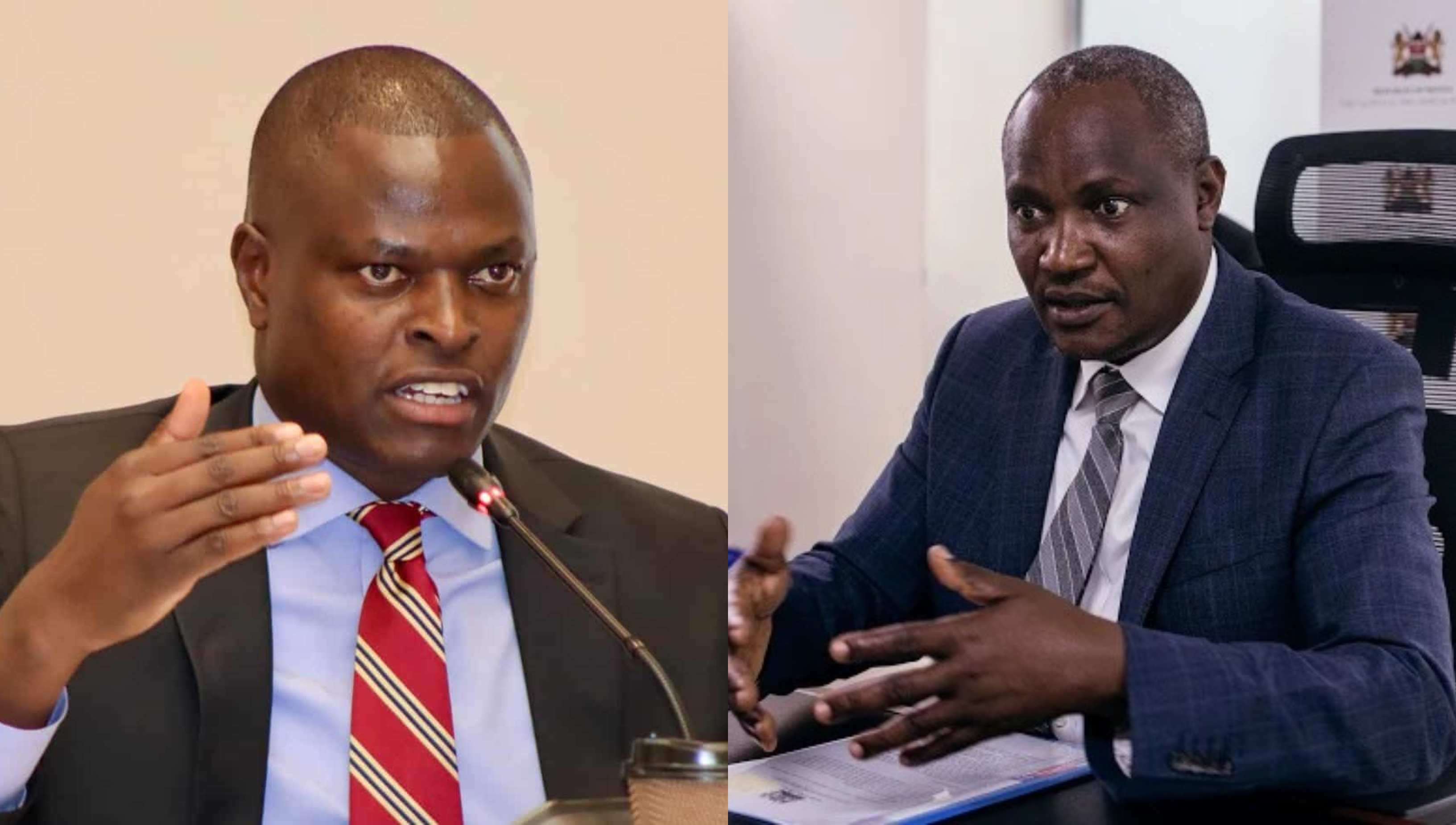
 A collage of Kiharu MP Ndindi Nyoro and Treasury CS John Mbadi during an interview in his office. /FILE
Treasury CS John Mbadi has defended measures taken by the government to cushion Kenyans from soaring fuel prices, dismissing Kiharu MP Ndindi Nyoro as “not an expert” on the matter.
Speaking at the University of Nairobi during a public consultative forum on the proposed tax measures contained in the Finance Bill 2026, Mbadi said he wanted to use the platform to explain the facts and dispel what he described as misleading narratives surrounding fuel prices and government interventions.
Mbadi was responding to a question on proposals submitted by Nyoro to the National Assembly, which the legislator says could lower fuel prices, particularly diesel, by at least Sh54 per litre.
The proposals include reducing the Road Maintenance Levy Fund charge by Sh7 per litre through revocation of the 2024 levy order that increased the levy from Sh18 to Sh25 per litre.
Nyoro has also proposed amending the VAT Act to remove petroleum products from taxable supplies and classify them as VAT-exempt, effectively reducing VAT on fuel from the current eight per cent to zero.
Other proposals include reducing the profit margins of fuel importers and distributors by Sh4 per litre and providing an additional Sh5 billion fuel subsidy targeted exclusively at diesel.
“These amendments are short-term measures aimed at reducing the inflationary and sticky economic effects arising from the current high fuel prices,” Nyoro said in the proposals submitted to Parliament.
Mbadi, however, rejected the proposals, arguing that the government had already gone much further than what Nyoro was suggesting and had deployed substantial resources to cushion consumers from rising fuel costs.
He said the government had already spent Sh11.2 billion subsidising fuel prices over the past two months as it sought to shield consumers from the effects of the ongoing crisis in the Middle East.
“And we have now even added another Sh2.7 billion. The first month, we provided Sh6.2 billion, the second month, it was Sh5 billion. We have already provided Sh11.2 billion,” Mbadi said.
The CS said the government was planning to deploy an additional Sh2.7 billion, which would raise the total subsidy commitment to Sh13.9 billion.
“So tell him we are at Sh13.9 billion, way beyond the Sh5 billion. His Sh5 billion would leave the prices of diesel very high; in fact, diesel would go to Sh300. So tell him he's not an expert if that is his thinking,” Mbadi said.
Despite the criticism, Parliament has agreed to consider Nyoro’s proposals.
The National Assembly has referred Nyoro's recommendations to the Budget and Appropriations Committee and the Departmental Committee on Finance and National Planning, which are expected to engage the MP on the fiscal implications of the proposed changes and their impact on the approved budget and existing financial obligations.
The debate comes amid sustained public concern over fuel prices following the May 14 review by the Energy and Petroleum Regulatory Authority (EPRA).
The review increased the price of Super Petrol by Sh16.65 per litre and Diesel by Sh46.29 per litre, pushing pump prices in Nairobi to Sh214.25 and Sh242.92, respectively.
The increases triggered a nationwide strike organised by the Transport Sector Alliance, bringing public transport services to a near standstill in many parts of the country on Monday and Tuesday.
For two days, thousands of Kenyans were forced to walk long distances to work as matatus, online taxi operators, cargo transporters and motorcycle riders withdrew services in protest against the fuel price hikes.
The disruption piled pressure on the government to intervene, prompting negotiations with transport stakeholders.
The government subsequently announced a Sh10.06 reduction in diesel prices, but transport operators initially rejected the concession, insisting it fell short of their demand for a reduction of between Sh30 and Sh35 per litre.
A follow-up meeting on Tuesday eventually resulted in the suspension of the strike for seven days to allow further negotiations, bringing temporary relief to commuters who had borne the brunt of the transport shutdown.