
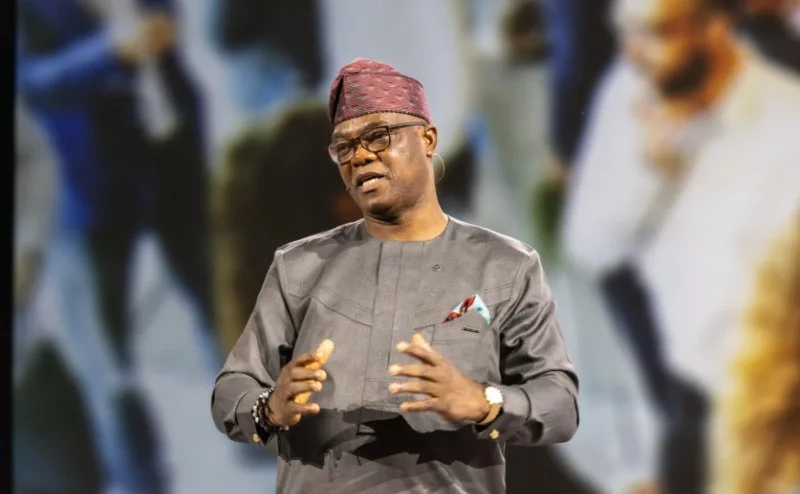
 Olayinka Hakeem Babalola, a member of the Rotary Club of Trans Amadi in Nigeria.
A Nigerian engineer and long-serving humanitarian has become
the second African to lead Rotary International, taking charge of the global
volunteer organisation at a time when it is intensifying efforts to eradicate
polio and promote peace across communities.
Olayinka Hakeem Babalola, a member of the Rotary Club of
Trans Amadi in Nigeria, officially assumes office on July 1 for a one-year term
as president of Rotary International, which has more than 1.2 million members
in over 45,000 clubs worldwide.
During his tenure, Babalola says he will prioritise
peacebuilding and support sustainable, community-led solutions that address
local and global challenges.
“Rotary gives people the opportunity not only to make a
difference in their communities, but also to grow through meaningful
relationships, collaboration, and a deeper appreciation of different
perspectives,” Babalola said.
“At a time when many societies face division and
uncertainty, I believe Rotary has an important role to play in building
understanding, advancing peace, and creating opportunities for communities to
thrive. As president, I look forward to highlighting and strengthening that
impact around the world.”
Babalola becomes only the second African to head the
international service organisation, which is best known for its decades-long
campaign to eradicate polio.
He brings decades of experience in community development,
peacebuilding and public health initiatives across Africa. He has also worked
closely with Rotary’s Peace Center at Makerere University, the organisation’s
first peace centre on the African continent.
As Rotary’s global president, Babalola will oversee the
organisation’s continued support for the fight against polio, one of its
flagship programmes.
Together with partners in the Global Polio Eradication
Initiative, Rotary says it has helped reduce polio cases worldwide by 99.9 per
cent. The organisation has contributed more than $3 billion and mobilised
volunteers to help protect more than three billion children against the disease.
Babalola has also played a key role in the campaign, serving
on the End Polio Now Countdown to History Campaign Committee and advising
Nigeria’s National PolioPlus Committee.
Beyond polio, Rotary members implement projects that tackle
disease, promote peace, improve access to clean water, support education,
strengthen local economies, protect the environment and improve maternal and
child health.
Over the past century, Rotary says its charitable arm, The
Rotary Foundation, has awarded more than $5.5 billion to support community
service projects around the world.
Before taking up the Rotary presidency, Babalola built a
career spanning more than 30 years in the oil and gas industry, including
senior leadership positions at Shell plc. He later founded Riviera Technical
Services Ltd., an oil and gas infrastructure company, and Lead and Change
Consulting, which specialises in executive coaching and organisational
performance.
An engineer by training, he is a member of the Nigerian
Society of Engineers, the Institute of Safety Professionals and the Association
of Change Management Practitioners. He also belongs to the Jericho Business
Club in Ibadan.
Babalola first joined Rotary through its Rotaract programme
in 1984 before becoming a member of the Rotary Club of Trans Amadi in 1994.
Over the years, he has held several leadership positions and currently serves
as a trustee of ShelterBox, Rotary’s official disaster relief project partner.
He and his wife, Preba, are major supporters of The Rotary
Foundation and have received several honours, including the Africa Centennial
Heroes Award, the Service Above Self Award, the Regional Service Award for a
Polio-Free World and The Rotary Foundation Citation for Meritorious Service.

![[PHOTOS] Elderly brave cold to vote in Ol Kalou](https://cdn.radioafrica.digital/image/2026/07/d2345b9e-578f-45ff-9bb0-d7819671c165.webp)
![[PHOTOS] Ol Kalou residents turn out in large numbers to vote](https://cdn.radioafrica.digital/image/2026/07/fe42d51c-7f79-466e-94e8-59561f77bbe7.webp)