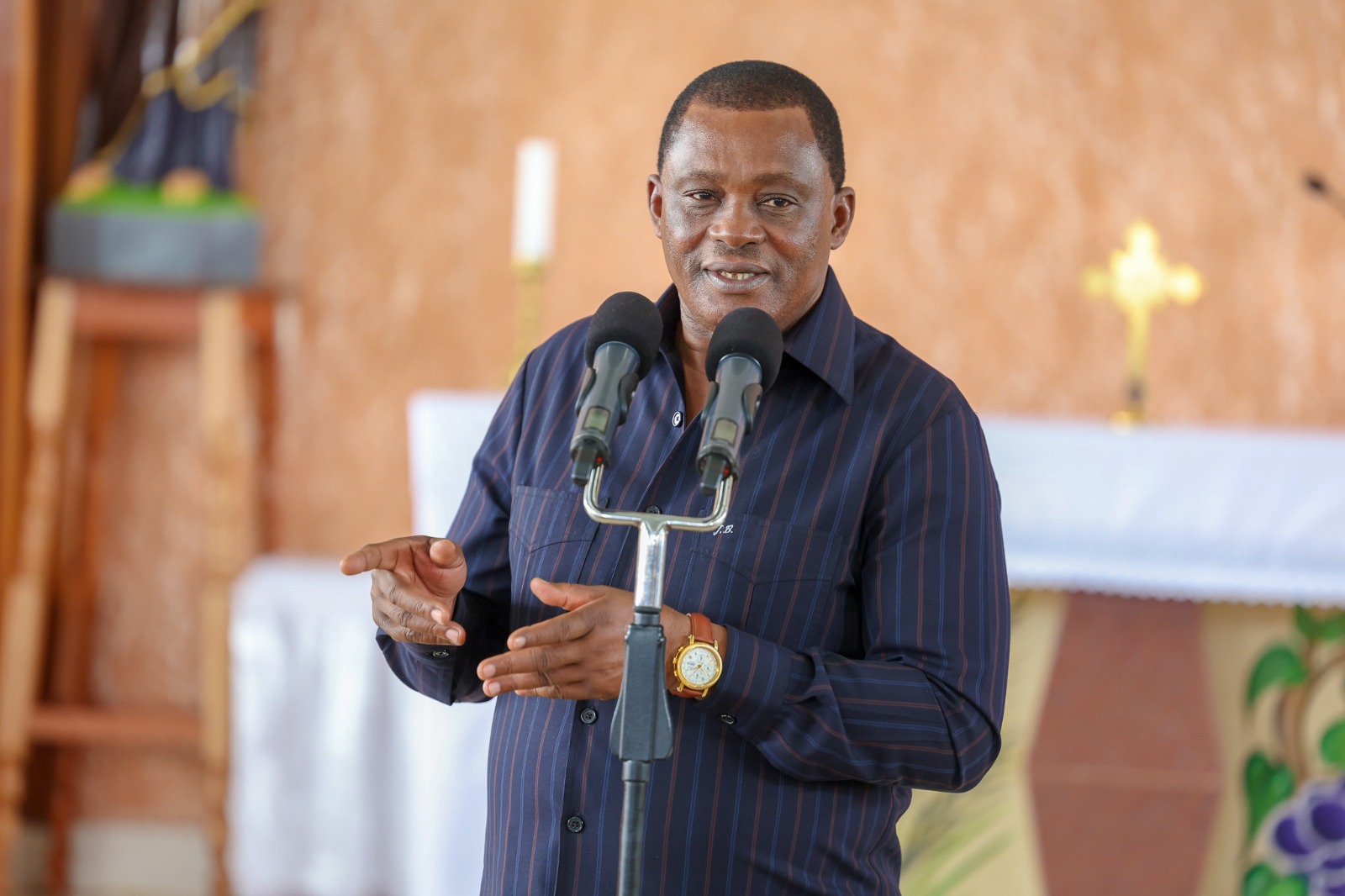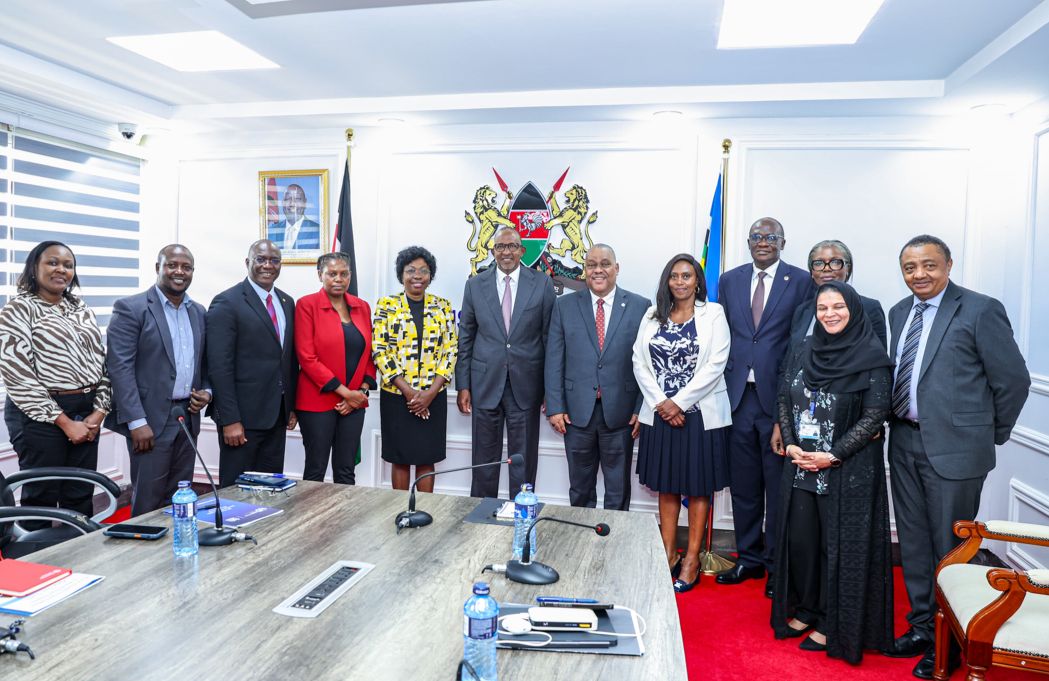

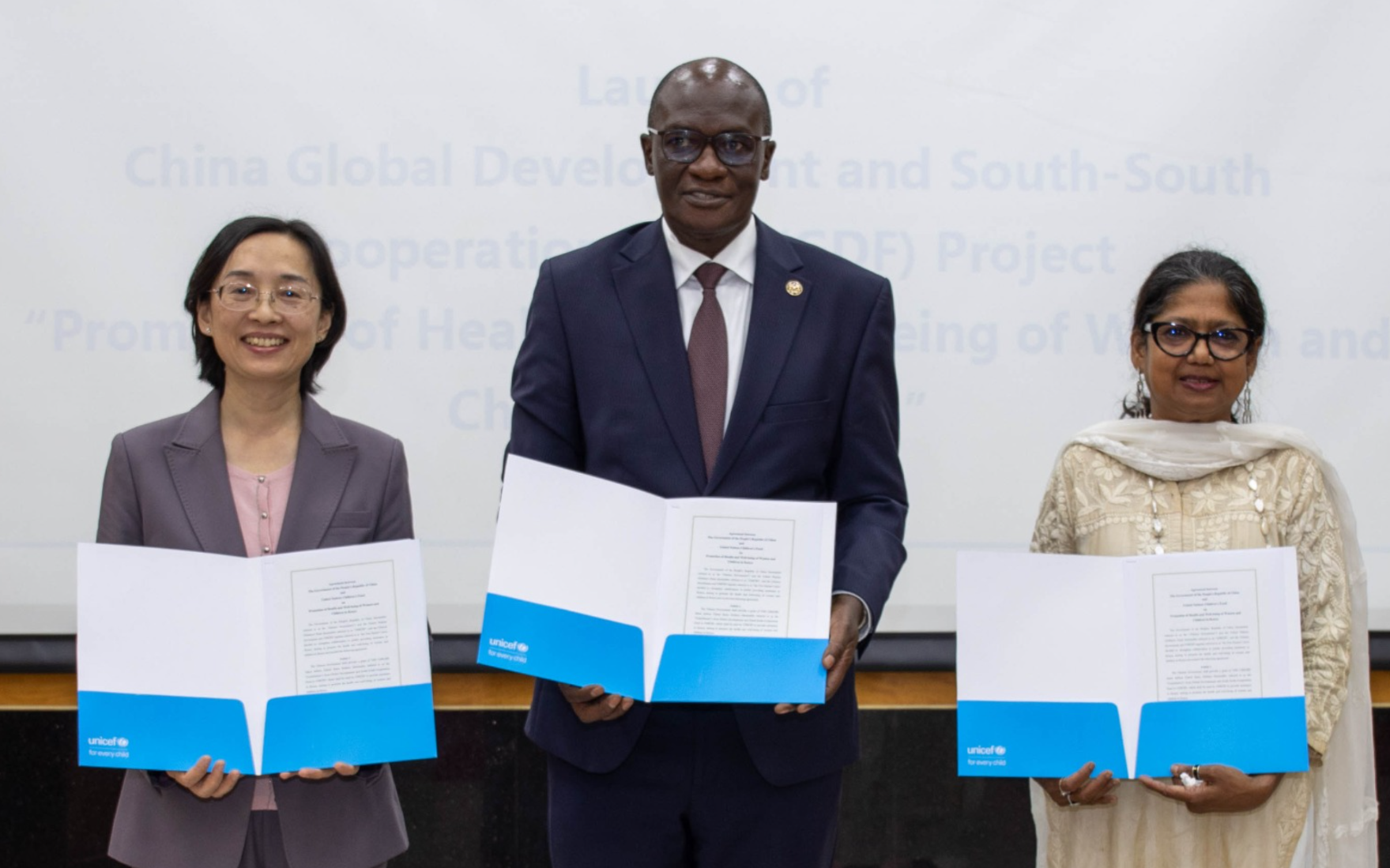
 Guo Haiyan, Ambassador of the People’s Republic of China to Kenya, with Dr Patrick Amoth, the Director General for Health in the Ministry of Health, and Dr Shaheen Nilofer, Unicef Representative in Kenya at the launch of the promotion of Health and Well-Being of Women and Children in Kenya programme.
Pregnant women and new mothers in three of Kenya's most underserved counties will soon have easier access to the healthcare they need.
A new two-year programme worth $4 million (Sh517 million), launched on June 9, is bringing medical support closer to communities where many women still give birth without any skilled help nearby.
The programme targets Garissa, Mandera, and Wajir counties in Northeastern Kenya, where too many mothers and babies die from causes that can be prevented with timely medical care.
In much of Garissa, Mandera, and Wajir, getting care during pregnancy is hard. Clinics are few and far between. Skilled nurses and midwives are not always available. Many women give birth at home without any medical support, which puts both mother and baby at serious risk.
The most common reasons mothers die during or after childbirth include heavy bleeding, high blood pressure, infections, and difficult labour. For newborns, the biggest dangers are being born too early, problems during delivery, and infections in the first days of life. Most of these deaths can be prevented if mothers get the right care in time.
The initiative will equip hospitals, health centres, and smaller clinics across the three counties with the supplies and equipment needed to care for women from early pregnancy through to the weeks after delivery. Community health workers — people who visit homes and villages — will be trained to better support mothers in their own communities. Health facilities will also be upgraded to have cleaner water and better sanitation, reducing the risk of infections for mothers and newborns.
The programme is being delivered through a partnership between the Government of China, the United Nations Children's Fund (Unicef), and Kenya's Ministry of Health. It is funded through the China Global Development and South-South Cooperation Fund, and is fully aligned to Kenya Vision 2030 and the United Nations' global health goals for 2030.
"Following the Global Development Initiative, this project reflects China's strong commitment to advancing South-South cooperation and delivering meaningful impact for women and children in Kenya. Through our partnership with the Government of Kenya and Unicef, we are strengthening bilateral ties while supporting sustainable, locally driven solutions to improve maternal and newborn health in most needed communities," said Guo Haiyan, Ambassador of the People's Republic of China to Kenya.
Dr Shaheen Nilofer, Unicef Representative in Kenya, added: "Behind every statistic is a mother, a newborn and a family whose future hangs in the balance. This partnership is about changing those stories. We thank the Government of China for its support to address the issue of maternal and newborn mortality in Kenya. Together, we are supporting the government's efforts to reach those who are most at risk and to give every child a safe and healthy start to life."
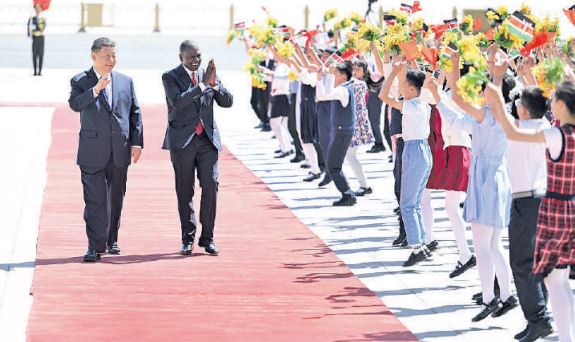
This programme is the latest step in a long-standing relationship between Kenya and China. When President William Ruto visited Beijing in April 2025, the two countries formally agreed to build a deeper partnership — one focused on a shared future and mutual growth. That visit built on years of cooperation on major infrastructure and development projects under the Belt and Road Initiative, which have created jobs and improved services in both countries.
China's embassy in Nairobi has been central to keeping this relationship alive and growing — working to build understanding between ordinary Kenyans and Chinese people, supporting cooperation across different sectors, and promoting cultural exchange between the two nations.
For mothers in Garissa, Mandera, and Wajir, the fruits of that partnership are now arriving in the most personal way possible — in the form of care when they need it most.