
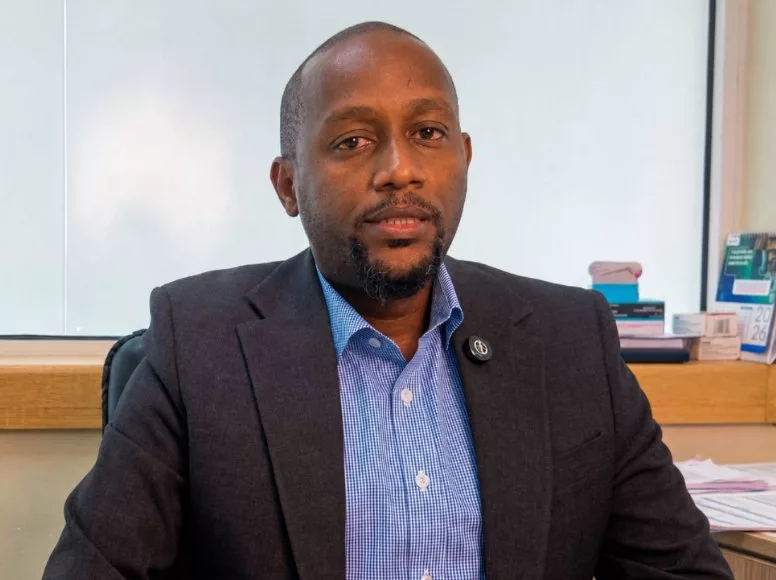
 Dr Boniface Githaiga, Bone Marrow Transplant and Hematology Expert, The Nairobi West Hospital /HANDOUT
For months, 57-year-old Severini Tole lived in a cycle of exhaustion, frequent hospital visits and repeated blood transfusions.
His blood counts kept dropping, leaving him too weak to carry out everyday activities.
Doctors eventually diagnosed him with multiple myeloma, a cancer of plasma cells that affects the bone marrow and interferes with the production of healthy blood cells. The diagnosis was life-changing, but so was the solution.
"I was constantly weak and depended on blood transfusions. They would help for a short while, but my blood counts would fall again. When I was told I needed a bone marrow transplant, I thought I would have to travel abroad," he recalls.
Instead, in December 2025, he underwent a successful bone marrow transplant at The Nairobi West Hospital, home to Kenya's first dedicated Bone Marrow Transplant (BMT) Unit.
He spent three weeks admitted to the specialised transplant ward before being discharged. Today, his hospital visits are for routine follow-up clinics, where doctors continue to monitor his recovery.
"To any Kenyan who is feeling weak, struggling with low blood counts or losing hope, don't give up. World-class treatment is available right here at home," he says.
His story reflects a growing shift in Kenya's healthcare landscape, where highly specialised procedures that once required travel to countries such as India are now available locally.
Dr Boniface Kairu Githaiga, a Bone Marrow Transplant and Haematology expert at The Nairobi West Hospital, says bone marrow transplantation has transformed the outlook for patients with blood cancers and other serious blood disorders.
"Bone marrow transplantation offers eligible patients the possibility of long-term remission and, in some cases, cure. For conditions such as multiple myeloma, it is an important treatment option that can significantly improve both survival and quality of life. Early diagnosis and timely referral remain critical to achieving the best outcomes," says Kairu.
Multiple myeloma is among the most common blood cancers globally. Although comprehensive national data remain limited, Kenya continues to witness a rising burden of haematological cancers, including leukaemia, lymphoma and multiple myeloma. According to the International Agency for Research on Cancer (IARC) GLOBOCAN estimates, cancer cases continue to rise in the country, underscoring the need for greater access to specialised cancer treatment, including bone marrow transplantation.
For years, many Kenyans requiring bone marrow transplantation had little choice but to seek treatment abroad, often in India or South Africa, at enormous financial and emotional cost.
Tole says being able to receive the procedure locally made all the difference.
"I realised I didn't have to leave my country to receive quality care. The treatment was done professionally, and I had my family close by throughout the journey."
He credits the multidisciplinary transplant team for helping him through one of the most difficult periods of his life.
"There were days I felt so weak that I wanted to give up, but Dr Boniface Kairu, Jason and the nursing team kept encouraging me. They stood with me every step of the way."
He also praises the hospital's integrated services.
"Everything I needed was available under one roof. From investigations to the transplant itself, I never had to be referred elsewhere. The cleanliness and strict infection-control measures also gave me confidence because my immunity was very low."
According to Kairu, a successful bone marrow transplant depends on more than the procedure itself.
"It requires a multidisciplinary team comprising haematologists, transplant physicians, specialised nurses, laboratory scientists, pharmacists and infection prevention experts. Equally important is long-term follow-up, which allows us to monitor recovery, detect complications early and support patients as they regain their health."
Now attending scheduled follow-up clinics, Tole says each visit is a reminder of how far he has come.
"I feel stronger with every clinic review. Looking back, I am grateful I chose to have the transplant in Kenya."
His message to other Kenyans facing blood cancers is simple: seek medical attention early, ask about available treatment options and never assume specialised care can only be found outside the country.
For an increasing number of patients, life-saving bone marrow transplantation is now available closer to home.

![[PHOTOS] Elderly brave cold to vote in Ol Kalou](https://cdn.radioafrica.digital/image/2026/07/d2345b9e-578f-45ff-9bb0-d7819671c165.webp)
![[PHOTOS] Ol Kalou residents turn out in large numbers to vote](https://cdn.radioafrica.digital/image/2026/07/fe42d51c-7f79-466e-94e8-59561f77bbe7.webp)