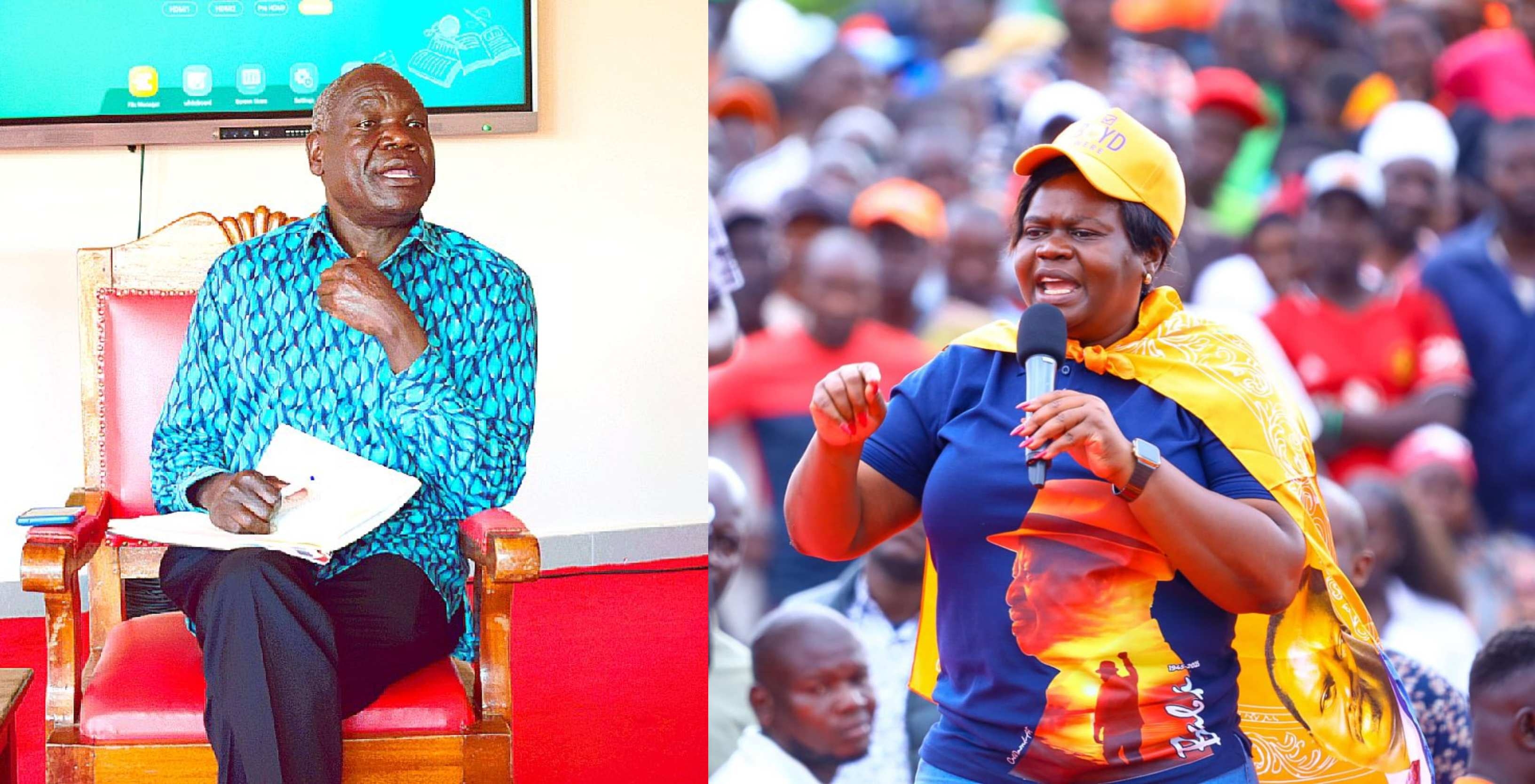


 Kirinyaga Woman Representative Njeri Maina/FB
Kirinyaga Woman Representative Njeri Maina has sounded the alarm over an alleged move to withdraw a petition that had sought to block the mass importation of rice into Kenya, warning that the decision could expose local farmers to economic shock and undermine national food production systems.
In a detailed statement on Thursday, Maina said she was “deeply concerned” about efforts to abandon the case, which had been filed on public interest grounds to question the scale and timing of planned rice imports.
She argued that withdrawing the petition would dismantle protections that farmers were relying on as the matter awaited full determination.
This comes after a formal notice was issued seeking to withdraw the case.
“Take notice that the Applicant/petitioner herein wholly wishes to withdraw and discontinue this suit, that is with entirety no order as to cost,” read in part the alleged document filed in court.
The development triggered concern among a section of stakeholders who had joined the petition as interested parties, viewing it as a sudden and unexplained shift.
Maina argued the withdrawal would have far-reaching consequences.
“Withdrawal of that petition will lead to lapsing of conservatory orders issued by the court, allowing anonymous private investors to flood the market with over 500,000 metric tonnes of imported rice within weeks,” she warned, noting that these orders had shielded Kenyan farmers from potential market disruptions.
According to her, removing the legal barrier would leave local producers exposed.
“This withdrawal will decimate local production, prices, and undermine years of investment by hardworking Kenyan households,” she said, calling the development “an economic betrayal.”
Kenya’s rice consumption has grown rapidly over the past decade due to population growth and dietary changes, yet local production, concentrated in regions like Mwea, Ahero and Bunyala, continues to lag behind demand.
While imports help bridge the gap, farmer associations have long argued that unregulated, large-volume importation depresses prices and weakens domestic value chains.
The petition in question had sought to scrutinise the scale and transparency of the proposed importation programme, with several interest groups joining in support.
It also resulted in temporary conservatory measures safeguarding the sector as the court examined the issues.
Maina questioned the motive behind the abrupt push to abandon the case.
“Has the public interest they sought to protect morphed into private interest?” she asked.
“This raises only one question: Whose interests are they really serving?”
She added that the manner and timing of the alleged withdrawal raised concerns.
“When one files a petition under the banner of public interest, then abruptly abandons it at the most critical moment, the public is entitled to suspect,” she said.
Maina urged Parliament, farmer associations and civil society organisations to closely monitor the situation and remain vigilant against attempts that could compromise farmer livelihoods.
“We must not allow political games to open the floodgates for importation that threatens food security, livelihoods, and the sovereignty of our local value chains,” she said.
She insisted that the country’s producers deserve unwavering advocacy.
“Kenyan farmers deserve defenders who do not wobble, waver or withdraw when pressure mounts,” she noted.