
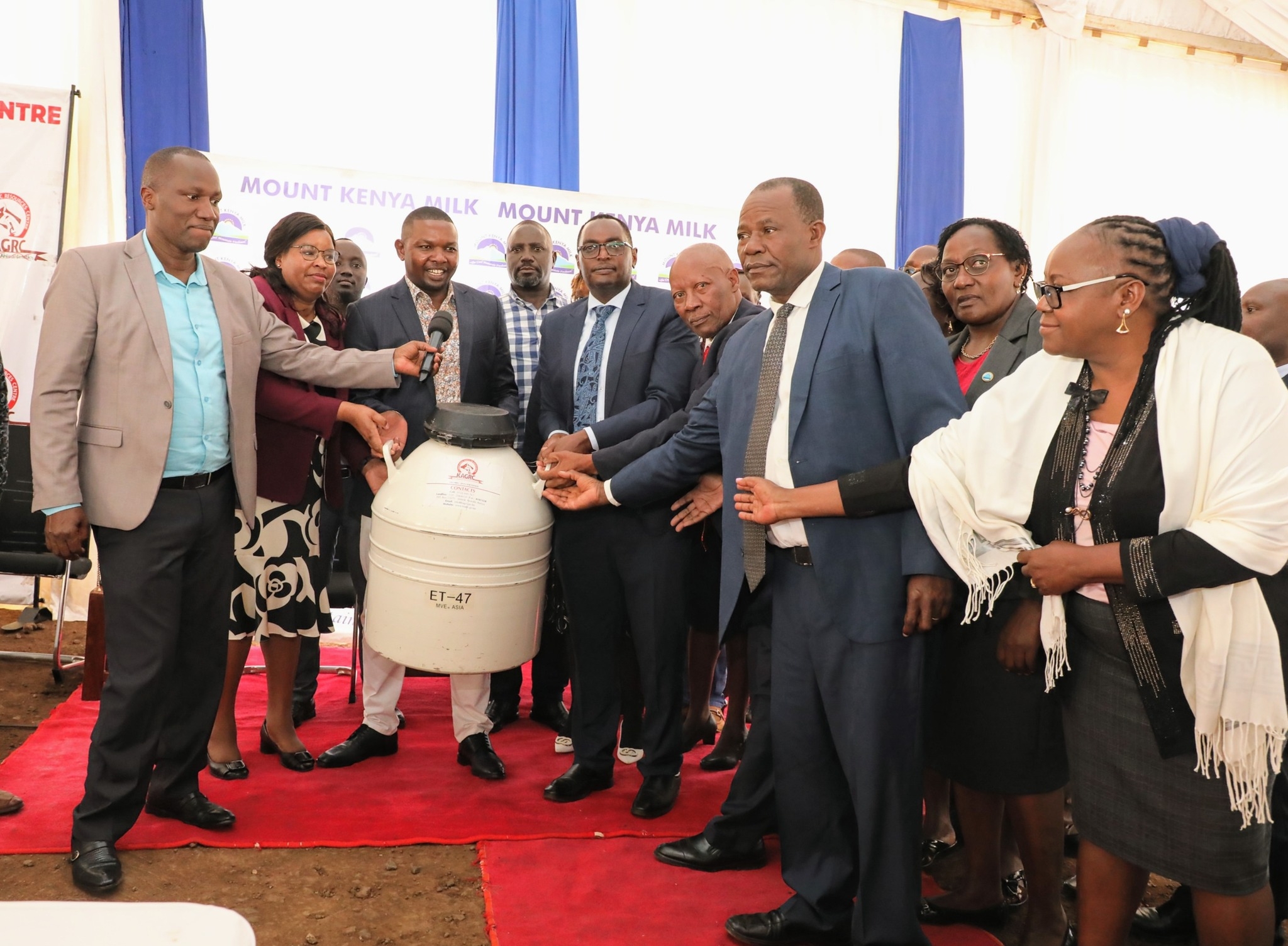
State supplies Meru dairy farmers with 1,000 doses of semen
Farmers will buy the semen at Sh1,400 down from Sh7,000
5mon agoALICE WAITHERACentral
The two-year partnership aims to help small dairy farmers overcome low productivity, poor profits and limited technical support.
In Summary

Audio By Vocalize
 Extension officers from Githunguri Dairy Farmers Co-operative Society in Kiambu being shown how to operate e-bikes on December 8, 2025/ ALICE WAITHERA
Githunguri Dairy Farmers
Cooperative Society has engaged 35 new extension officers to raise its
production.
The
co-operative, known for its Fresha dairy products, has also launched a fleet of
19 electric motorcycles to be used by extension officers who have also been
provided with laptops.
This, according to chairperson John
Ndichu, is part of its efforts to modernise its operations and boost farmer
profitability.
Under
the Maziwa Faida initiative, the co-operative has partnered with the United
Nations Industrial Development Organisation (UNIDO), Tetra Pak and the Swedish
Embassy in Kenya to enhance its operations.
"Over
the years, we have received many requests from our farmers to support them with
more extension services,” Ndichu said.
The two-year $3.5 million (Sh452 million) public-private development partnership project seeks to
address challenges faced by small-holder dairy farmers such as low
productivity, poor profitability and limited access to technical expertise.
The
project will see a dairy academy established at Githunguri, which is expected
to train farmers on proper livestock husbandry, provide courses in modern dairy
farming techniques, animal health, farm management, recordkeeping and business
skills.
Maziwa
Faida project underscores sustainable farming practices aimed at enhancing
farmers’ resilience against the effects of climate change.
With training, farmers will be
empowered to produce high-quality milk that will reduce post-harvest losses and
improve their profit margins.
The
additional extension officers will reduce the farmer-extension officer ratio
from 700:1 to a much more manageable 350:1.
Speaking
at the handover event on December 8, Ndichu said the reduction will see each
farmer visited by an extension officer at least once in three months,
translating to about three visits per farmer annually.
"This is a major improvement for our co-operative. Our projection is that this initiative will raise our daily production by about 50,000 litres daily."
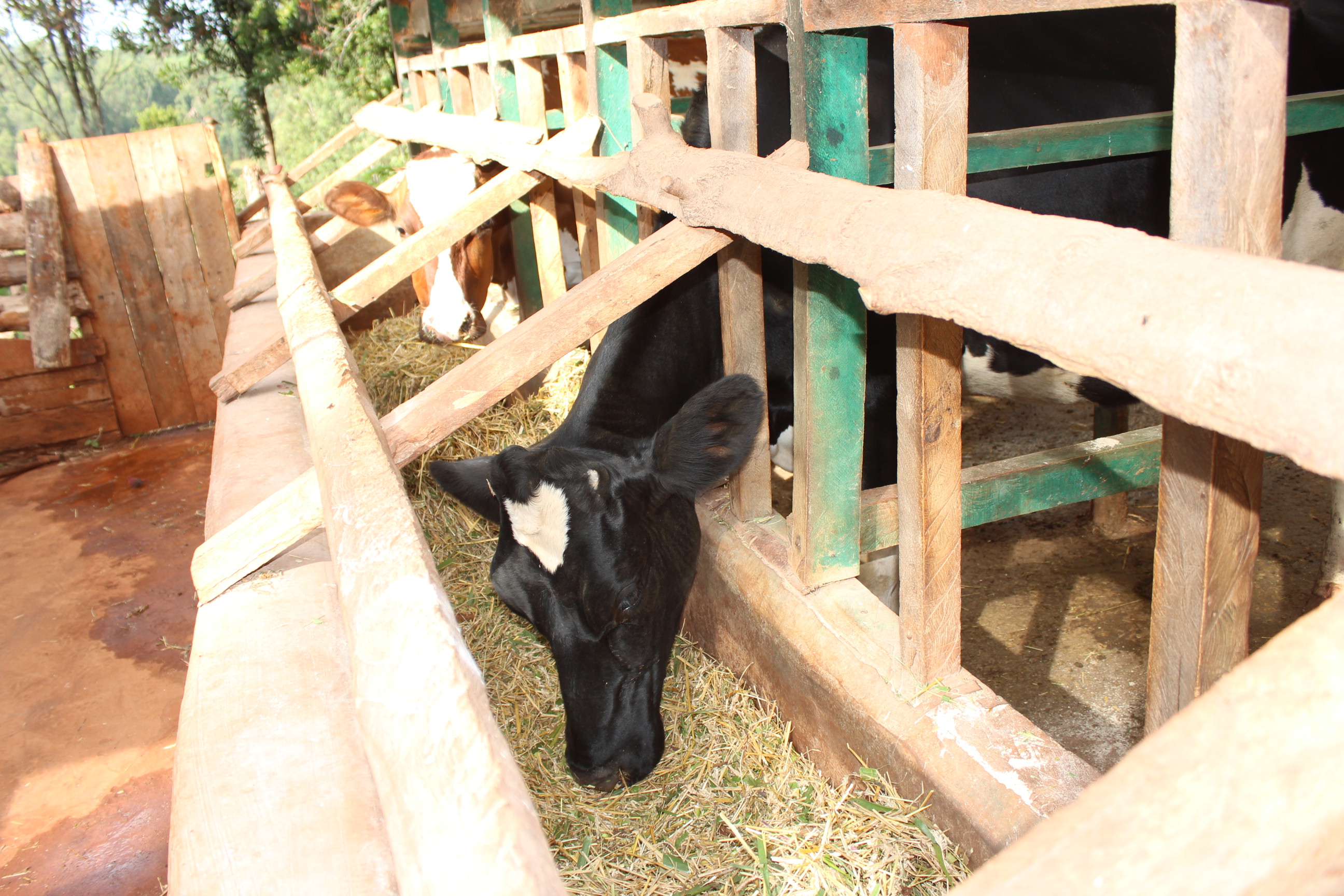 Dairy cows feeding in a farm in Kandara, Murang'a/ALICE WAITHERA
Statistics indicate that the
co-operative currently produces 250,000 litres of milk daily, with a forecast of
reaching 350,000 litres per day by 2027. Last year, the farmers sold more 92
million litres of milk.
Ndichu
said the motorcycles will improve the extension officers' mobility, allowing
them to access farmers in a timely manner.
The
shift to e-transport promises substantial financial benefits for the
cooperative and is expected to reduce the co-operative’s operational costs by
almost half.
"There's
no fuel need, just charging and God is gracious enough to give us enough
sunlight to charge the electric bikes using our solar systems,” Ndichu said.
Michael
Vandenberghe, project manager for the Dairy Development for Greater Middle
Eastern Africa project under Tetra Pak, emphasised the project's impact on
farmer profitability.
"This
sponsorship is going to make a huge difference to farmers’ profitability
because the officers can move around and assist farmers in doing better feeds
rations formulation and give general farming advice,” he said.
Vandenberghe
said the initial funding from the Swedish Embassy, under the Pathways to
Profitable Dairy project, will run until the end of 2026, with proposals being
developed for a further extension.
Maina
Karuiru, UNIDO national project coordinator, highlighted the sustainability
aspect, saying by equipping extension officers with clean and efficient
transport solutions, they have been facilitated to reach more farmers,
improving livelihoods and strengthening the dairy ecosystem.
Farmers
however raised concerns over decreasing quality and rising costs of livestock
feeds in the market.
Ndichu
said with 80 per cent of raw materials imported, costs have continued to soar
against erratic weather patterns and rising drought.
"A
bag of dairy mill is currently going for about Sh3,200 which is very high for a
farmer," he said.
Ndichu urged the government to review taxes and implement policies that are farmer-friendly support sustained productivity.
Farmers will buy the semen at Sh1,400 down from Sh7,000