
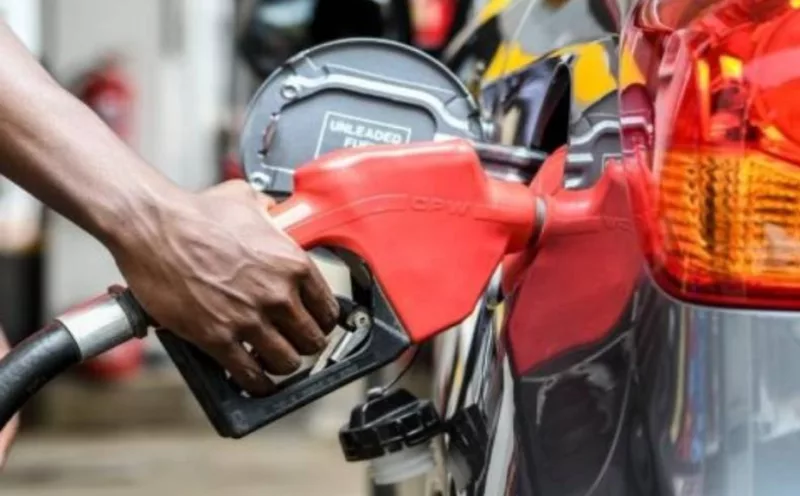
The government's move to replenish the fuel stabilisation fund has denied Kenyans lower pump prices despite a sharp decline in global oil prices and the cost of imported fuel.
This comes as monies owed to Oil Marketing Companies in pending fuel subsidy arrears stood at Sh20 billion as at June.
The Energy and Petroleum Regulatory Authority (EPRA) on Tuesday retained pump prices for the period ending August 14, leaving motorists and households without the relief many had expected following the easing of international oil markets.
A litre of super petrol will continue retailing at Sh214.03 in Nairobi, diesel at Sh222.86 and kerosene at Sh191.38.
The decision comes even as both international refined fuel prices and Kenya's landed import costs fell significantly over the past month.
The government also extended the reduced eight per cent Value Added Tax (VAT) on petroleum products for another three months after halving it from 16 per cent in April, to cushion consumers from the spike triggered by the Middle East conflict.
International crude oil prices declined sharply in June, with Brent crude falling below $70 a barrel after dropping more than $3 mid-month.
The benchmark had surged to about $126 per barrel in April during heightened tensions in the Middle East.
EPRA data shows the international price of super petrol dropped to $948.65 per metric tonne in June from $1,127 in May. Diesel declined to $889.55 from $1,108.58, while kerosene fell to $951.48 from $1,164.11 per metric tonne.
Import costs also eased with the average landed cost of super petrol declining to $886.92 per cubic metre in June from $901.16 in May.
Diesel registered the sharpest fall, dropping to $984.37 from $1,294.71, while kerosene fell to $1,028.17 from $1,328.36 per cubic metre.
In local currency, a litre of petrol landed at the Port of Mombasa at Sh122.64, which was slightly higher than Sh117.64 in May, pegged on shipping and insurance costs.
Diesel however landed at a lower price of Sh128.33 per litre, down from Sh168.47, while kerosene dropped to Sh133.75 from Sh172.79.
However, the lower import bill has not translated into cheaper fuel at the pump as the government seeks to rebuild the Petroleum Development Levy (PDL) fund, which was heavily depleted after subsidising fuel prices during the Middle East crisis, according to ministry officials.
The subsidy fund came under immense pressure following disruptions caused by the Israel-US-Iran conflict and closure of the Strait of Hormuz, a key global oil shipping route.
Energy CS Opiyo Wandayi on Tuesday said the government would continue supporting consumers while rebuilding the fund.
"In the July-August 2026 fuel pricing cycle, the government will deploy a subsidy from the Petroleum Development Levy to the tune of Sh945 million to sustain the current fuel price levels," Wandayi said.
A senior Energy Ministry official, who requested anonymity as as their are not the official spokesperson said the government was operating the stabilisation fund at a deficit.
"The government has been operating on a deficit, especially on petrol and kerosene. This is why Kenyans have not enjoyed the gains from the recent decline in global prices and import costs," the official said.
The Petroleum Development Levy is financed through a levy of about Sh5.40 on every litre of petrol and diesel sold locally. It is also supported through Treasury allocations and tax relief measures.
The fund collects between Sh25 billion and Sh30 billion annually.
At the beginning of April, the government injected Sh17 billion into the stabilisation programme after global oil prices surged.
By the end of May, cumulative expenditure on fuel subsidies and tax relief had exceeded Sh28 billion.
The June-July pricing cycle alone required a record Sh10 billion subsidy to shield consumers from higher diesel and kerosene prices, while the latest cycle will consume an additional Sh945 million.
Governments may maintain high local pump prices despite drops in global crude costs due to lagged shipping and refining times, fixed tax structures, the need to repay past subsidies, or deliberate efforts to rebuild stabilisation reserves.
“A big chunk of subsidies and advance sales is still
outstanding,” Petroleum Institute of East Africa chairman, Solomon Osundwa,
noted during an event in Nairobi.
OMCs also want Treasury and KRA to refund monies owed in the form of duties and vat for supplies to privileged bodies like the United Nations and Armed forces.
The PDL fund faces chronic strain and depletion, drained partly by the diversion of monies to other state obligations like the SGR and clearing arrears owed to OMCs.
Industry players however expect a major drop in fuel prices in the August-September cycle owing to projected lower global prices and easing freight costs.
Petroleum Outlets Association of Kenya chairman, Martin Chomba, said the sector supports government's efforts to rebuild its muscles for future cushions.
“The prices are likely to significantly drop in August because the government will also have stabilised. We are seeing crude prices go back to pre-war period so most likely consumers will enjoy lower prices from August,” said Martin Chomba,



![[PHOTOS] Elderly brave cold to vote in Ol Kalou](https://cdn.radioafrica.digital/image/2026/07/d2345b9e-578f-45ff-9bb0-d7819671c165.webp)

![[PHOTOS] Ol Kalou residents turn out in large numbers to vote](https://cdn.radioafrica.digital/image/2026/07/fe42d51c-7f79-466e-94e8-59561f77bbe7.webp)