Kenya's foreign exchange reserves are on course to hit a record $16 billion (Sh2.06 trillion), providing a to shield the shilling from rising global economic risks while boosting investor confidence.
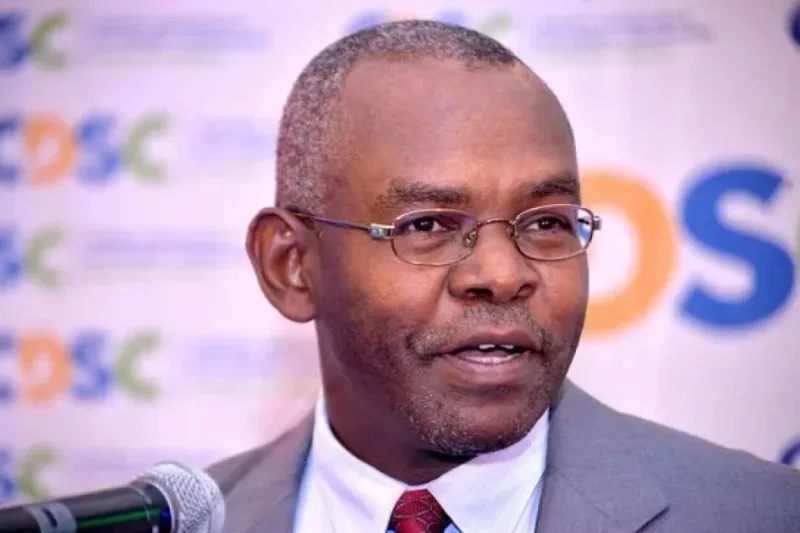
Central Bank of Kenya (CBK) Governor Kamau Thugge, is optimistic the reserves could rise to the equivalent of about seven months of import cover, well above the international benchmark of at least four months, supported by fresh foreign currency inflows expected in the coming months.
Speaking at the Kenya Bankers Association conference in Mombasa on Tuesday, Thugge said the reserve build-up will be driven by proceeds from the government's sale of its 15 per cent stake in Safaricom to Vodacom and South Africa's Nedbank investment in NCBA Group.
He said the stronger reserve position would provide a critical buffer against external shocks while helping maintain exchange rate stability.
"It is our sure guard against volatilities stemming from renewed tensions in the Middle East and growing climate-related uncertainties," Thugge said.
Latest CBK data shows Kenya's foreign exchange reserves have already climbed to $14.1 billion (about Sh1.82 trillion), equivalent to six months of import cover, after increasing by nearly $954 million (about Sh123 billion) in two weeks.
The jump was largely supported by $750 million (about Sh97 billion) in World Bank financing approved recently to support Kenya's fiscal reforms, debt management and economic resilience.
Last week, National Treasury Cabinet Secretary John Mbadi said over Sh200 billion, proceeds from the sale of the government’s 15 per cent stake in Safaricom to Vodacom will be in government accounts by this Friday.
He said the money will be placed in the National Infrastructure Fund account at CBK, where Sh103 billion from the KPC sale is already held.
A combination of tighter monetary policy, stronger diaspora remittances, increased tourism earnings, successful Eurobond liability management, multilateral financing and sustained reserve accumulation has helped restore stability in the foreign exchange market.
The shilling has since recovered significantly, easing pressure on inflation and reducing the cost of servicing Kenya's external debt.
It traded 129.2 units against the greenback on Wednesday , a position it has held for almost two years now.
A stronger reserve position gives the CBK greater capacity to intervene in the foreign exchange market whenever demand for dollars surges, preventing sharp swings in the value of the shilling.
He said that stable reserves also reassure international investors and lenders that Kenya can comfortably meet its external obligations, including debt repayments.
"That confidence supports foreign direct investment, lowers borrowing costs and encourages businesses to expand," Thugge said.
The positive outlook comes despite rising global uncertainty.
Renewed tensions in the Middle East have heightened concerns over disruptions along the Strait of Hormuz, a strategic shipping route that handles about one-fifth of the world's oil supplies.
The conflict has pushed up oil prices, freight charges and shipping insurance costs, increasing import bills for fuel-dependent economies such as Kenya.
Higher crude oil prices eventually filter through to transport costs, electricity tariffs, food prices and overall inflation, reducing household purchasing power and raising business operating costs.
The World Bank has warned that prolonged instability in the region could weaken household spending and private investment through persistently high energy prices and slower remittance growth.
The United Nations Conference on Trade and Development has also cautioned that elevated transport costs could continue weighing on import-dependent economies even after shipping normalises.
Thugge noted that Kenya's current account deficit has widened more than previously projected due to disruptions in exports and remittance inflows from the Gulf region.
The Middle East accounts for roughly 10 per cent of Kenya's annual remittances, valued at about $500 million (about Sh64.5 billion), and a similar share of the country's exports.
Even so, the CBK remains confident that strong capital inflows will continue supporting the country's external position.
Foreign direct investment remains a key source of support.
According to the latest UN Trade and Development World Investment Report, Kenya attracted $3.2 billion (about Sh413 billion) in foreign direct investment in 2025, up from $2.3 billion (about Sh297 billion) a year earlier.
The investments were largely directed to digital infrastructure, renewable energy, manufacturing and financial services.
The CBK expects continued foreign investment, multilateral financing and other capital inflows to keep reserves comfortably above six months of import cover.


![[PHOTOS] Elderly brave cold to vote in Ol Kalou](https://cdn.radioafrica.digital/image/2026/07/d2345b9e-578f-45ff-9bb0-d7819671c165.webp)

![[PHOTOS] Ol Kalou residents turn out in large numbers to vote](https://cdn.radioafrica.digital/image/2026/07/fe42d51c-7f79-466e-94e8-59561f77bbe7.webp)